


Ulinastatin for acute lung injury and acute respiratory distress syndrome: A systematic review and meta-analysis
- PMID: 24834400
- PMCID: PMC4021152
- DOI: 10.5492/wjccm.v3.i1.34
Ulinastatin for acute lung injury and acute respiratory distress syndrome: A systematic review and meta-analysis
Abstract
Aim: To investigate the efficacy and safety of ulinastatin for patients with acute lung injury (ALI) and those with acute respiratory distress syndrome (ARDS).
Methods: A systematic review of randomized controlled trials (RCTs) of ulinastatin for ALI/ARDS was conducted. Oxygenation index, mortality rate [intensive care unit (ICU) mortality rate, 28-d mortality rate] and length of ICU stay were compared between ulinastatin group and conventional therapy group. Meta-analysis was performed by using Rev Man 5.1.
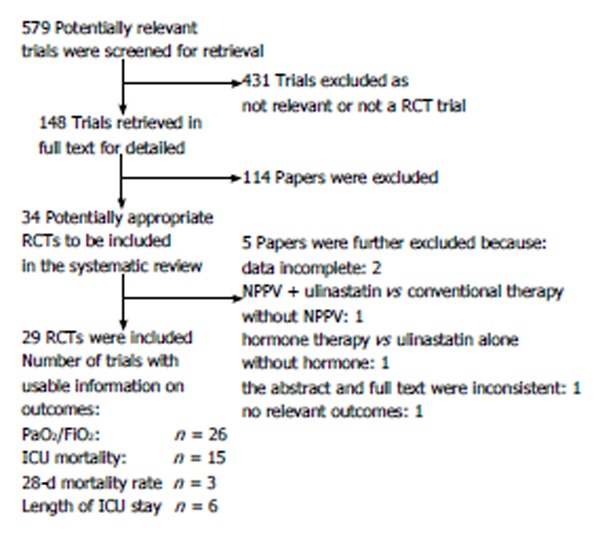
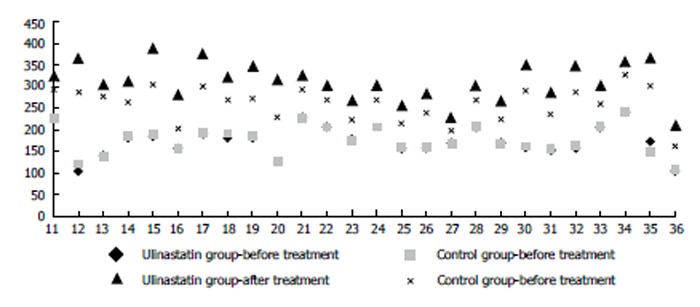
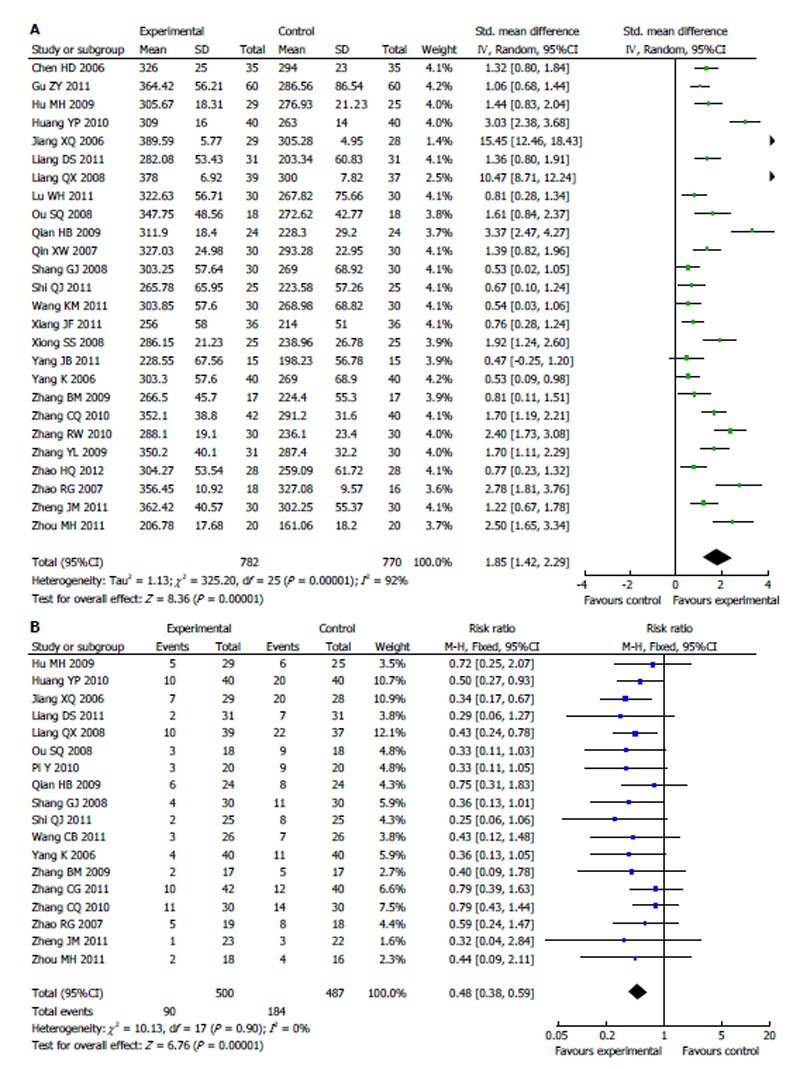
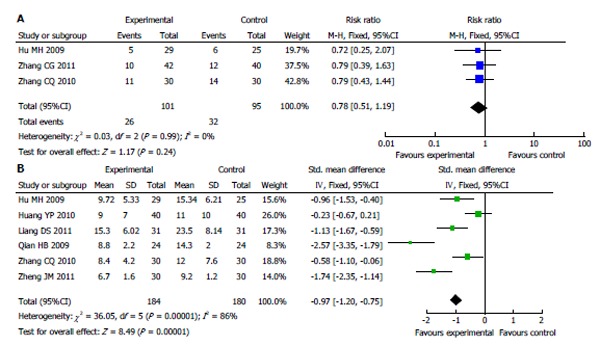
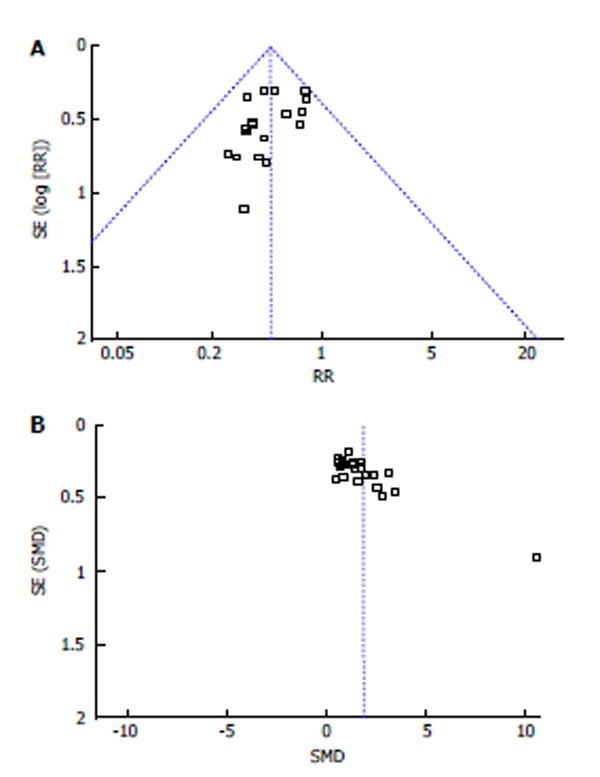
Results: Twenty-nine RCTs with 1726 participants were totally included, the basic conditions of which were similar. No studies discussed adverse effect. Oxygenation index was reported in twenty-six studies (1552 patients). Ulinastatin had a significant effect in improving oxygenation [standard mean difference (SMD) = 1.85, 95%CI: 1.42-2.29, P < 0.00001, I(2) = 92%]. ICU mortality and 28-d mortality were respectively reported in eighteen studies (987 patients) and three studies (196 patients). We found that ulinastatin significantly decreased the ICU mortality [I(2) = 0%, RR = 0.48, 95%CI: 0.38-0.59, number needed to treat (NNT) = 5.06, P < 0.00001], while the 28-d mortality was not significantly affected (I(2) = 0%, RR = 0.78, 95%CI: 0.51-1.19, NNT = 12.66, P = 0.24). The length of ICU stay (six studies, 364 patients) in the ulinastatin group was significantly lower than that in the control group (SMD = -0.97, 95%CI: -1.20--0.75, P < 0.00001, I(2) = 86%).
Conclusion: Ulinastatin seems to be effective for ALI and ARDS though most trials included were of poor quality and no information on safety was provided.
Keywords: Acute lung injury; Acute respiratory distress syndrome; Mortality; Oxygenation index; Ulinastatin.
Figures
References
-
- Pugia MJ, Lott JA. Pathophysiology and diagnostic value of urinary trypsin inhibitors. Clin Chem Lab Med. 2005;43:1–16. - PubMed
-
- Ohnishi H, Kosuzume H, Ashida Y, Kato K, Honjo I. Effects of urinary trypsin inhibitor on pancreatic enzymes and experimental acute pancreatitis. Dig Dis Sci. 1984;29:26–32. - PubMed
-
- Uemura K, Murakami Y, Hayashidani Y, Sudo T, Hashimoto Y, Ohge H, Sueda T. Randomized clinical trial to assess the efficacy of ulinastatin for postoperative pancreatitis following pancreaticoduodenectomy. J Surg Oncol. 2008;98:309–313. - PubMed
-
- Cao YZ, Tu YY, Chen X, Wang BL, Zhong YX, Liu MH. Protective effect of Ulinastatin against murine models of sepsis: inhibition of TNF-α and IL-6 and augmentation of IL-10 and IL-13. Exp Toxicol Pathol. 2012;64:543–547. - PubMed
-
- Inoue K, Takano H. Urinary trypsin inhibitor as a therapeutic option for endotoxin-related inflammatory disorders. Expert Opin Investig Drugs. 2010;19:513–520. - PubMed
Publication types
LinkOut - more resources
Full Text Sources
Other Literature Sources
