


Failure of lorazepam to treat alprazolam withdrawal in a critically ill patient
- PMID: 24834401
- PMCID: PMC4021153
- DOI: 10.5492/wjccm.v3.i1.42
Failure of lorazepam to treat alprazolam withdrawal in a critically ill patient
Abstract
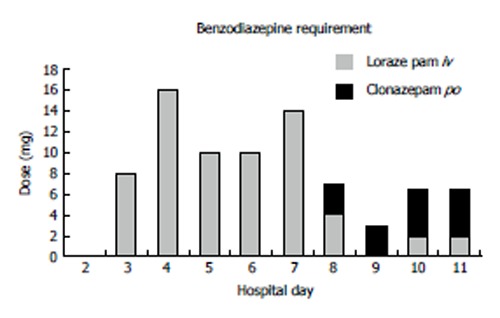
Management of sedation in the critical care unit is an ongoing challenge. Benzodiazepines have been commonly used as sedatives in critically ill patients. The pharmacokinetic and pharmacodynamic properties that make benzodiazepines effective and safe in critical care sedation include rapid onset of action and decreased respiratory depression. Alprazolam is a commonly used benzodiazepine that is prescribed for anxiety and panic disorders. It is frequently prescribed in the outpatient setting. Its use has been reported to result in a relatively high rate of dependence and subsequent withdrawal symptoms. Symptoms of alprazolam withdrawal can be difficult to recognize and treat in the critical care setting. In addition, other benzodiazepines may also be ineffective in treating alprazolam withdrawal. We present a case of alprazolam withdrawal in a critically ill trauma patient who failed treatment with lorazepam and haloperidol. Subsequent replacement with alprazolam resulted in significant improvement in the patient's medication use and clinical status.
Keywords: Alpralazom; Lorazepam; Pharmacodynamics; Pharmacokinetics; Withdrawal.
Figures
References
-
- Barr J, Fraser GL, Puntillo K, Ely EW, Gélinas C, Dasta JF, Davidson JE, Devlin JW, Kress JP, Joffe AM, et al. Clinical practice guidelines for the management of pain, agitation, and delirium in adult patients in the intensive care unit. Crit Care Med. 2013;41:263–306. - PubMed
-
- Klein E. The role of extended-release benzodiazepines in the treatment of anxiety: a risk-benefit evaluation with a focus on extended-release alprazolam. J Clin Psychiatry. 2002;63 Suppl 14:27–33. - PubMed
-
- Trevor AJ, Way WL. Sedative-hypnotic drugs. In: Katzung BG, editor. Basic and Clinical Pharmacology, 6th edition. East Norwalk, CT: Appleton & Lange; 1995. pp. 333–349.
-
- Chouinard G. Issues in the clinical use of benzodiazepines: potency, withdrawal, and rebound. J Clin Psychiatry. 2004;65 Suppl 5:7–12. - PubMed
-
- Patterson JF. Withdrawal from alprazolam dependency using clonazepam: clinical observations. J Clin Psychiatry. 1990;51 Suppl:47–49; discussion 50-53. - PubMed
Publication types
LinkOut - more resources
Full Text Sources
Other Literature Sources
