


What weather variables are important in predicting heat-related mortality? A new application of statistical learning methods
- PMID: 24834832
- PMCID: PMC4091921
- DOI: 10.1016/j.envres.2014.04.004
What weather variables are important in predicting heat-related mortality? A new application of statistical learning methods
Abstract
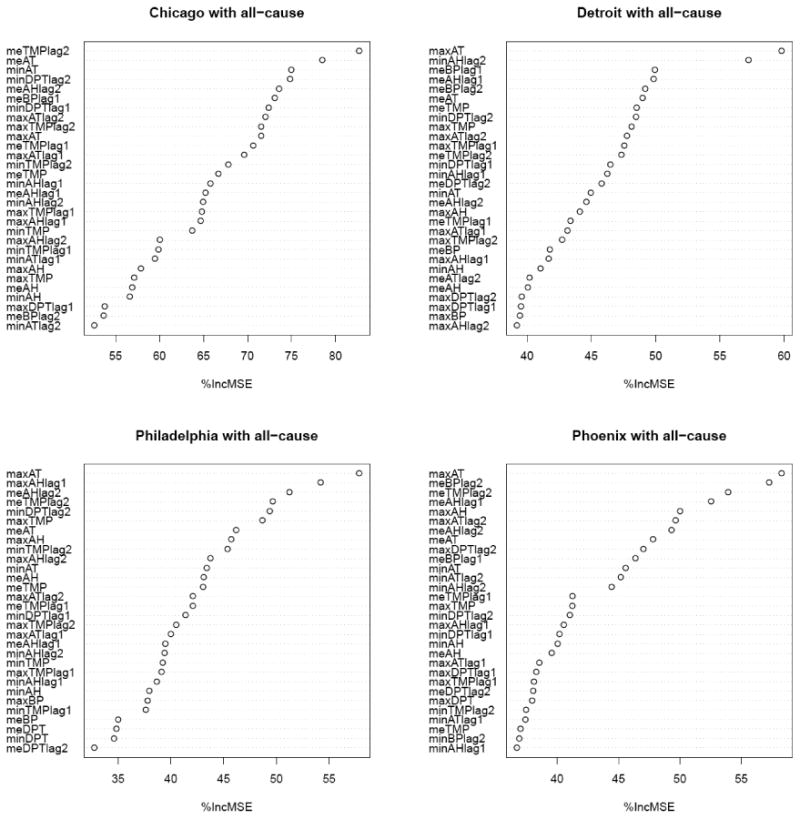
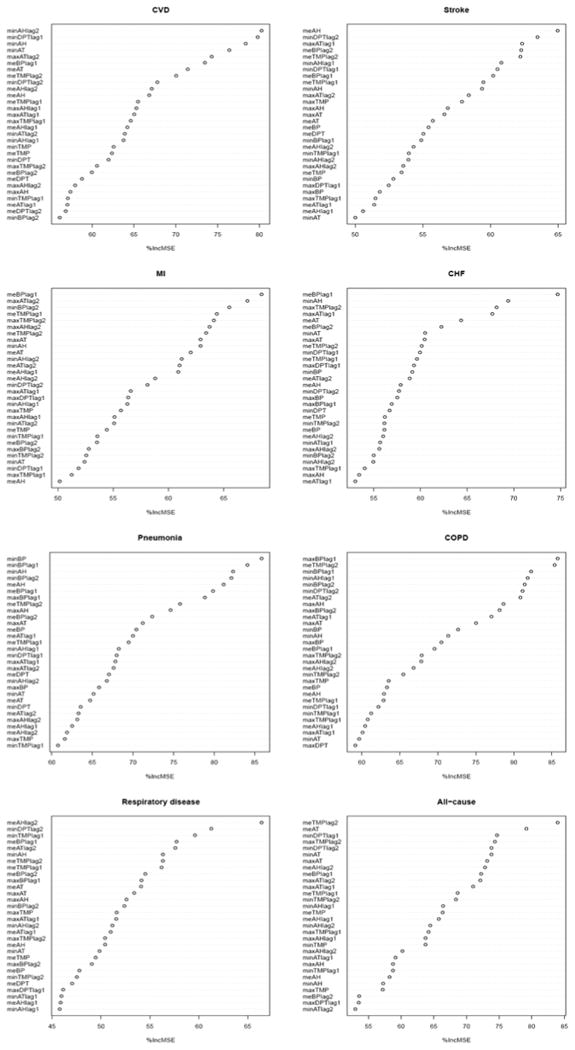
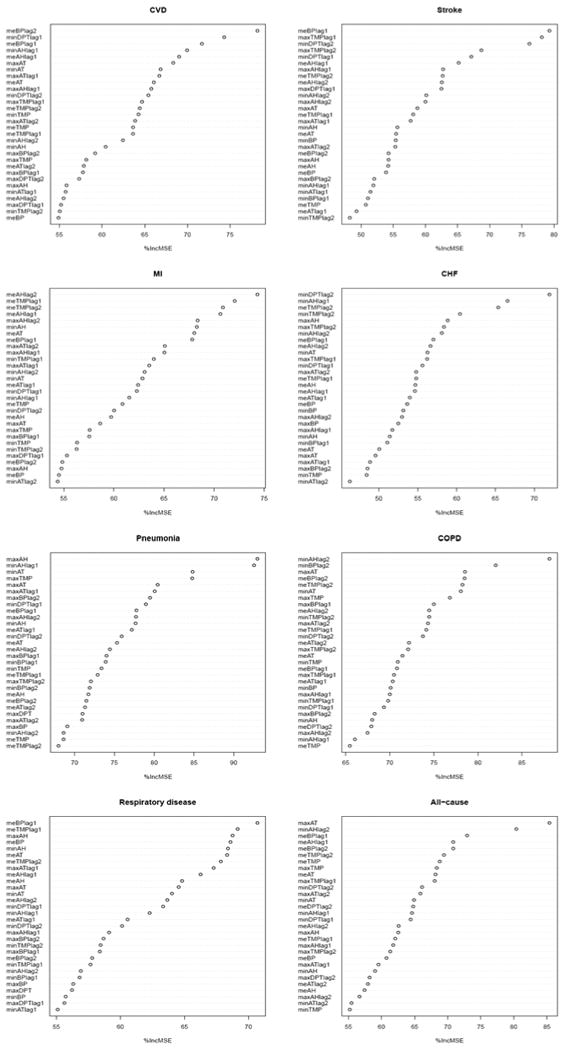
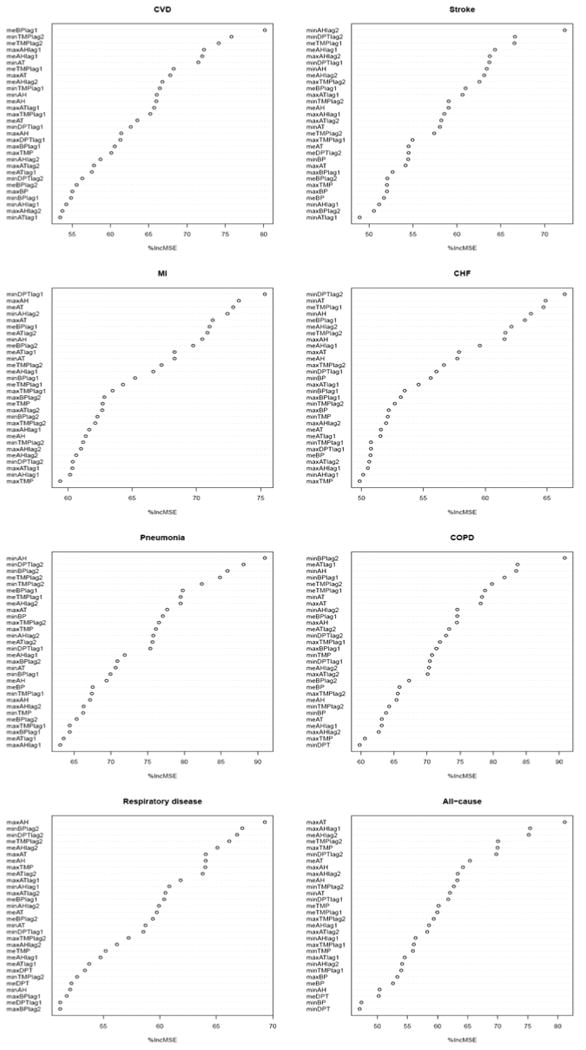
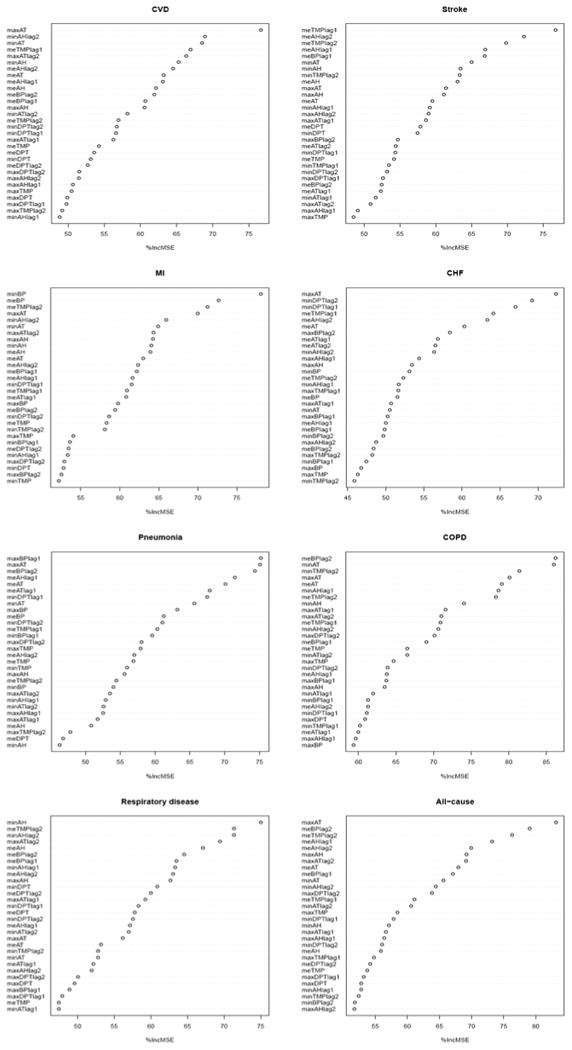
Hot weather increases risk of mortality. Previous studies used different sets of weather variables to characterize heat stress, resulting in variation in heat-mortality associations depending on the metric used. We employed a statistical learning method - random forests - to examine which of the various weather variables had the greatest impact on heat-related mortality. We compiled a summertime daily weather and mortality counts dataset from four U.S. cities (Chicago, IL; Detroit, MI; Philadelphia, PA; and Phoenix, AZ) from 1998 to 2006. A variety of weather variables were ranked in predicting deviation from typical daily all-cause and cause-specific death counts. Ranks of weather variables varied with city and health outcome. Apparent temperature appeared to be the most important predictor of heat-related mortality for all-cause mortality. Absolute humidity was, on average, most frequently selected as one of the top variables for all-cause mortality and seven cause-specific mortality categories. Our analysis affirms that apparent temperature is a reasonable variable for activating heat alerts and warnings, which are commonly based on predictions of total mortality in next few days. Additionally, absolute humidity should be included in future heat-health studies. Finally, random forests can be used to guide the choice of weather variables in heat epidemiology studies.
Keywords: Absolute humidity; Heat; Mortality; Random forests; Temperature; Weather.
Copyright © 2014 Elsevier Inc. All rights reserved.
Figures
References
-
- Barnett AG, Tong S, Clements AC. What measure of temperature is the best predictor of mortality? Environ Research. 2010;110(6):604–611. - PubMed
-
- Breiman L. Random forests. Mach Learn. 2001;45(1):5–32.
-
- Faraway JJ. Extending the Linear Model with R: Generalized Linear, Mixed Effects and Nonparametric Regression Models. Boca Raton, FL: Chapman & Hall/CRC; 2006.
Publication types
MeSH terms
Grants and funding
LinkOut - more resources
Full Text Sources
Other Literature Sources
