


Computer-delivered and web-based interventions to improve depression, anxiety, and psychological well-being of university students: a systematic review and meta-analysis
- PMID: 24836465
- PMCID: PMC4051748
- DOI: 10.2196/jmir.3142
Computer-delivered and web-based interventions to improve depression, anxiety, and psychological well-being of university students: a systematic review and meta-analysis
Abstract
Background: Depression and anxiety are common mental health difficulties experienced by university students and can impair academic and social functioning. Students are limited in seeking help from professionals. As university students are highly connected to digital technologies, Web-based and computer-delivered interventions could be used to improve students' mental health. The effectiveness of these intervention types requires investigation to identify whether these are viable prevention strategies for university students.
Objective: The intent of the study was to systematically review and analyze trials of Web-based and computer-delivered interventions to improve depression, anxiety, psychological distress, and stress in university students.
Methods: Several databases were searched using keywords relating to higher education students, mental health, and eHealth interventions. The eligibility criteria for studies included in the review were: (1) the study aimed to improve symptoms relating to depression, anxiety, psychological distress, and stress, (2) the study involved computer-delivered or Web-based interventions accessed via computer, laptop, or tablet, (3) the study was a randomized controlled trial, and (4) the study was trialed on higher education students. Trials were reviewed and outcome data analyzed through random effects meta-analyses for each outcome and each type of trial arm comparison. Cochrane Collaboration risk of bias tool was used to assess study quality.
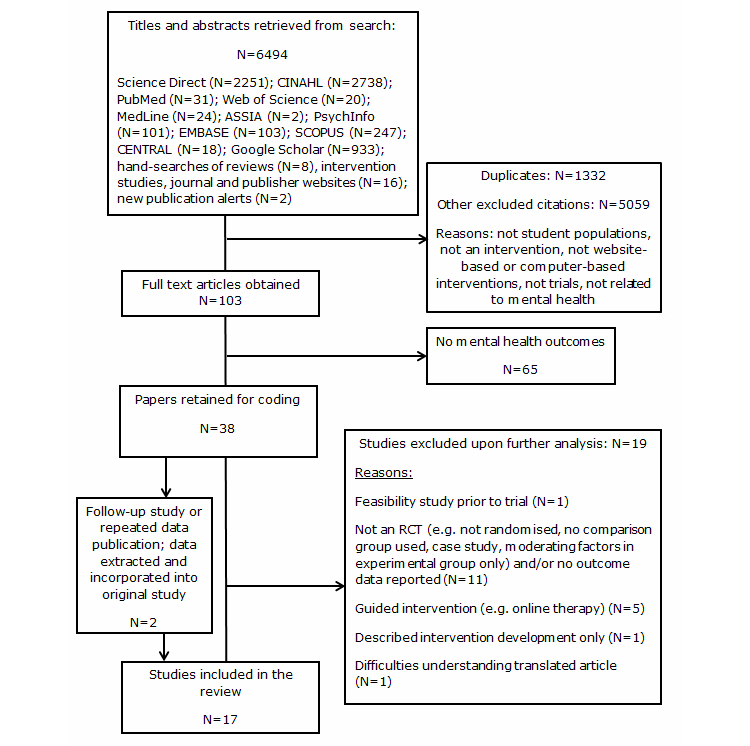
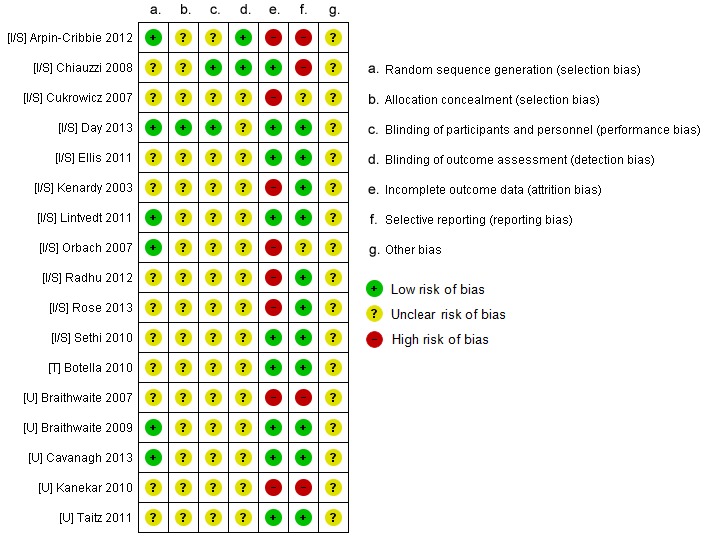
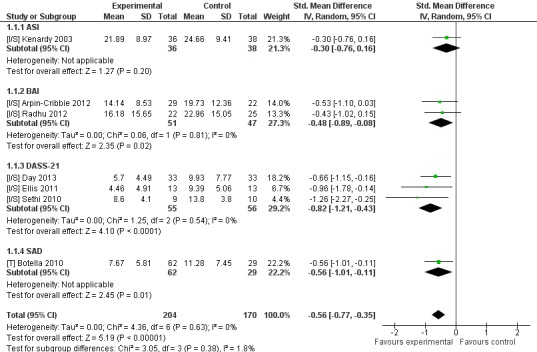
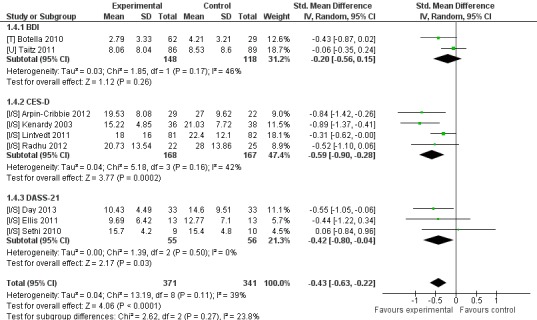
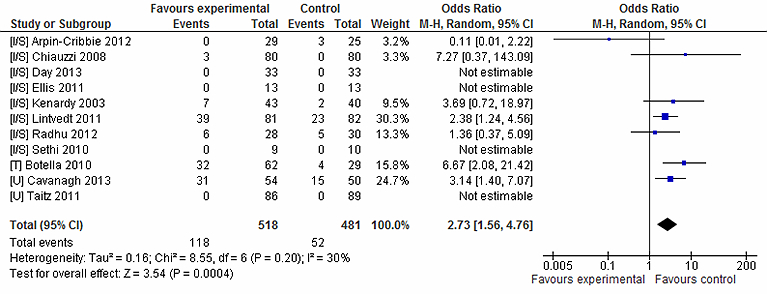
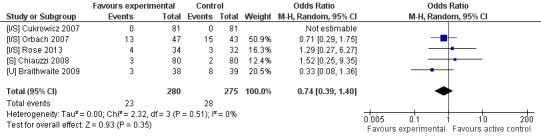
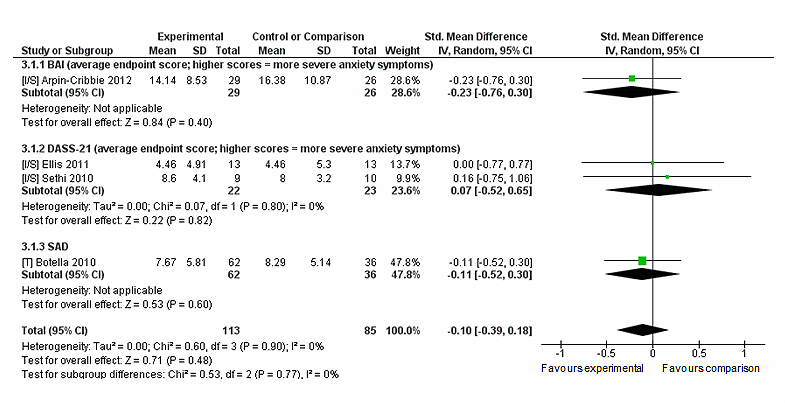
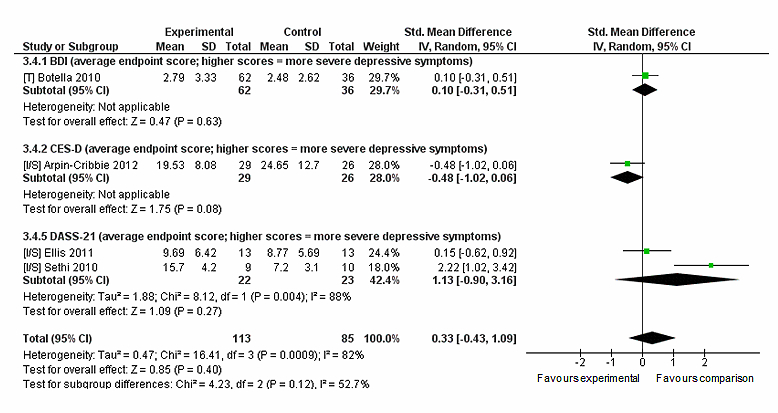
Results: A total of 17 trials were identified, in which seven were the same three interventions on separate samples; 14 reported sufficient information for meta-analysis. The majority (n=13) were website-delivered and nine interventions were based on cognitive behavioral therapy (CBT). A total of 1795 participants were randomized and 1480 analyzed. Risk of bias was considered moderate, as many publications did not sufficiently report their methods and seven explicitly conducted completers' analyses. In comparison to the inactive control, sensitivity meta-analyses supported intervention in improving anxiety (pooled standardized mean difference [SMD] -0.56; 95% CI -0.77 to -0.35, P<.001), depression (pooled SMD -0.43; 95% CI -0.63 to -0.22, P<.001), and stress (pooled SMD -0.73; 95% CI -1.27 to -0.19, P=.008). In comparison to active controls, sensitivity analyses did not support either condition for anxiety (pooled SMD -0.18; 95% CI -0.98 to 0.62, P=.66) or depression (pooled SMD -0.28; 95% CI -0.75 to -0.20, P=.25). In contrast to a comparison intervention, neither condition was supported in sensitivity analyses for anxiety (pooled SMD -0.10; 95% CI -0.39 to 0.18, P=.48) or depression (pooled SMD -0.33; 95% CI -0.43 to 1.09, P=.40).
Conclusions: The findings suggest Web-based and computer-delivered interventions can be effective in improving students' depression, anxiety, and stress outcomes when compared to inactive controls, but some caution is needed when compared to other trial arms and methodological issues were noticeable. Interventions need to be trialed on more heterogeneous student samples and would benefit from user evaluation. Future trials should address methodological considerations to improve reporting of trial quality and address post-intervention skewed data.
Keywords: anxiety; depression; health promotion; intervention; mental health; meta-analysis; students; systematic review; universities.
Conflict of interest statement
Conflicts of Interest: None declared.
Figures
References
-
- Macaskill A. The mental health of university students in the United Kingdom. British Journal of Guidance & Counselling. 2013 Aug;41(4):426–441. doi: 10.1080/03069885.2012.743110. - DOI
-
- Farrer L, Gulliver A, Chan JK, Batterham PJ, Reynolds J, Calear A, Tait R, Bennett K, Griffiths KM. Technology-based interventions for mental health in tertiary students: systematic review. J Med Internet Res. 2013;15(5):e101. doi: 10.2196/jmir.2639. http://www.jmir.org/2013/5/e101/ - DOI - PMC - PubMed
Publication types
MeSH terms
LinkOut - more resources
Full Text Sources
Other Literature Sources
Medical
Research Materials
