


Signaling pathways in cartilage repair
- PMID: 24837833
- PMCID: PMC4057753
- DOI: 10.3390/ijms15058667
Signaling pathways in cartilage repair
Abstract
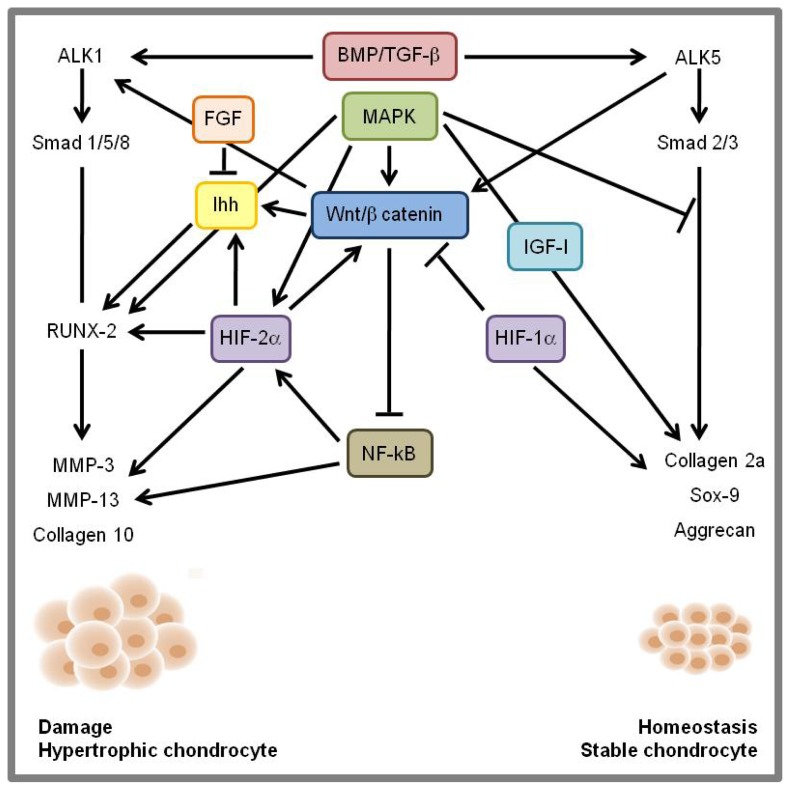
In adult healthy cartilage, chondrocytes are in a quiescent phase characterized by a fine balance between anabolic and catabolic activities. In ageing, degenerative joint diseases and traumatic injuries of cartilage, a loss of homeostatic conditions and an up-regulation of catabolic pathways occur. Since cartilage differentiation and maintenance of homeostasis are finely tuned by a complex network of signaling molecules and biophysical factors, shedding light on these mechanisms appears to be extremely relevant for both the identification of pathogenic key factors, as specific therapeutic targets, and the development of biological approaches for cartilage regeneration. This review will focus on the main signaling pathways that can activate cellular and molecular processes, regulating the functional behavior of cartilage in both physiological and pathological conditions. These networks may be relevant in the crosstalk among joint compartments and increased knowledge in this field may lead to the development of more effective strategies for inducing cartilage repair.
Figures
References
-
- Poole A.R., Kojima T., Yasuda T., Mwale F., Kobayashi M., Laverty S. Composition and structure of articular cartilage: A template for tissue repair. Clin. Orthop. Relat. Res. 2001;391:S26–S33. - PubMed
-
- Goldring M.B. Osteoarthritis and cartilage: The role of cytokines. Curr. Rheumatol. Rep. 2000;2:459–465. - PubMed
-
- Melchiorri C., Meliconi R., Frizziero L., Silvestri T., Pulsatelli L., Mazzetti I., Borzi R.M., Uguccioni M., Facchini A. Enhanced and coordinated in vivo expression of inflammatory cytokines and nitric oxide synthase by chondrocytes from patients with osteoarthritis. Arthritis Rheum. 1998;41:2165–2174. - PubMed
Publication types
MeSH terms
Substances
LinkOut - more resources
Full Text Sources
Other Literature Sources
