


Immunomodulatory properties of HLA-G in infectious diseases
- PMID: 24839609
- PMCID: PMC4009271
- DOI: 10.1155/2014/298569
Immunomodulatory properties of HLA-G in infectious diseases
Abstract
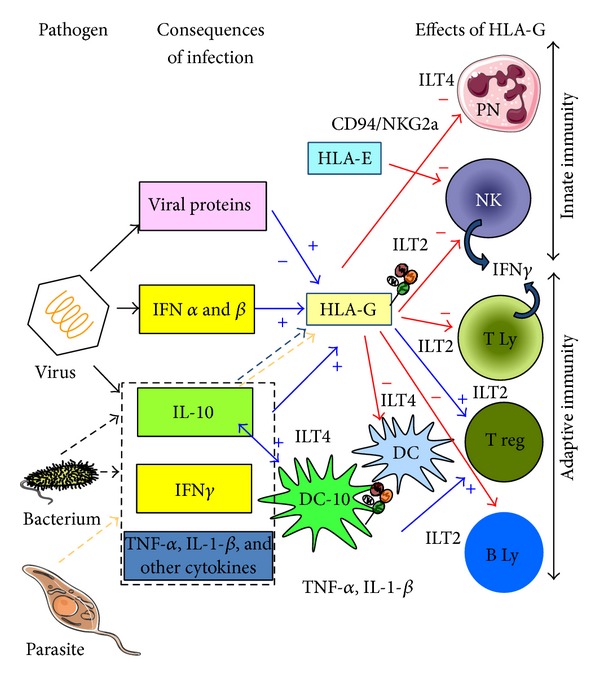
HLA-G is a nonclassical major histocompatibility complex molecule first described at the maternal-fetal interface, on extravillous cytotrophoblasts. Its expression is restricted to some tissues in normal conditions but increases strongly in pathological conditions. The expression of this molecule has been studied in detail in cancers and is now also beginning to be described in infectious diseases. The relevance of studies on HLA-G expression lies in the well known inhibitory effect of this molecule on all cell types involved in innate and adaptive immunity, favoring escape from immune control. In this review, we summarize the features of HLA-G expression by type of infections (i.e, bacterial, viral, or parasitic) detailing the state of knowledge for each pathogenic agent. The polymorphism, the interference of viral proteins with HLA-G intracellular trafficking, and various cytokines have been described to modulate HLA-G expression during infections. We also discuss the cellular source of HLA-G, according to the type of infection and the potential role of HLA-G. New therapeutic approaches based on synthetic HLA-G-derived proteins or antibodies are emerging in mouse models of cancer or transplantation, and these new therapeutic tools may eventually prove useful for the treatment of infectious diseases.
Figures
References
-
- Mizuno S, Trapani JA, Koller BH, Dupont B, Yang SY. Isolation and nucleotide sequence of a cDNA clone encoding a novel HLA class I gene. Journal of Immunology. 1988;140(11):4024–4030. - PubMed
-
- Kirszenbaum M, Moreau P, Gluckman E, Dausset J, Carosella E. An alternatively spliced form of HLA-G mRNA in human trophoblasts and evidence for the presence of HLA-G transcript in adult lymphocytes. Proceedings of the National Academy of Sciences of the United States of America. 1994;91(10):4209–4213. - PMC - PubMed
Publication types
MeSH terms
Substances
LinkOut - more resources
Full Text Sources
Other Literature Sources
Medical
Research Materials
