


Small-molecule SMAC mimetics as new cancer therapeutics
- PMID: 24841289
- PMCID: PMC4247261
- DOI: 10.1016/j.pharmthera.2014.05.007
Small-molecule SMAC mimetics as new cancer therapeutics
Abstract
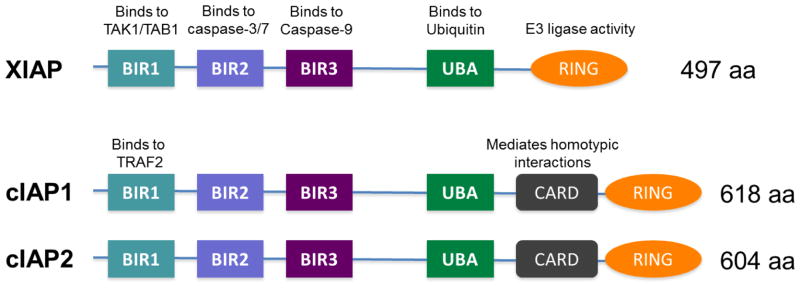
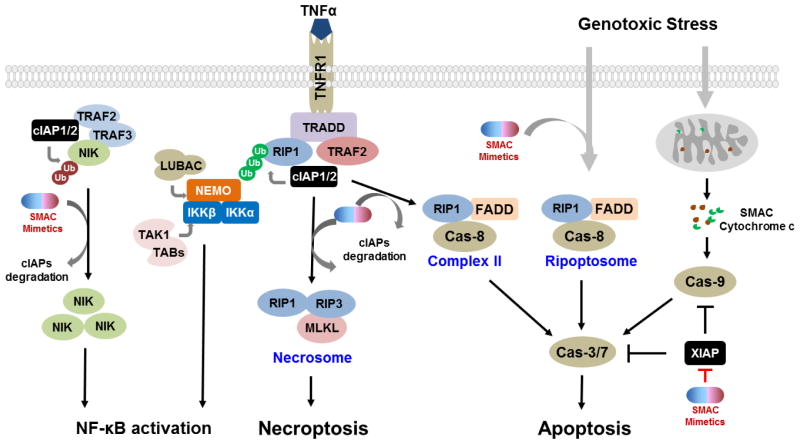
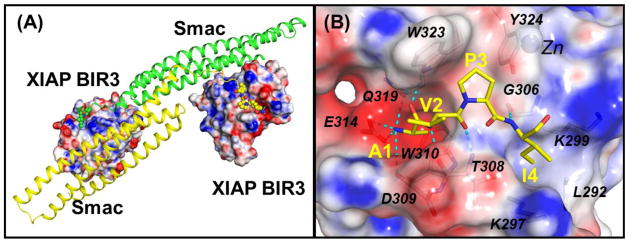
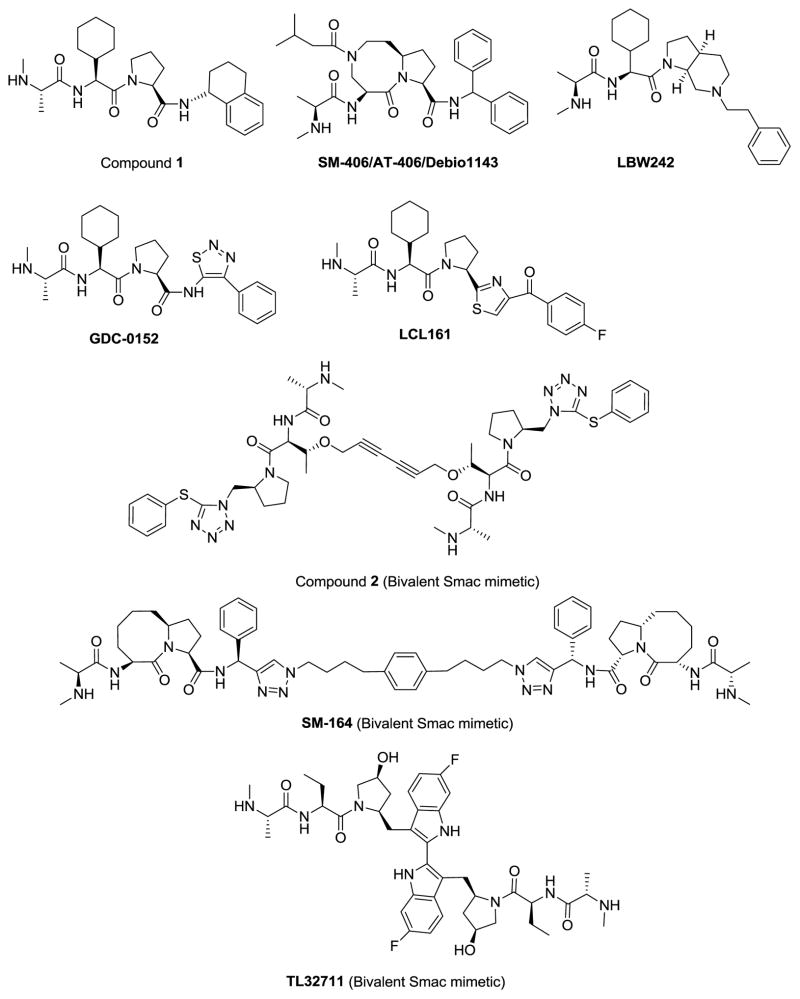
Apoptosis is a tightly regulated cellular process and faulty regulation of apoptosis is a hallmark of human cancers. Targeting key apoptosis regulators with the goal to restore apoptosis in tumor cells has been pursued as a new cancer therapeutic strategy. XIAP, cIAP1, and cIAP2, members of inhibitor of apoptosis (IAP) proteins, are critical regulators of cell death and survival and are attractive targets for new cancer therapy. The SMAC/DIABLO protein is an endogenous antagonist of XIAP, cIAP1, and cIAP2. In the last decade, intense research efforts have resulted in the design and development of several small-molecule SMAC mimetics now in clinical trials for cancer treatment. In this review, we will discuss the roles of XIAP, cIAP1, and cIAP2 in regulation of cell death and survival, and the design and development of small-molecule SMAC mimetics as novel cancer treatments.
Keywords: Apoptosis; Inhibitors; SMAC mimetics.
Copyright © 2014 Elsevier Inc. All rights reserved.
Conflict of interest statement
Figures
References
-
- Lowe SW, Lin AW. Apoptosis in cancer. Carcinogenesis. 2000;21(3):485–95. - PubMed
-
- Nicholson DW. From bench to clinic with apoptosis-based therapeutic agents. Nature. 2000;407(6805):810–6. - PubMed
-
- Reed JC. Apoptosis-based therapies. Nat Rev Drug Discov. 2002;1(2):111–21. - PubMed
-
- Hanahan D, Weinberg RA. Hallmarks of cancer: the next generation. Cell. 2011;144(5):646–74. - PubMed
Publication types
MeSH terms
Substances
Grants and funding
LinkOut - more resources
Full Text Sources
Other Literature Sources
Molecular Biology Databases
Research Materials
Miscellaneous
