


Expression of programmed death ligand 1 (PD-L1) is associated with poor prognosis in human breast cancer
- PMID: 24842267
- PMCID: PMC4180714
- DOI: 10.1007/s10549-014-2988-5
Expression of programmed death ligand 1 (PD-L1) is associated with poor prognosis in human breast cancer
Abstract
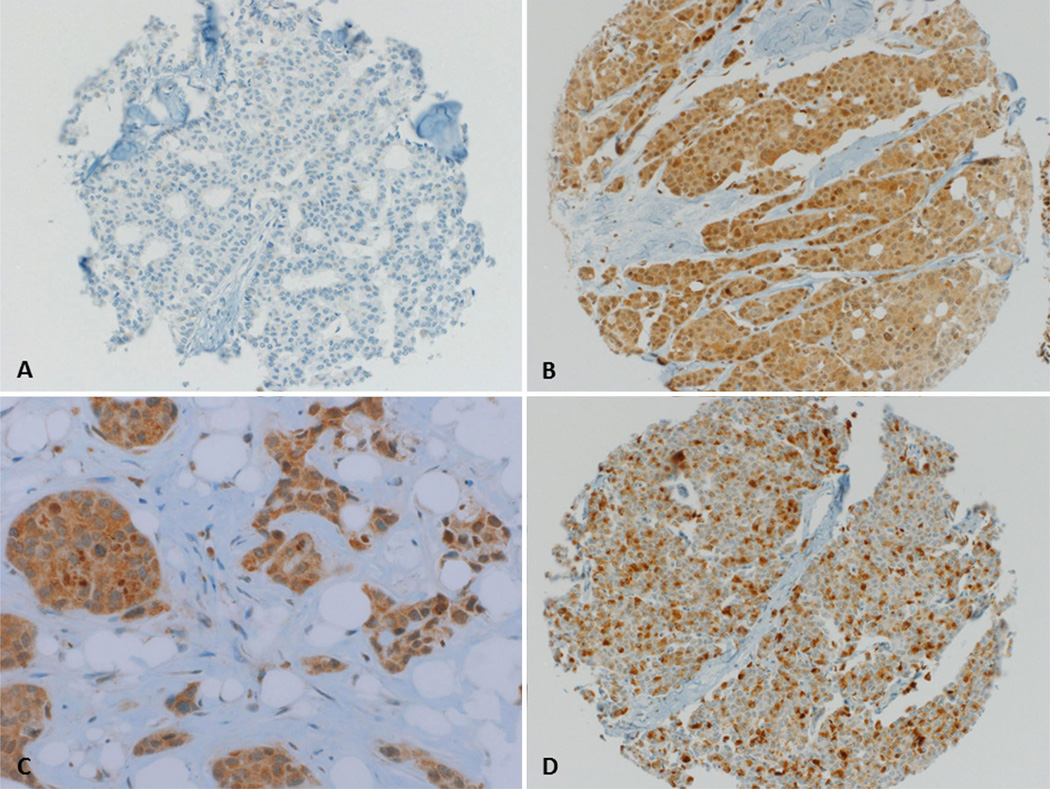
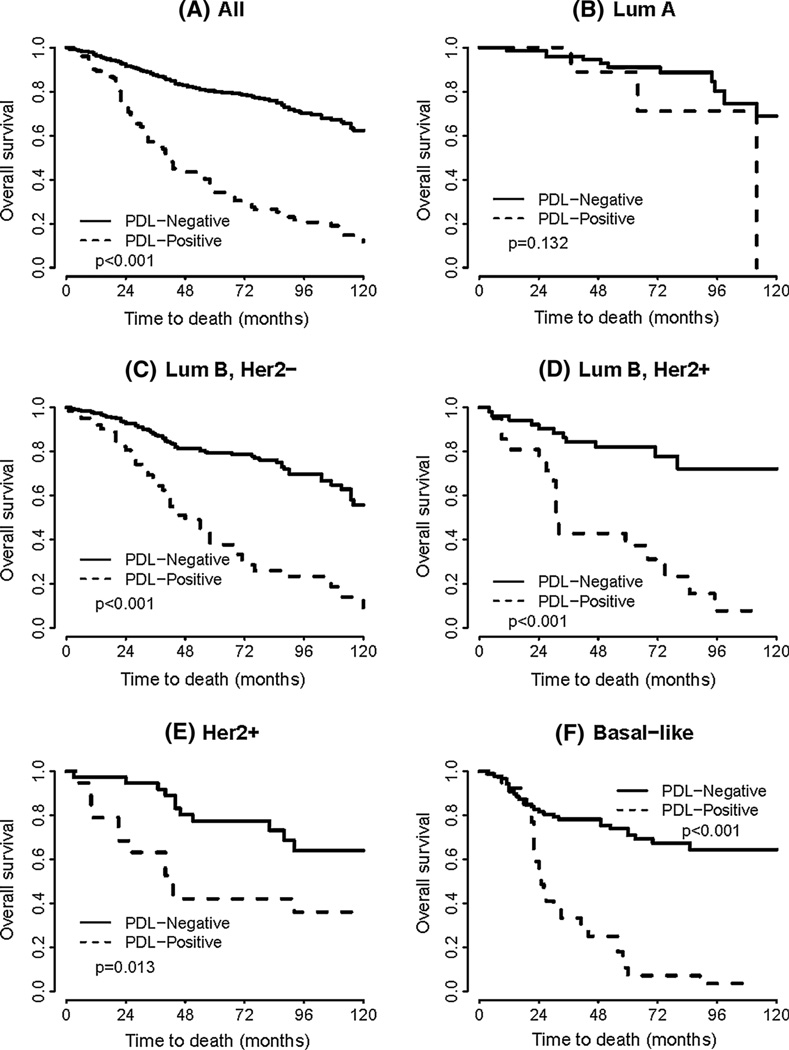
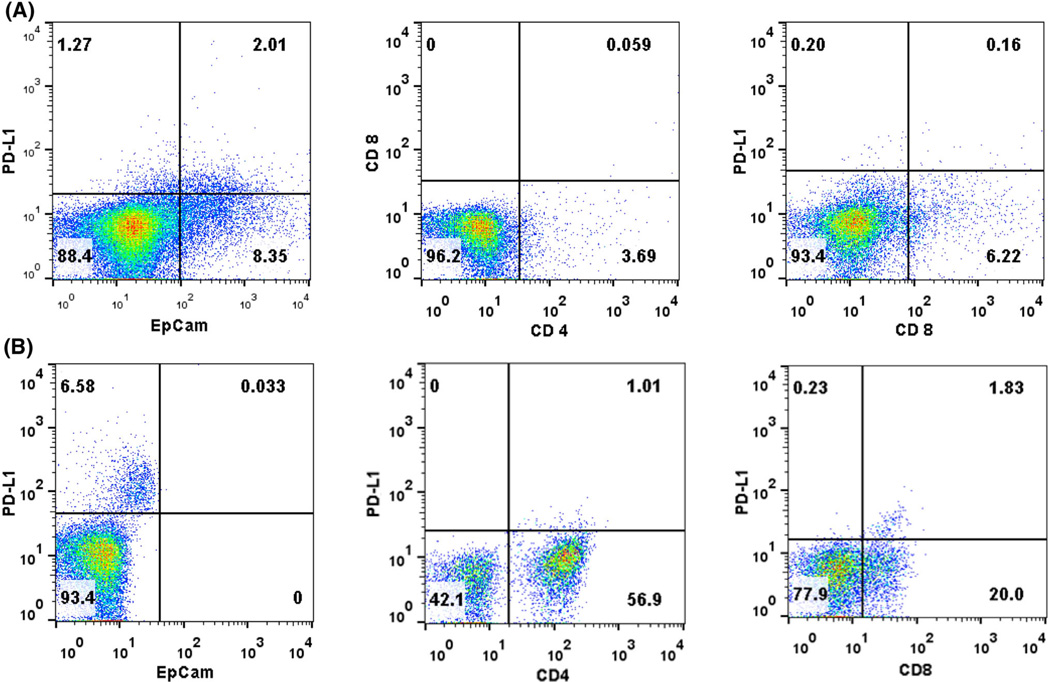
Recent studies in multiple epithelial cancers have shown that the inhibitory receptor programmed cell death 1 (PD-1) is expressed on tumor-infiltrating lymphocytes and/or programmed death ligand 1 (PD-L1) is expressed on tumor cells, suggesting that antitumor immunity may be modulated by the PD-1/PD-L1 signaling pathway. In addition, phase 1 clinical trials with monoclonal antibodies targeting PD-1 or PD-L1 have shown promising results in several human cancers. The purpose of this study was to investigate the impact of PD-L1 expression in human breast cancer specimens. We conducted an immunohistochemistry study using a tissue microarray encompassing 650 evaluable formalin-fixed breast cancer cases with detailed clinical annotation and outcomes data. PD-L1 was expressed in 152 (23.4 %) of the 650 breast cancer specimens. Expression was significantly associated with age, tumor size, AJCC primary tumor classification, tumor grade, lymph node status, absence of ER expression, and high Ki-67 expression. In univariate analysis, PD-L1 expression was associated with a significantly worse OS. In multivariate analysis, PD-L1 expression remained an independent negative prognostic factor for OS. In subset analyses, expression of PD-L1 was associated with significantly worse OS in the luminal B HER2(-) subtype, the luminal B HER2(+) subtype, the HER2 subtype, and the basal-like subtype. This is the first study to demonstrate that PD-L1 expression is an independent negative prognostic factor in human breast cancer. This finding has important implications for the application of antibody therapies targeting the PD-1/PD-L1 signaling pathway in this disease.
Conflict of interest statement
Figures
Comment in
-
Author's response to "Letter to the editor: unvalidated antibodies and misleading results".Breast Cancer Res Treat. 2014 Sep;147(2):459-62. doi: 10.1007/s10549-014-3064-x. Breast Cancer Res Treat. 2014. PMID: 25082517 No abstract available.
-
Unvalidated antibodies and misleading results.Breast Cancer Res Treat. 2014 Sep;147(2):457-8. doi: 10.1007/s10549-014-3061-0. Epub 2014 Aug 3. Breast Cancer Res Treat. 2014. PMID: 25086631 Free PMC article. No abstract available.
References
-
- Dermime S, et al. Vaccine and antibody-directed T cell tumour immunotherapy. Biochim Biophys Acta. 2004;1704(1):11–35. - PubMed
-
- Mueller DL, Jenkins MK, Schwartz RH. Clonal expansion versus functional clonal inactivation: a costimulatory signalling pathway determines the outcome of T cell antigen receptor occupancy. Annu Rev Immunol. 1989;7:445–480. - PubMed
-
- Liang SC, et al. Regulation of PD-1, PD-L1, and PD-L2 expression during normal and autoimmune responses. Eur J Immunol. 2003;33(10):2706–2716. - PubMed
-
- Probst HC, et al. Resting dendritic cells induce peripheral CD8 + T cell tolerance through PD-1 and CTLA-4. Nat Immunol. 2005;6(3):280–286. - PubMed
Publication types
MeSH terms
Substances
Grants and funding
LinkOut - more resources
Full Text Sources
Other Literature Sources
Medical
Research Materials
Miscellaneous
