


Role of Fc-mediated antibody function in protective immunity against HIV-1
- PMID: 24843871
- PMCID: PMC3992047
- DOI: 10.1111/imm.12232
Role of Fc-mediated antibody function in protective immunity against HIV-1
Abstract
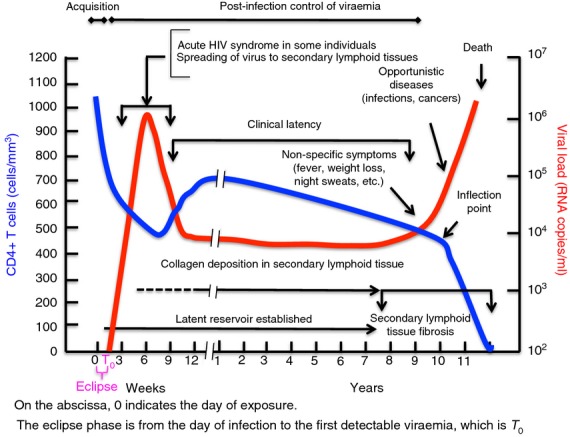
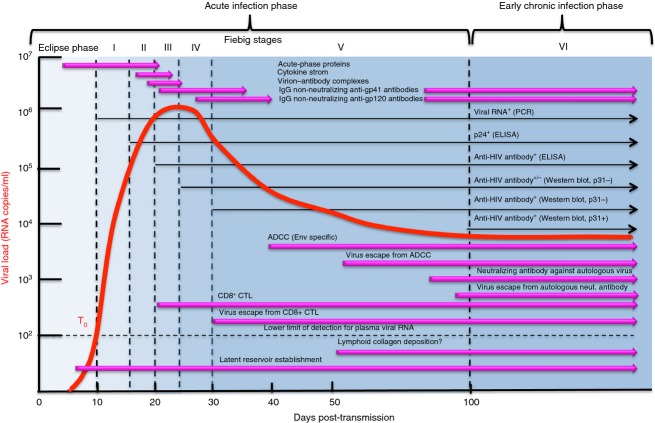
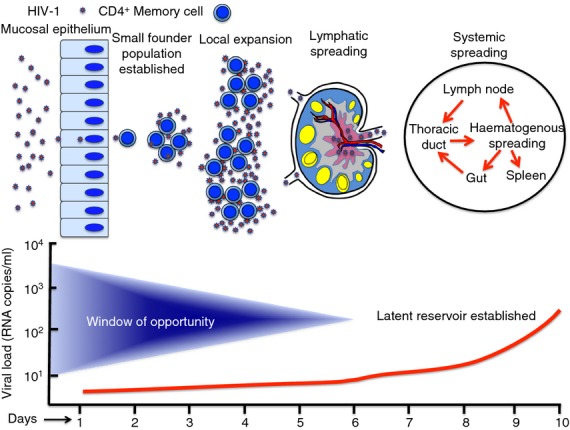
The importance of Fc-mediated effector function in protective immunity to HIV-1 (hereafter referred to simply as HIV) is becoming increasingly apparent. A large of number of studies in natural infection cohorts, spanning the last 26 years, have associated Fc-mediated effector function, particularly antibody-dependent cellular cytotoxicity, with a favourable clinical course. These studies strongly suggest a role for Fc-mediated effector function in the post-infection control of viraemia. More recently, studies in both humans and non-human primates (NHPs) also implicate Fc-mediated effector function in blocking HIV acquisition. Accordingly, this review will discuss the results supporting a role of Fc-mediated effector function in both blocking acquisition and post-infection control of viraemia. Parallel studies in NHPs and humans will be compared for common themes. Context for this discussion will be provided by summarizing the temporal emergence of key host and virological events over the course of an untreated HIV infection framing where, when and how Fc-mediated effector function might be protective. A hypothesis that Fc-mediated effector function protects primarily in the early stages of both acquisition and post-infection control of viraemia will be developed.
Figures
References
-
- Fiebig EW, Wright DJ, Rawal BD, et al. Dynamics of HIV viremia and antibody seroconversion in plasma donors: implications for diagnosis and staging of primary HIV infection. AIDS. 2003;17:1871–9. - PubMed
-
- Finzi D, Hermankova M, Pierson T, et al. Identification of a reservoir for HIV-1 in patients on highly active antiretroviral therapy. Science. 1997;278:1295–300. - PubMed
-
- Chun TW, Carruth L, Finzi D, et al. Quantification of latent tissue reservoirs and total body viral load in HIV-1 infection. Nature. 1997;387:183–8. - PubMed
-
- Tsai CC, Emau P, Follis KE, Beck TW, Benveniste RE, Lifson JD, Morton WR, Bischofberger N. Effectiveness of postinoculation (R)-9-(2-phosphonylmethoxypropyl) adenine treatment for prevention of persistent simian immunodeficiency virus SIVmne infection depends critically on timing of initiation and duration of treatment. J Virol. 1998;72:4265–73. - PMC - PubMed
Publication types
MeSH terms
Substances
Grants and funding
LinkOut - more resources
Full Text Sources
Other Literature Sources
Medical
