


How the nucleus copes with proteotoxic stress
- PMID: 24845679
- PMCID: PMC4207067
- DOI: 10.1016/j.cub.2014.03.033
How the nucleus copes with proteotoxic stress
Abstract
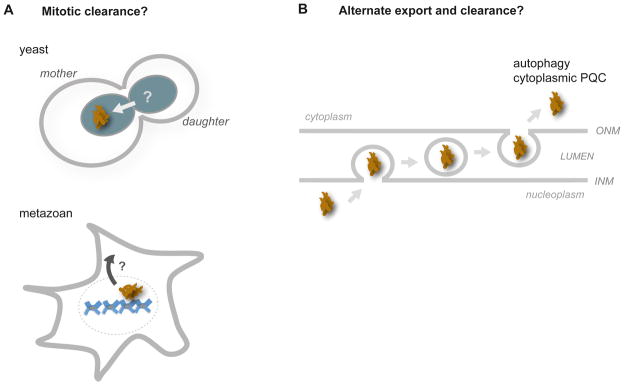
The proper folding of proteins is continuously challenged by intrinsic and extrinsic stresses, and the accumulation of toxic misfolded proteins is associated with many human diseases. Eukaryotic cells have evolved a complex network of protein quality control pathways to protect the proteome, and these pathways are specialized for each subcellular compartment. While many details have been elucidated for how the cytosol and endoplasmic reticulum counteract proteotoxic stress, relatively little is known about the pathways protecting the nucleus from protein misfolding. Proper maintenance of nuclear proteostasis has important implications in preserving genomic integrity, as well as for aging and disease. Here, we offer a conceptual framework for how proteostasis is maintained in this organelle. We define the particular requirements that must be considered for the nucleus to manage proteotoxic stress, summarize the known and implicated pathways of nuclear protein quality control, and identify the unresolved questions in the field.
Copyright © 2014 Elsevier Ltd. All rights reserved.
Figures
References
-
- Hartl FU, Bracher A, Hayer-Hartl M. Molecular chaperones in protein folding and proteostasis. Nature. 2011;475:324–332. - PubMed
-
- Powers ET, Morimoto RI, Dillin A, Kelly JW, Balch WE. Biological and chemical approaches to diseases of proteostasis deficiency. Annual review of biochemistry. 2009;78:959–991. - PubMed
-
- Ron D, Walter P. Signal integration in the endoplasmic reticulum unfolded protein response. Nature reviews Molecular cell biology. 2007;8:519–529. - PubMed
-
- Baker BM, Haynes CM. Mitochondrial protein quality control during biogenesis and aging. Trends in biochemical sciences. 2011;36:254–261. - PubMed
Publication types
MeSH terms
Substances
Grants and funding
LinkOut - more resources
Full Text Sources
Other Literature Sources
Molecular Biology Databases
