


Immune and inflammatory response in pigs during acute influenza caused by H1N1 swine influenza virus
- PMID: 24846450
- PMCID: PMC4173111
- DOI: 10.1007/s00705-014-2116-1
Immune and inflammatory response in pigs during acute influenza caused by H1N1 swine influenza virus
Abstract
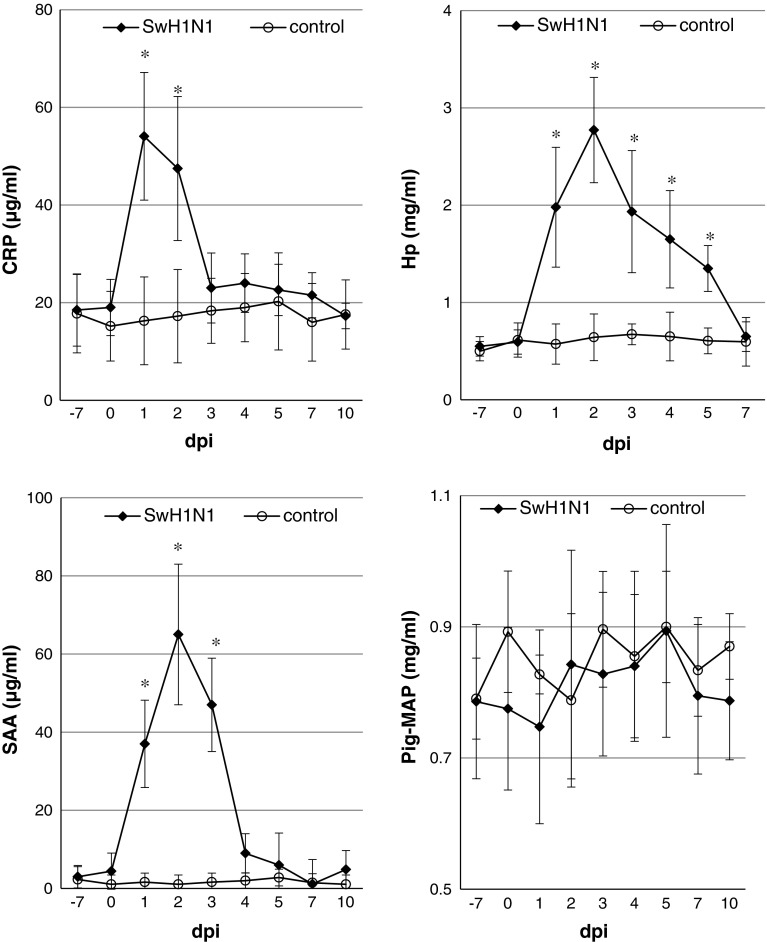
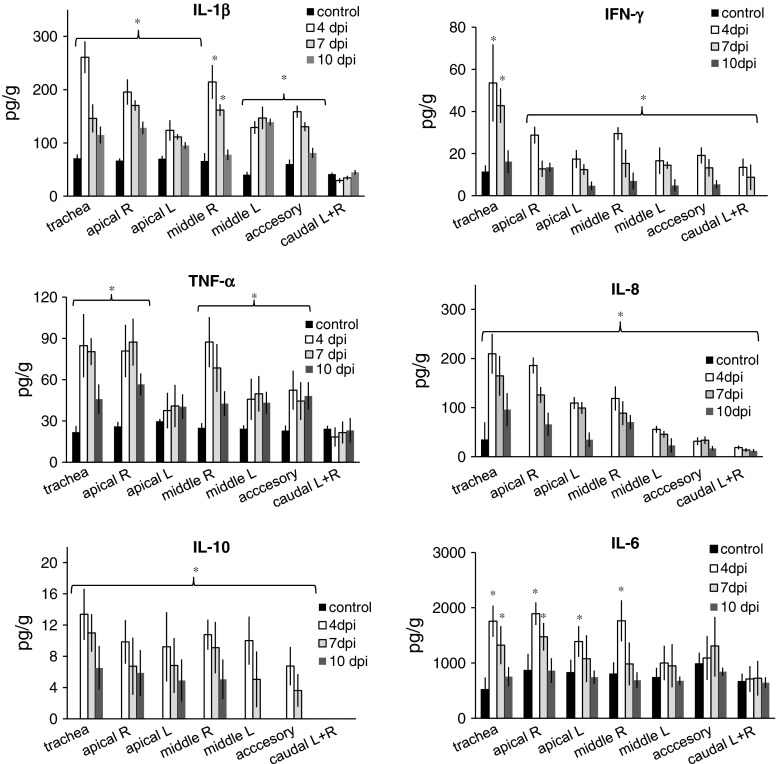
Swine influenza (SI) is an acute respiratory disease of pigs, caused by swine influenza virus (SIV). Little is known about the inflammatory response in the lung during acute SI and its correlation with clinical signs or lung pathology. Moreover, until now there has been a limited amount of data available on the relationship between the concentrations of pro- and anti-inflammatory cytokines in the lungs and the serum concentration of acute-phase proteins (APPs) in SIV-infected pigs. In the present study, the porcine inflammatory and immune responses during acute influenza caused by H1N1 SIV (SwH1N1) were studied. Nine pigs were infected intratracheally, and five served as controls. Antibodies against SIV were measured by haemagglutination inhibition assay, and the influenza-virus-specific T-cell response was measured using a proliferation assay. C-reactive protein (CRP), haptoglobin (Hp), serum amyloid A (SAA), and pig major acute-phase protein (Pig-MAP) the concentrations in serum and concentration of IL-1β, IL-6, IL-8, IL-10, TNF-α and IFN-γ in lung tissues were measured using commercial ELISAs.
Figures
References
-
- Olsen CW, Brown IH, Easterday BC, van Reeth K. Swine influenza. In: Straw BE, Zimmerman JJ, D’Allaire S, Taylor DJ, editors. Diseases of Swine. 9. Ames: State University Press; 2006. pp. 469–482.
-
- Madec F, Kobisch M. Bilan lesionnel des pumons de porcs charucutiers a l’abbotir. Journees de la Recherche Porcine en France. 1982;14:405–412.
Publication types
MeSH terms
Substances
LinkOut - more resources
Full Text Sources
Other Literature Sources
Research Materials
Miscellaneous
