


Mortality among tuberculosis patients with acquired resistance to second-line antituberculosis drugs--United States, 1993-2008
- PMID: 24846639
- PMCID: PMC4784225
- DOI: 10.1093/cid/ciu372
Mortality among tuberculosis patients with acquired resistance to second-line antituberculosis drugs--United States, 1993-2008
Abstract
Background: Resistance to second-line antituberculosis drugs (SLDs) severely compromises treatment options of drug-resistant tuberculosis. We assessed the association between acquisition of resistance (AR) to second-line injectable drugs (SLIs) or fluoroquinolones (FQs) and mortality among tuberculosis cases confirmed by positive culture results with available initial and final drug susceptibility test (DST) results.
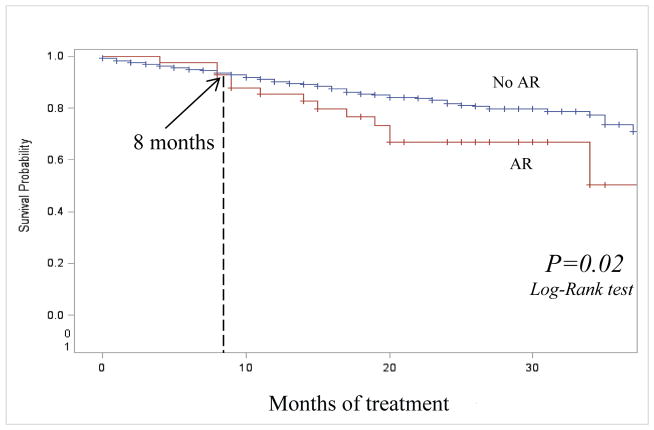
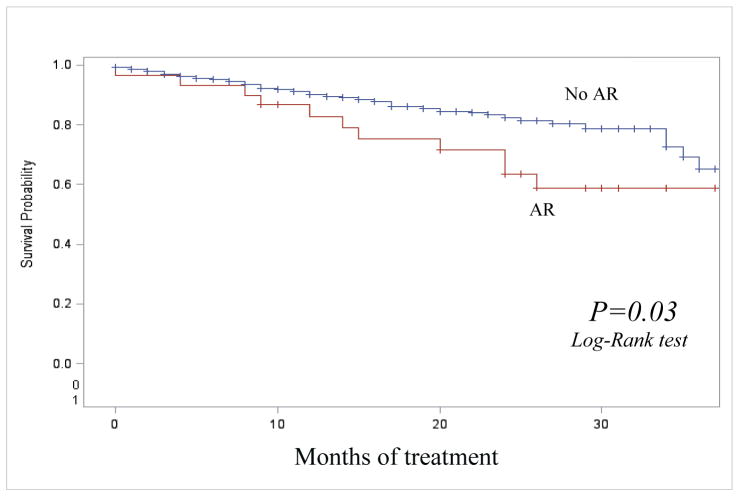
Methods: We analyzed data from the US National Tuberculosis Surveillance System, 1993-2008. Acquired resistance was defined as drug susceptibility at initial DST but resistance to the same drug at final DST. We compared survival with Kaplan-Meier curves and analyzed the association between AR and mortality using a univariate extended Cox proportional hazards model adjusted for age.
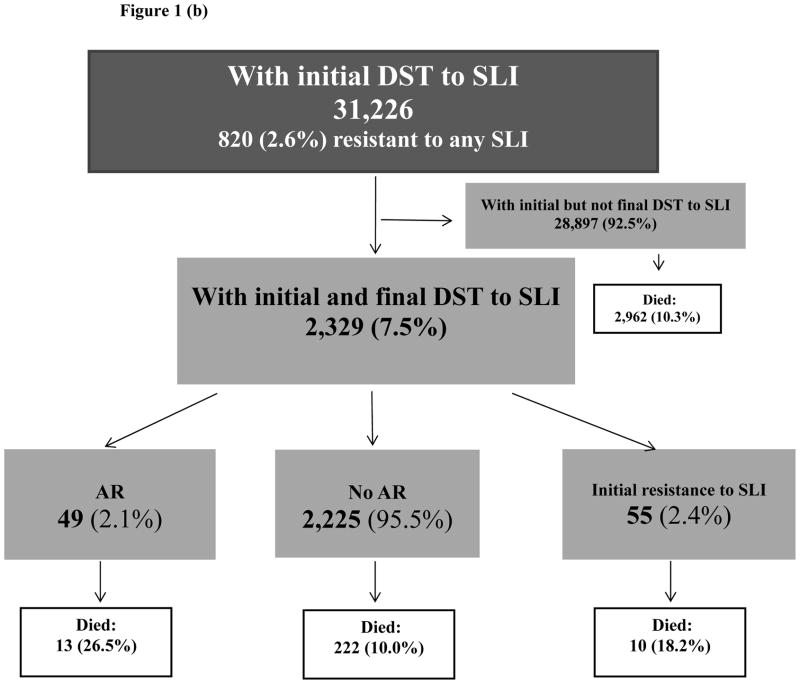
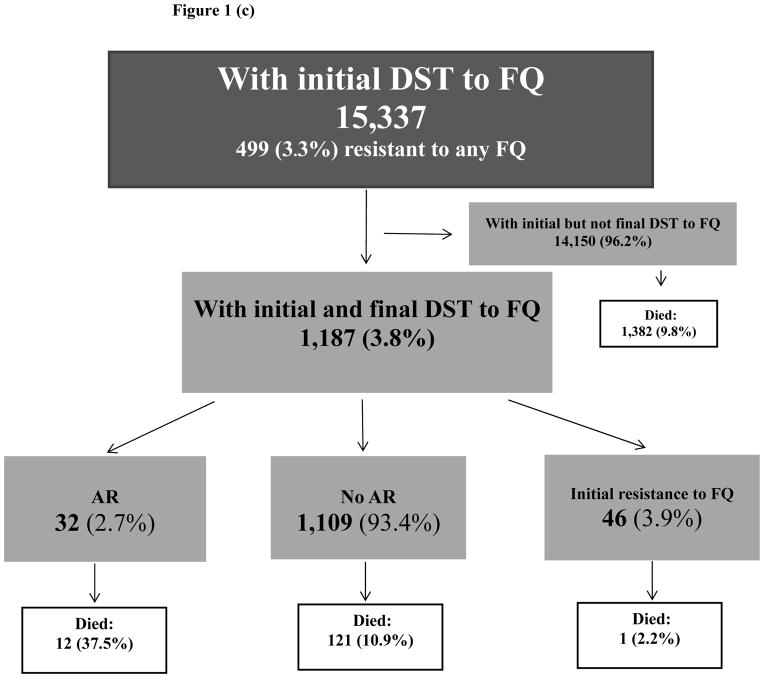
Results: Of 2329 cases with both initial and final DSTs to SLIs, 49 (2.1%) acquired resistance; 13 of 49 (26.5%) had treatment terminated by death compared with 222 (10.0%) of those without AR to SLIs (P < .001). Of 1187 cases with both initial and final DSTs to FQs, 32 (2.8%) acquired resistance; 12 of 32 (37.5%) had treatment terminated by death compared with 121 (10.9%) of those without AR to FQs (P = .001). Controlling for age, mortality was significantly greater among cases with AR to SLDs than among cases without AR (adjusted hazard ratio [aHR] for SLIs: 2.8; 95% confidence interval [CI],1.4-5.4; aHR for FQ: 1.9; 95% CI, 1.0-3.5). Multidrug-resistant tuberculosis at treatment initiation, positive human immunodeficiency virus status, and extrapulmonary disease were also significantly associated with mortality.
Conclusions: Mortality was significantly greater among tuberculosis cases with AR to SLDs. Providers should consider AR to SLDs early in treatment, monitor DST results, and avoid premature deaths.
Keywords: acquired drug resistance; tuberculosis.
Published by Oxford University Press on behalf of the Infectious Diseases Society of America 2014. This work is written by (a) US Government employee(s) and is in the public domain in the US.
Figures
References
-
- World Health Organization. Global Tuberculosis Control 2013. Geneva, Switzerland: WHO; 2013. Available at http://www.who.int/tb/publications/global_report/en/
-
- Caminero J. Multidrug-resistant tuberculosis: epidemiology, risk factors and case finding. Int J Tuberc Lung Dis. 2010 Apr;14(4):382–90. - PubMed
-
- Monedero I, Caminero J. Management of multidrug-resistant tuberculosis: an update. Ther Adv Respir Dis. 2010 Apr;4(2):117–27. - PubMed
-
- World Health Organization. The Global Plan to Stop TB 2011–2015. Geneva, Switzerland: WHO; 2010. Available at http://www.stoptb.org/assets/documents/global/plan/TB_GlobalPlanToStopTB....
Publication types
MeSH terms
Substances
Grants and funding
LinkOut - more resources
Full Text Sources
Other Literature Sources
Medical
Research Materials
