


Epidemiology of major non-communicable diseases in Ethiopia: a systematic review
- PMID: 24847587
- PMCID: PMC4089066
Epidemiology of major non-communicable diseases in Ethiopia: a systematic review
Abstract
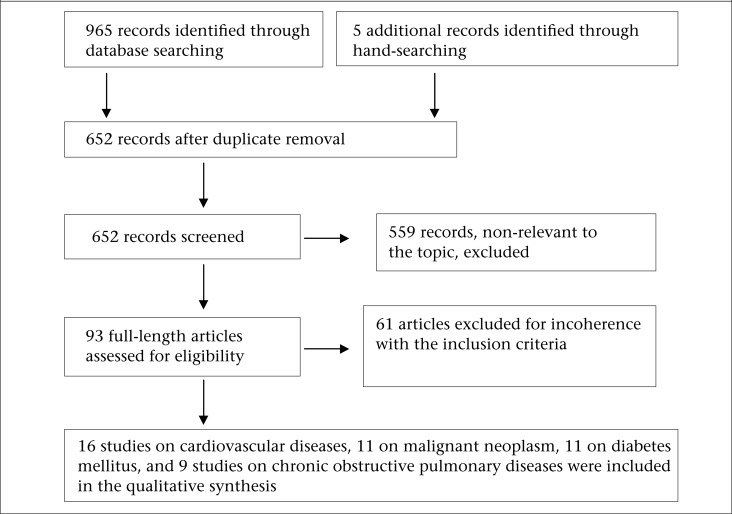
Impact of non-communicable diseases is not well-documented in Ethiopia. We aimed to document the prevalence and mortality associated with four major non-communicable diseases in Ethiopia: cardiovascular disease, cancer, diabetes, and chronic obstructive pulmonary disease. Associated risk factors: hypertension, tobacco-use, harmful use of alcohol, overweight/obesity, and khat-chewing were also studied. Systematic review of peer-reviewed and grey literature between 1960 and 2011 was done using PubMed search engines and local libraries to identify prevalence studies on the four diseases. In total, 32 studies were found, and half of these studies were from Addis Ababa. Two hospital-based studies reviewed the prevalence of cardiovascular disease and found a prevalence of 7.2% and 24%; a hospital-based study reviewed cancer prevalence and found a prevalence of 0.3%; two hospital-based studies reviewed diabetes prevalence and found a prevalence of 0.5% and 1.2%; and two hospital-based studies reviewed prevalence of asthma and found a prevalence of 1% and 3.5%. Few community-based studies were done on the prevalence of diabetes and chronic pulmonary obstructive disease among the population. Several studies reviewed the impact of these diseases on mortality: cardiovascular disease accounts for 24% of deaths in Addis Ababa, cancer causes 10% of deaths in the urban settings and 2% deaths in rural setting, and diabetes causes 5% and chronic obstructive pulmonary disease causes 3% of deaths. Several studies reviewed the impact of these diseases on hospital admissions: cardiovascular disease accounts for 3%-12.6% and found to have increased between 1970s and 2000s; cancer accounts for 1.1%-2.8%, diabetes accounts for 0.5%-1.2%, and chronic obstructive diseases account for 2.7%-4.3% of morbidity. Overall, the major non-communicable diseases and related risk factors are highly prevalent, and evidence-based interventions should be designed.
References
-
- World Health Organization . Global status report on noncommunicable diseases 2010. Geneva: World Health Organization; 2011. p. 162 p.
-
- Alwan A, MacLean DR, Riley LM, d'Espaignet ET, Mathers CD, Stevens GA, et al. Monitoring and surveillance of chronic non-communicable diseases: progress and capacity in high-burden countries. Lancet. 2010;376:1861–8. - PubMed
-
- World Health Organization . Noncommunicable diseases country profiles 2011. Geneva: World Health Organization; 2011. p. 207 p.
-
- Berhane Y, Mariam H, Kloos H, editors. Addis Ababa: Shama Books; 2006. Epidemiology and ecology of health and disease in Ethiopia; pp. 704–47.
-
- Abegunde DO, Mathers CD, Adam T, Ortegon M, Strong K. The burden and costs of chronic diseases in low-income and middle-income countries. Lancet. 2007;370:1929–38. - PubMed
Publication types
MeSH terms
LinkOut - more resources
Full Text Sources
Medical