


Synergy of entry inhibitors with direct-acting antivirals uncovers novel combinations for prevention and treatment of hepatitis C
- PMID: 24848265
- PMCID: PMC4345833
- DOI: 10.1136/gutjnl-2013-306155
Synergy of entry inhibitors with direct-acting antivirals uncovers novel combinations for prevention and treatment of hepatitis C
Abstract
Objective: Although direct-acting antiviral agents (DAAs) have markedly improved the outcome of treatment in chronic HCV infection, there continues to be an unmet medical need for improved therapies in difficult-to-treat patients as well as liver graft infection. Viral entry is a promising target for antiviral therapy.
Design: Aiming to explore the role of entry inhibitors for future clinical development, we investigated the antiviral efficacy and toxicity of entry inhibitors in combination with DAAs or other host-targeting agents (HTAs). Screening a large series of combinations of entry inhibitors with DAAs or other HTAs, we uncovered novel combinations of antivirals for prevention and treatment of HCV infection.
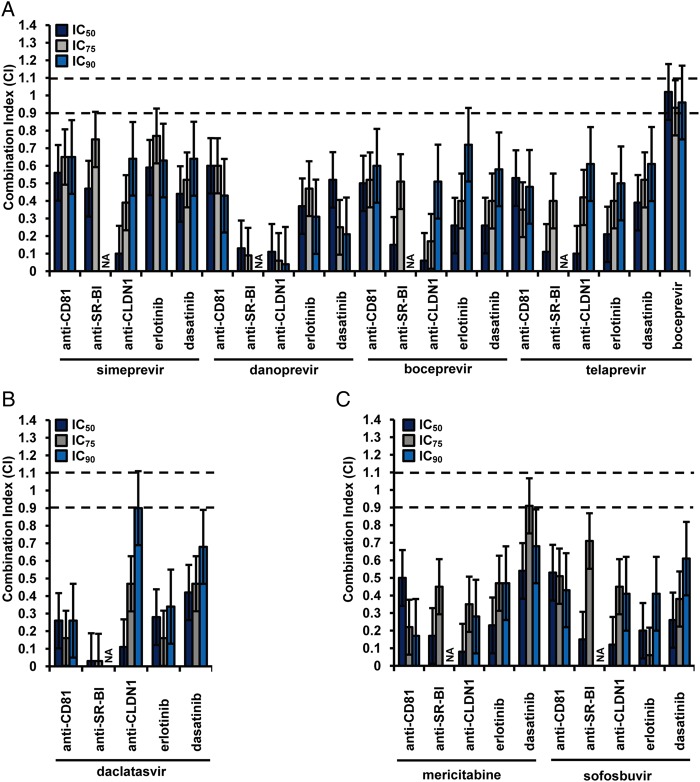
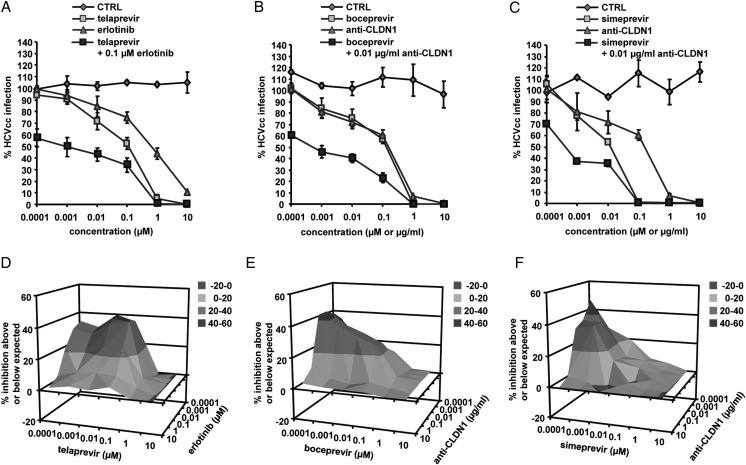
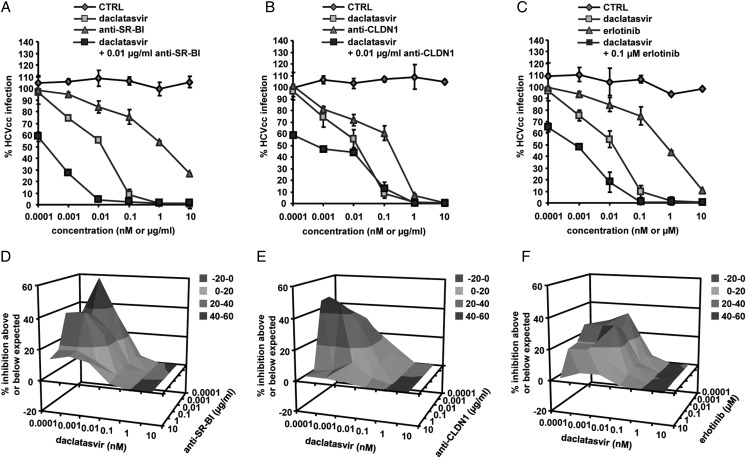
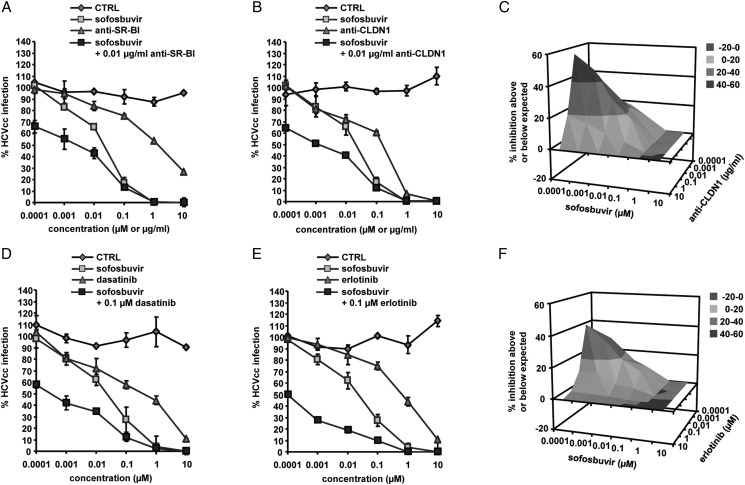
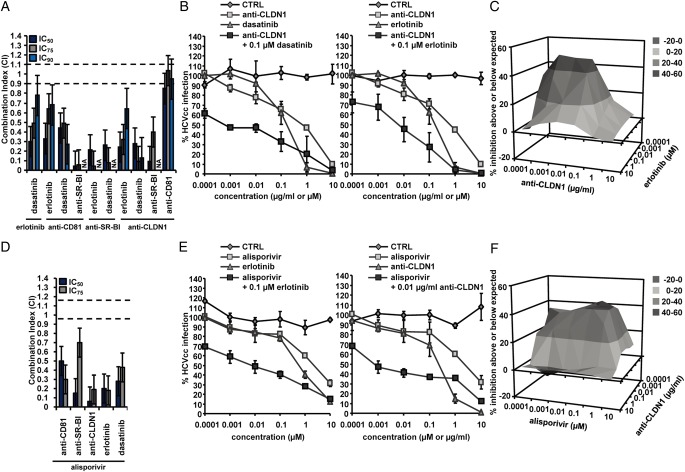
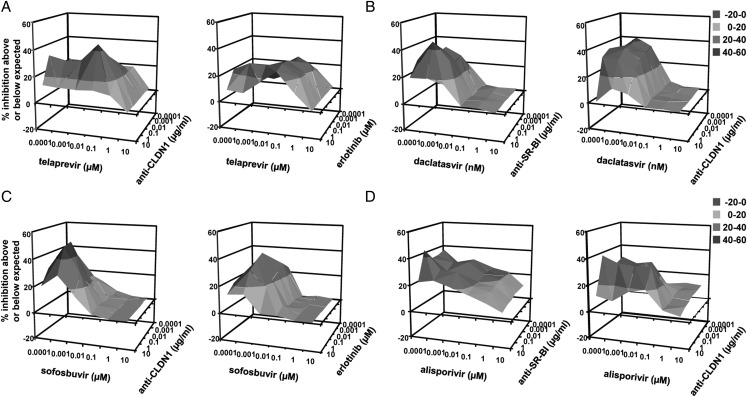
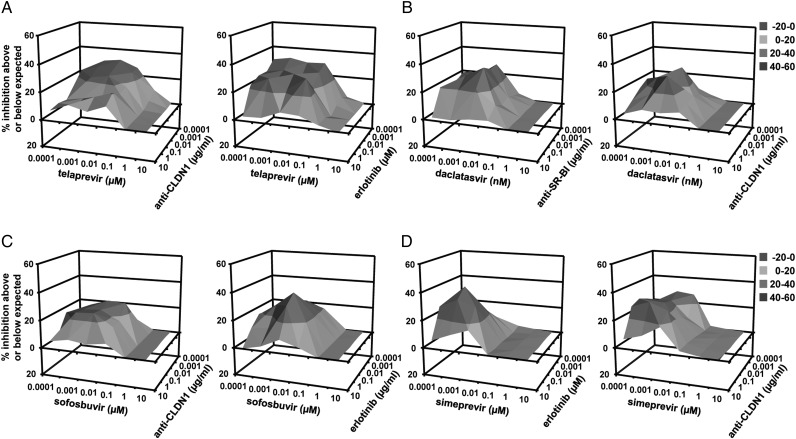
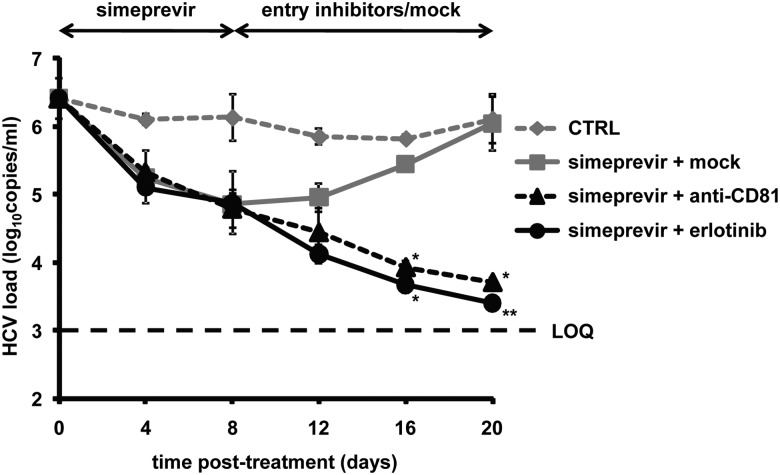
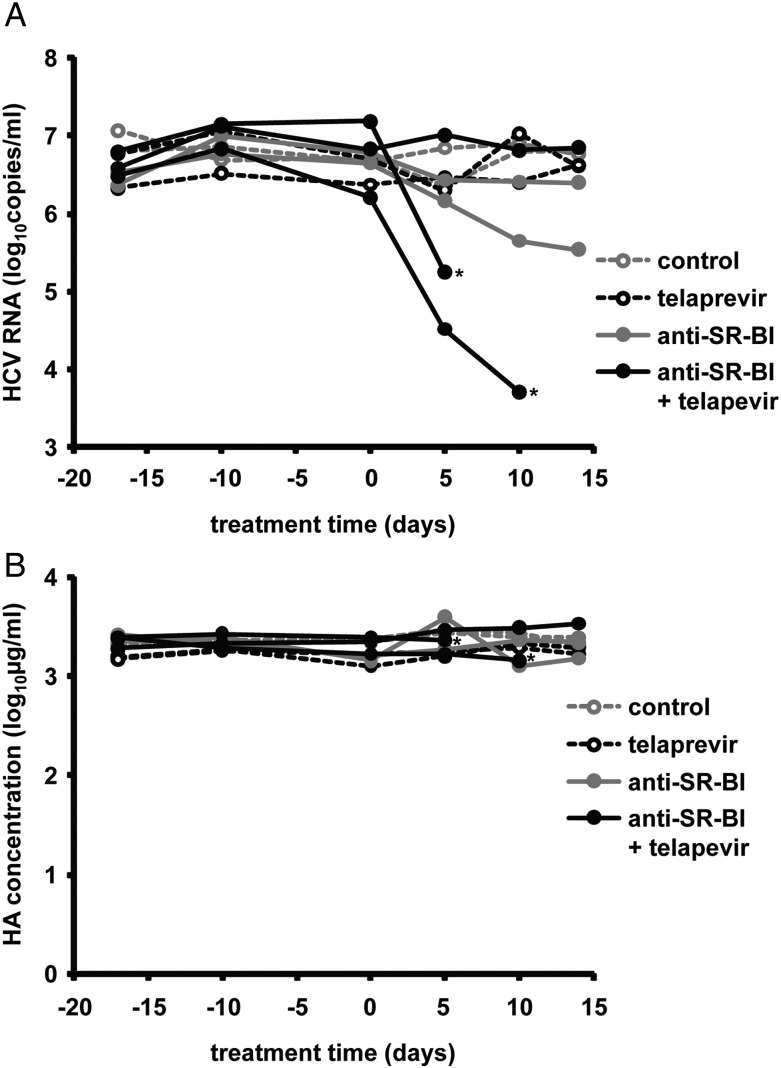
Results: Combinations of DAAs or HTAs and entry inhibitors including CD81-, scavenger receptor class B type I (SR-BI)- or claudin-1 (CLDN1)-specific antibodies or small-molecule inhibitors erlotinib and dasatinib were characterised by a marked and synergistic inhibition of HCV infection over a broad range of concentrations with undetectable toxicity in experimental designs for prevention and treatment both in cell culture models and in human liver-chimeric uPA/SCID mice.
Conclusions: Our results provide a rationale for the development of antiviral strategies combining entry inhibitors with DAAs or HTAs by taking advantage of synergy. The uncovered combinations provide perspectives for efficient strategies to prevent liver graft infection and novel interferon-free regimens.
Keywords: HCV; HEPATITIS C; LIVER.
Published by the BMJ Publishing Group Limited. For permission to use (where not already granted under a licence) please go to http://group.bmj.com/group/rights-licensing/permissions.
Figures
Comment in
-
Viral entry inhibition: too late for hepatitis C, but promising for other viral infections.Gut. 2015 Mar;64(3):362-4. doi: 10.1136/gutjnl-2014-307452. Epub 2014 Aug 6. Gut. 2015. PMID: 25098973 No abstract available.
-
Inhibition of hepatitis C entry: too soon to dismiss while many are still being denied treatment.Gut. 2015 Apr;64(4):690-1. doi: 10.1136/gutjnl-2014-308396. Epub 2014 Oct 6. Gut. 2015. PMID: 25287483 No abstract available.
References
-
- Dabbouseh NM, Jensen DM. Future therapies for chronic hepatitis C. Nat Rev Gastroenterol Hepatol 2013;10:268–76. - PubMed
-
- Sarrazin C, Hezode C, Zeuzem S, et al. Antiviral strategies in hepatitis C virus infection. J Hepatol 2012;56(Suppl 1):S88–100. - PubMed
-
- Chung RT, Baumert TF. Curing chronic hepatitis C—the arc of a medical triumph. N Engl J Med 2014;370:1576–8. - PubMed
-
- Crespo G, Marino Z, Navasa M, et al. Viral hepatitis in liver transplantation. Gastroenterology 2012;142:1373–83 e1. - PubMed
Publication types
MeSH terms
Substances
LinkOut - more resources
Full Text Sources
Other Literature Sources
Medical
Research Materials
Miscellaneous
