


Understanding epidemiological transition in India
- PMID: 24848651
- PMCID: PMC4028906
- DOI: 10.3402/gha.v7.23248
Understanding epidemiological transition in India
Abstract
Background: Omran's theory explains changing disease patterns over time predominantly from infectious to chronic noncommunicable diseases (NCDs). India's epidemiological transition is characterized by dual burden of diseases. Kumar addressed low mortality and high morbidity in Kerala, which seems also to be true for India as a country in the current demographic scenario.
Methods: NSS data (1986-1987, 1995-1996, 2004) and aggregated data on causes of death provided by Registrar General India (RGI) were used to examine the structural changes in morbidity and causes of death. A zero-inflated poisson (ZIP) regression model and a beta-binomial model were used to corroborate the mounting age pattern of morbidity. Measures, namely the 25th and 75th percentiles of age-at-death and modal age-at-death, were used to examine the advances in mortality transition.
Objective: This study addressed the advances in epidemiological transition via exploring the structural changes in pattern of diseases and progress in mortality transition.
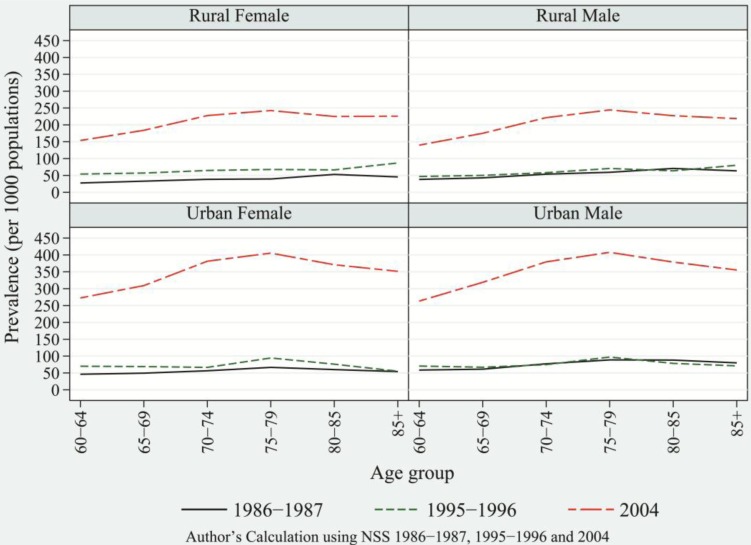
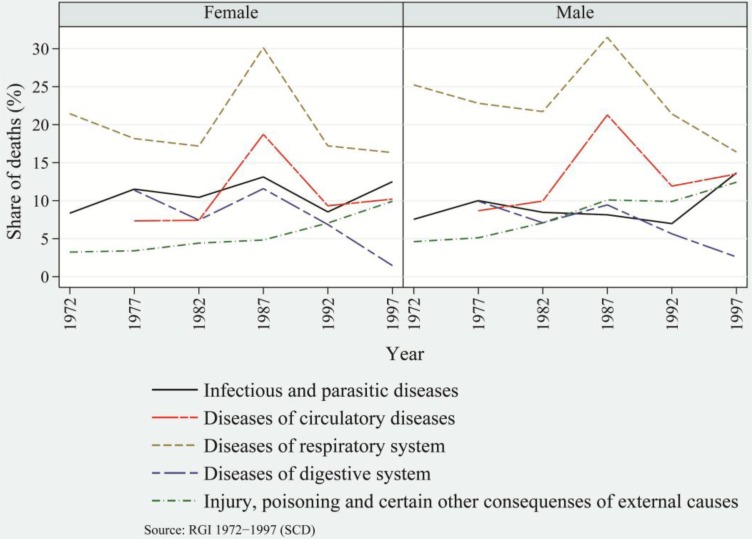
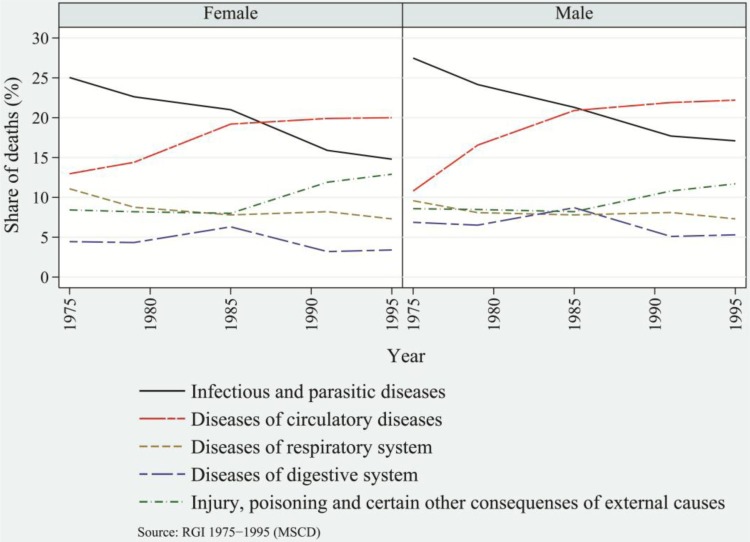
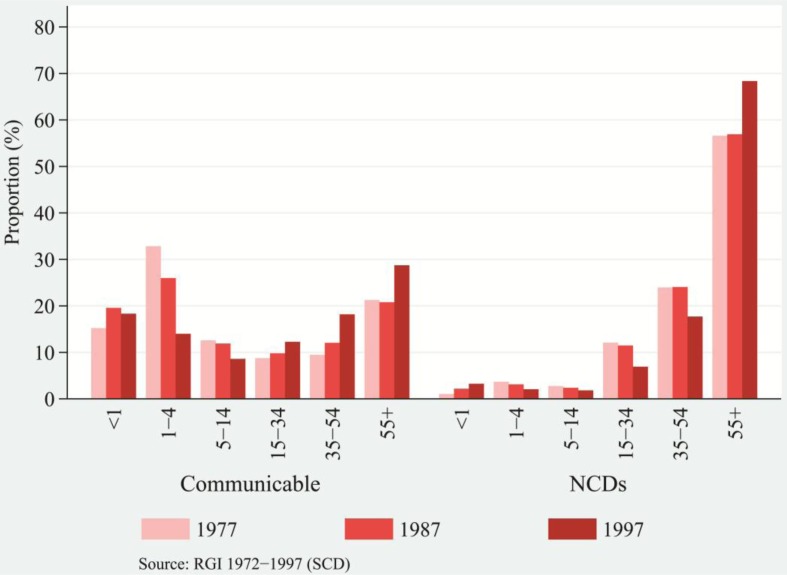
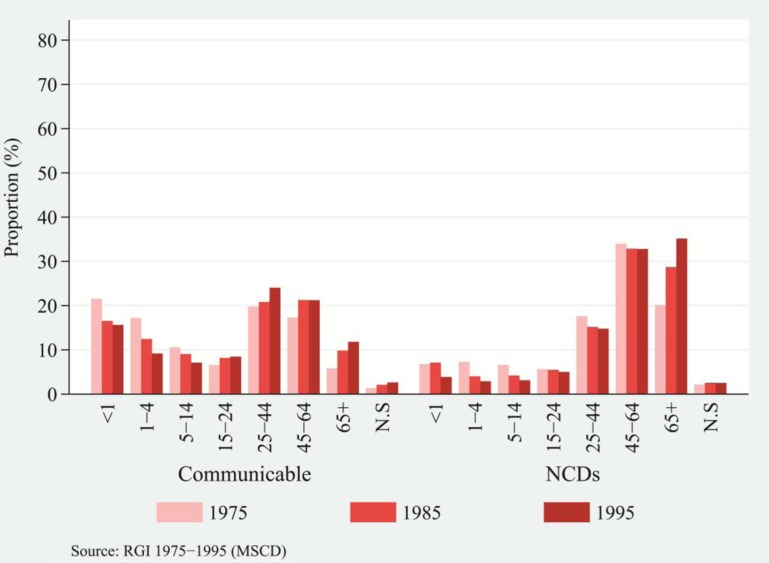
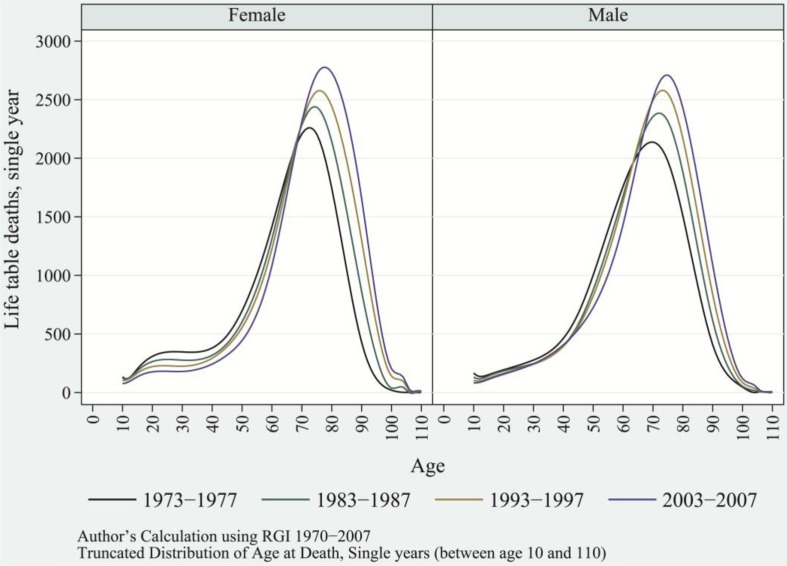
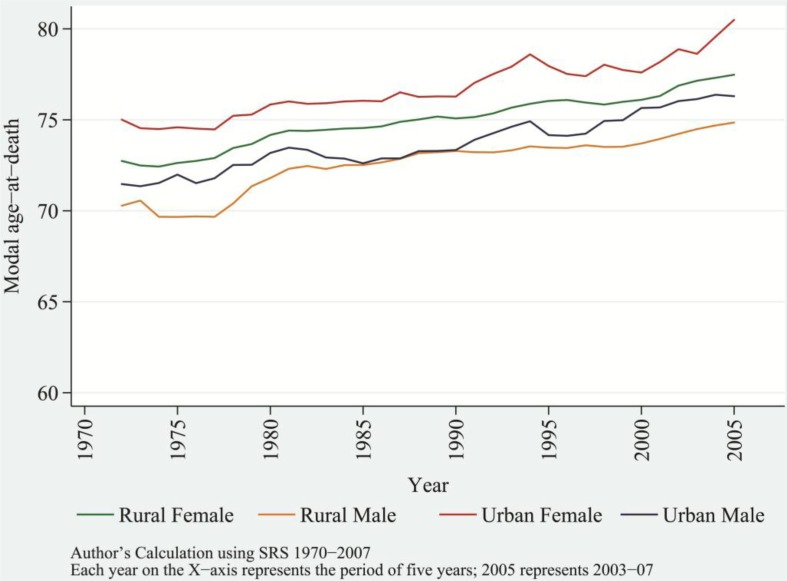
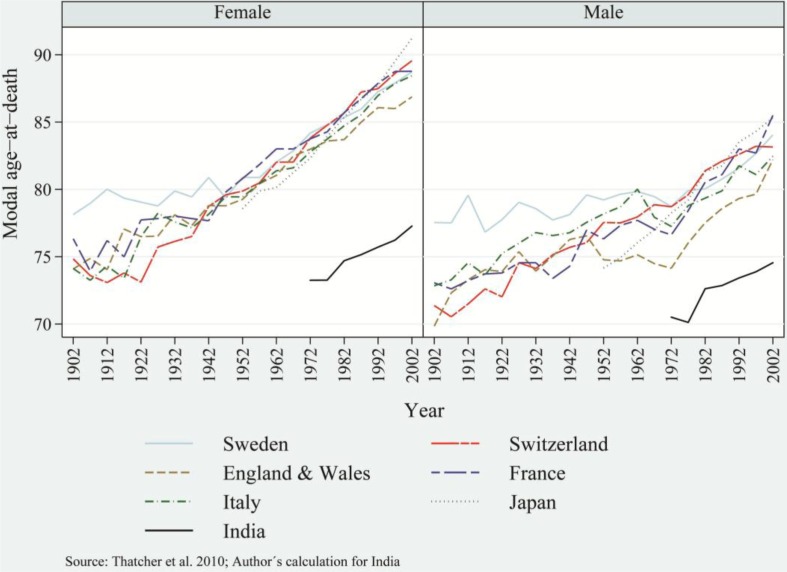
Results: The burden of NCDs has been increasing in old age without replacing the burden of communicable diseases. The manifold rise of chronic diseases in recent decades justifies the death toll and is responsible for transformation in the age pattern of morbidity. Over time, deaths have been concentrated near the modal age-at-death. Modal age-at-death increased linearly by 5 years for females (r(2)=0.9515) and males (r(2)=0.9020). Significant increase in modal age-at-death ascertained the dominance of old age mortality over the childhood/adult age mortality.
Conclusions: India experiences a dual burden of diseases associated with a remarkable transformation in the age pattern of morbidity and mortality, contemporaneous with structural changes in disease patterns. Continued progress in the pattern of diseases and mortality transition, accompanied by a linear rise in ex, unravels a compelling variation in advances found so far in epidemiological transition witnessed by the developed nations, with similar matrices for India.
Keywords: communicable diseases; disease patterns; epidemiological transition; mortality transition; noncommunicable diseases.
Figures
References
-
- Gribble JN, Preston SH. The epidemiological transition: policy and planning implications for developing countries [abstract]. National Research Council. Washington, DC: The National Academies Press; 1993. - PubMed
-
- RAND. Policy and health in Asia: demographic and epidemiological transitions; Available from: http://www.rand.org/content/dam/rand/pubs/research_briefs/RB5036/RB5036.pdf [cited 24 January 2014].
-
- Pool I, Wong LR, Vilquin E. Age structural transitions: challenges for development. Paris: Committee for International Cooperation in National Research in Demography; 2006.
-
- Bhat PNM, Navneetham K. Recent trends in age-specific mortality in India. J Inst Econ Res. 1991;26:49–69. - PubMed
-
- Karkal M. Differentials in mortality by sex. Econ Polit Wkly. 1987;22:1343–7.
MeSH terms
LinkOut - more resources
Full Text Sources
Other Literature Sources
