


Essential evidence for guiding health system priorities and policies: anticipating epidemiological transition in Africa
- PMID: 24848653
- PMCID: PMC4028905
- DOI: 10.3402/gha.v7.23359
Essential evidence for guiding health system priorities and policies: anticipating epidemiological transition in Africa
Abstract
Background: Despite indications that infection-related mortality in sub-Saharan Africa may be decreasing and the burden of non-communicable diseases increasing, the overwhelming reality is that health information systems across most of sub-Saharan Africa remain too weak to track epidemiological transition in a meaningful and effective way.
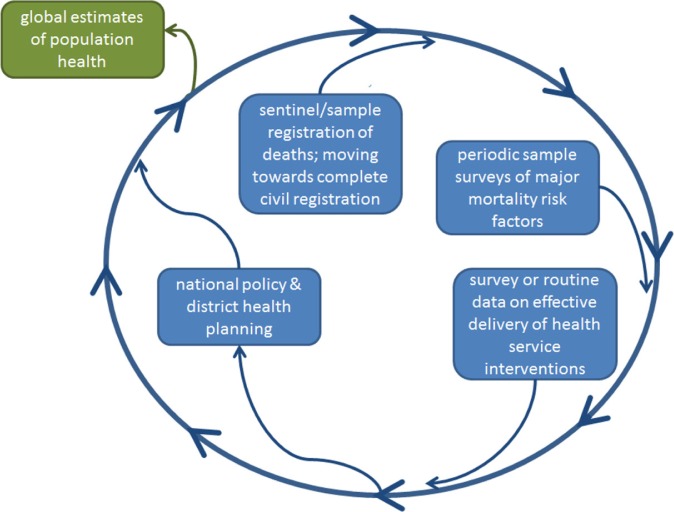
Proposals: We propose a minimum dataset as the basis of a functional health information system in countries where health information is lacking. This would involve continuous monitoring of cause-specific mortality through routine civil registration, regular documentation of exposure to leading risk factors, and monitoring effective coverage of key preventive and curative interventions in the health sector. Consideration must be given as to how these minimum data requirements can be effectively integrated within national health information systems, what methods and tools are needed, and ensuring that ethical and political issues are addressed. A more strategic approach to health information systems in sub-Saharan African countries, along these lines, is essential if epidemiological changes are to be tracked effectively for the benefit of local health planners and policy makers.
Conclusion: African countries have a unique opportunity to capitalize on modern information and communications technology in order to achieve this. Methodological standards need to be established and political momentum fostered so that the African continent's health status can be reliably tracked. This will greatly strengthen the evidence base for health policies and facilitate the effective delivery of services.
Keywords: epidemiological transition; health information; health policy; health services; sub-Saharan Africa.
Figures

References
-
- Gill GV, Mbanya JC, Ramaiya K, Tesfaye S. A Sub-Saharan African perspective of diabetes. Diabetologia. 2009;52:8–16. - PubMed
-
- Mensah G. Epidemiology of stroke and high blood pressure in Africa. Heart. 2008;94:697–705. - PubMed
-
- Jamison DJ, Feachem RG, Makgoba MW, Bos E, Baingana FK, Hofman KJ, et al. Disease and mortality in Sub-Saharan Africa. Washington, DC: World Bank; 2006. pp. 43–58. - PubMed
-
- Boutayeb A. The double burden of communicable and non-communicable diseases in developing countries. Trans R Soc Trop Med Hyg. 2006;100:191–9. - PubMed
MeSH terms
LinkOut - more resources
Full Text Sources
Other Literature Sources
