Comparative Study
. 2014 May 23:4:5013.
doi: 10.1038/srep05013.

Elevated circulating lipasin/betatrophin in human type 2 diabetes and obesity

Affiliations
Comparative Study

Elevated circulating lipasin/betatrophin in human type 2 diabetes and obesity

Zhiyao Fu et al. Sci Rep. .

Abstract

Lipasin (also known as C19ORF80, RIFL, ANGPTL8 and betatrophin) is a newly discovered circulating factor that regulates lipid metabolism and promotes pancreatic β-cell proliferation. Whether circulating levels of lipasin in humans are altered in a) type 2 diabetes; b) obesity and c) the postprandial state, however, is unknown. The current study aimed to compare serum lipasin levels in those who were a) non-diabetic (N=15) or diabetic (BMI- and age-matched; N=14); b) lean or obese (N=53 totally) and c) fasting and 2 hours following a defined meal (N=12). Serum lipasin levels were determined by the enzyme-linked immunosorbent assay. Lipasin levels [mean±SEM] were increased by more than two fold (P<0.001) in the diabetic patients (5.56±0.73 ng/mL) as compared to the control subjects (2.19±0.24 ng/mL). Serum lipasin levels were positively correlated with BMI (rho=0.49, P<0.001), and showed a 35% increase 2 hours following a defined meal (P=0.009). Therefore, lipasin/betatrophin is nutritionally-regulated hepatokine that is increased in human type 2 diabetes and obesity.


Conflict of interest statement

The authors declare no competing financial interests.

Figures

Figure 1
Figure 1. Serum levels of lipasin are elevated in patients with type 2 diabetes.
A) Characterization of the standard curve for the lipasin ELISA kit. B) Serum lipasin levels are elevated in patients with type 2 diabetes. Box plot for lipasin levels in non-diabetic and diabetic subjects. Lipasin ELISA was performed using serum samples from overnight fasted non-diabetic (n = 15) and diabetic subjects (n = 14). Boxes represent the interquartile range between first and third quartiles, and the line (square) inside represents the median (mean). P values were obtained by performing Student t tests. C) Correlation between serum lipasin and fasting glucose levels determined by Spearman's rank correlation. D) The promoter sequence of human lipasin and consensus binding site of ChREBP. The ChREBP consensus site is adapted from ref. .
Figure 2
Figure 2. Serum levels of lipasin are elevated in obesity, and are positively correlated to BMI.
A) Serum lipasin levels are elevated in obesity. Serum lipasin levels were examined using ELISA. Box plot for lipasin levels in lean (BMI < 25) and overweight or obese human subjects (BMI ≥ 25). Lipasin ELISA was performed using serum samples from overnight fasted lean (n = 24) and overweight or obese subjects (n = 29). Boxes represent the interquartile range between first and third quartiles, and the line (square) inside represents the median (mean). P values were obtained by performing Student t tests. B) Serum lipasin levels are positively correlated with BMI determined by Spearman's rank correlation.
Figure 3
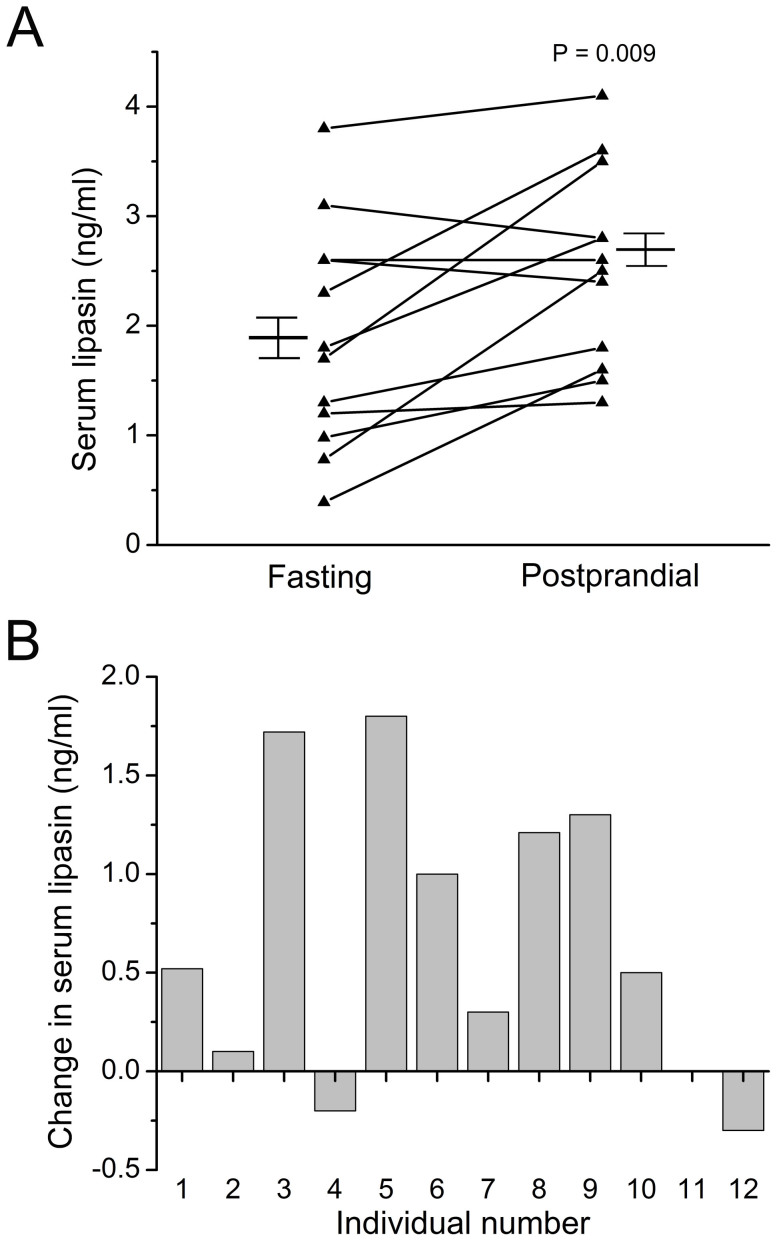
Figure 3. Serum levels of lipasin are increased 2 hours following a defined meal.
A) Serum lipasin levels were examined using ELISA. Serum samples were obtained from 12 lean human subjects after an overnight fast, without a meal or 2 hours following a defined meal. Refer to table 2 for meal nutritional composition. Each triangle denotes an individual, and the bars denote mean ± SEM. P values were obtained by performing paired Student t tests. B) Change in lipasin levels following the defined meal in each of the 12 individuals.

References

    1. Eckel R. H., Grundy S. M. & Zimmet P. Z. The metabolic syndrome. Lancet 365, 1415–1428 (2005). - PubMed
    1. Zhang R. Lipasin, a novel nutritionally-regulated liver-enriched factor that regulates serum triglyceride levels. Biochem Biophys Res Commun 424, 786–92 (2012). - PubMed
    1. Fu Z., Yao F., Abou-Samra A. B. & Zhang R. Lipasin, thermoregulated in brown fat, is a novel but atypical member of the angiopoietin-like protein family. Biochem Biophys Res Commun 430, 1126–31 (2013). - PubMed
    1. Ren G., Kim J. Y. & Smas C. M. Identification of RIFL, a novel adipocyte-enriched insulin target gene with a role in lipid metabolism. Am J Physiol Endocrinol Metab 303, E334–51 (2012). - PMC - PubMed
    1. Quagliarini F. et al. Atypical angiopoietin-like protein that regulates ANGPTL3. Proc Natl Acad Sci U S A 109, 19751–6 (2012). - PMC - PubMed

Publication types