


Altered postural responses persist following physical therapy of general versus specific trunk exercises in people with low back pain
- PMID: 24853255
- PMCID: PMC4288452
- DOI: 10.1016/j.math.2014.04.007
Altered postural responses persist following physical therapy of general versus specific trunk exercises in people with low back pain
Abstract
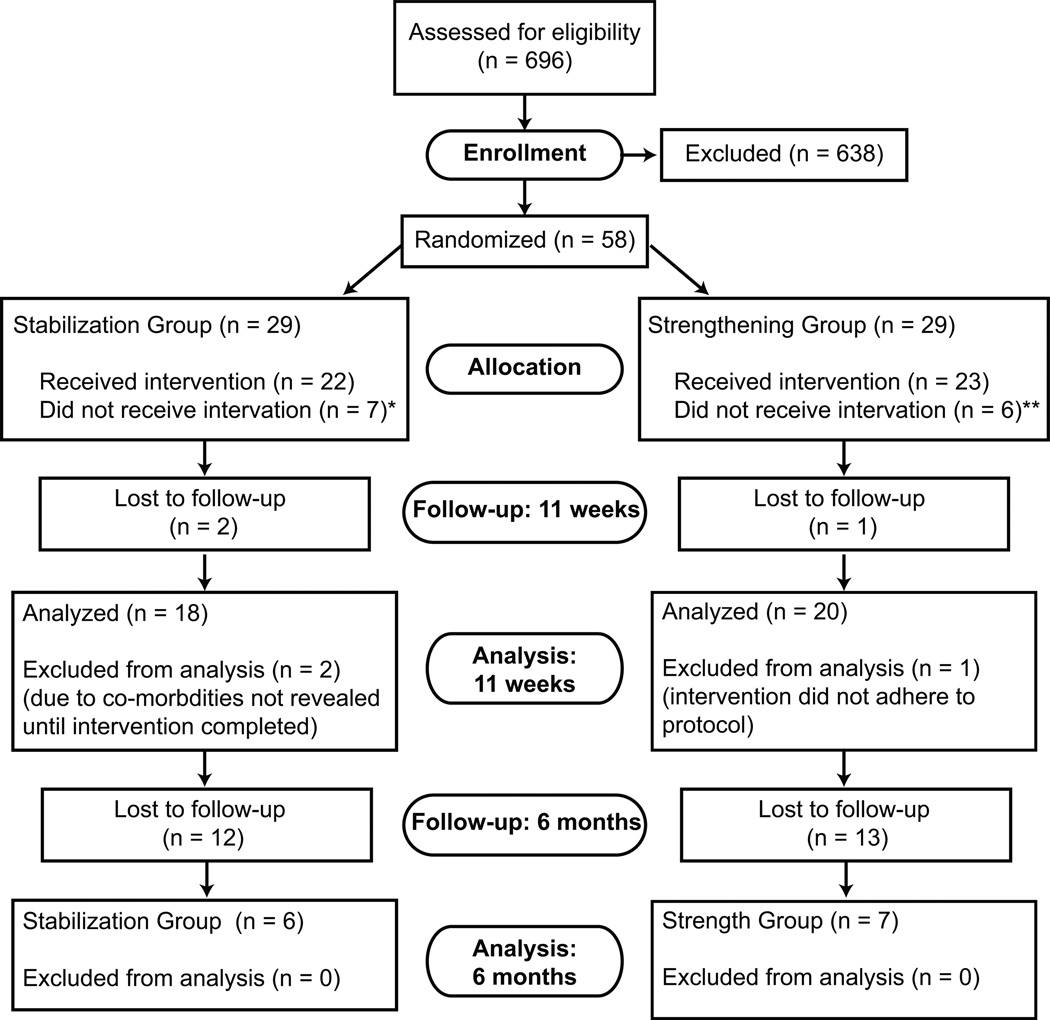
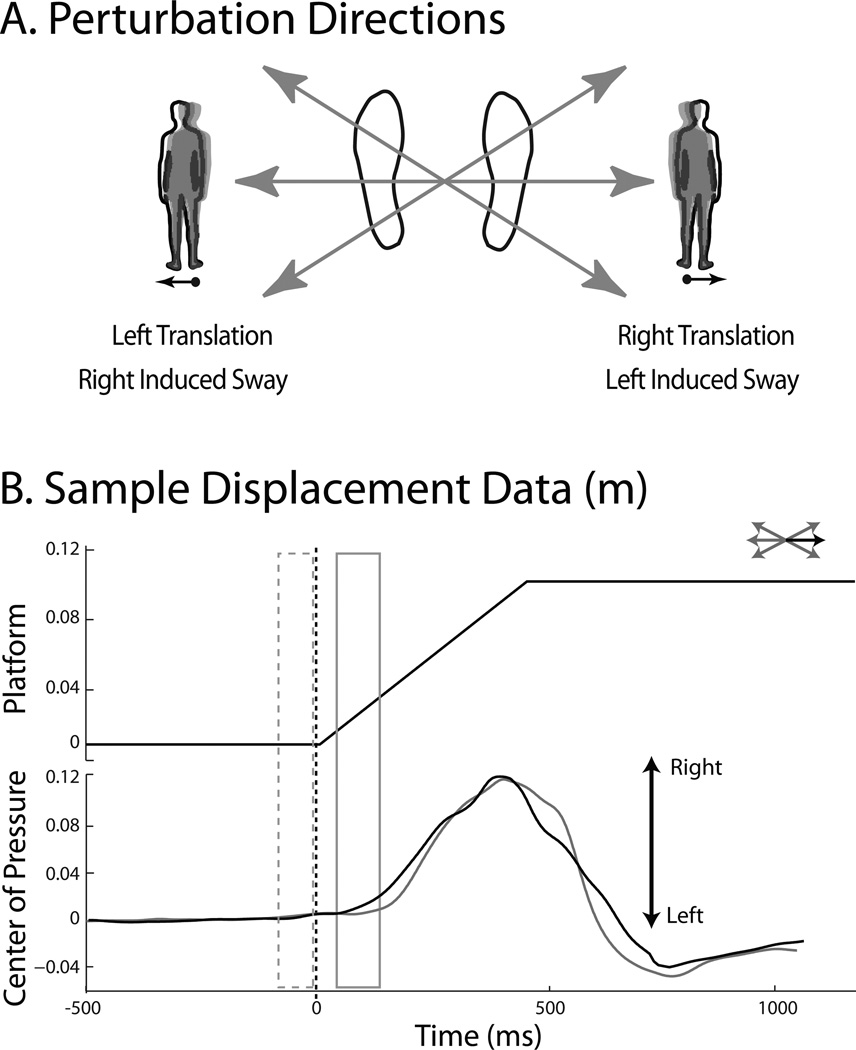
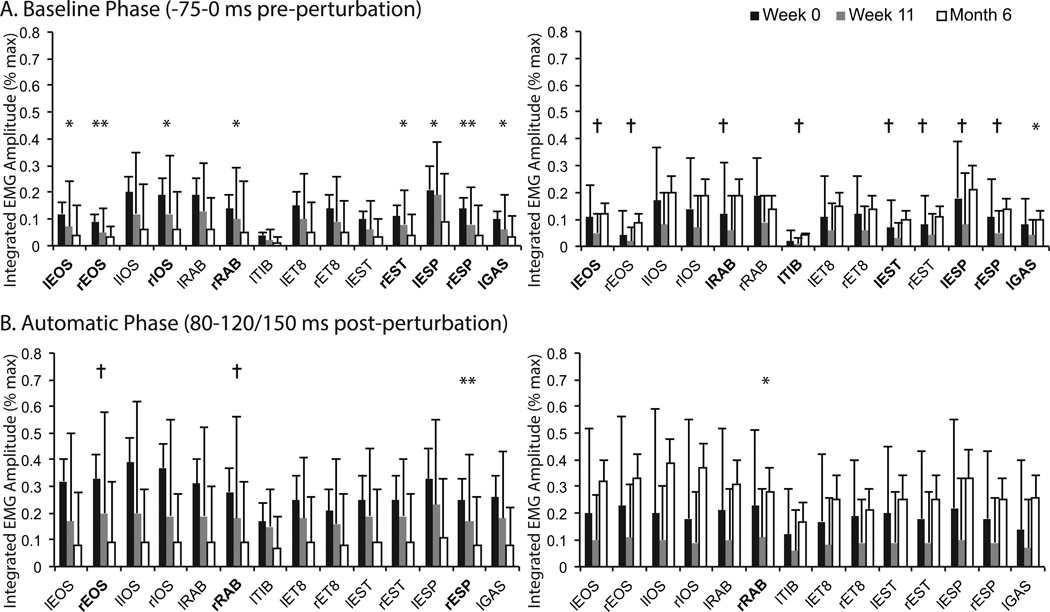
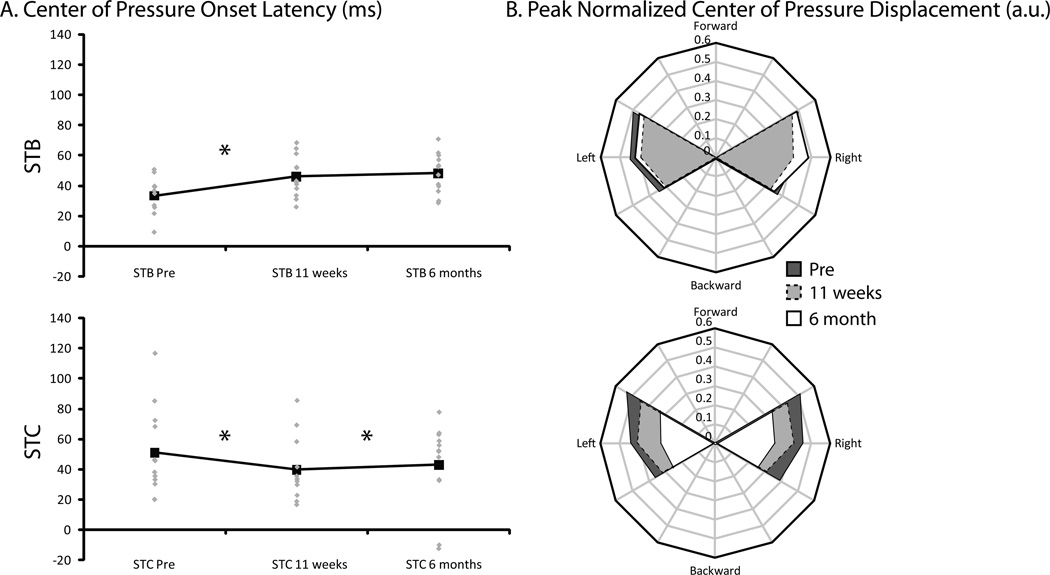
Interventions that target trunk muscle impairments in people with LBP have been promoted; however, the treatment effects on muscle activation impairments during postural tasks remain unclear. Thus, our objective was to evaluate the effects trunk stabilization vs. general strength and conditioning exercises on the automatic postural response in persons with chronic low back pain (LBP). Fifty-eight subjects with chronic, recurrent LBP (n = 58) (i.e., longer than six months) were recruited and randomly assigned to one of two, 10-week physical therapy programs: stabilization (n = 29) or strength and conditioning (n = 29). Pain and function were measured at 11 weeks and 6 months post-treatment initiation. To quantify postural following support surface perturbations, surface electrodes recorded electromyography (EMG) of trunk and leg muscles and force plates recorded forces under the feet, to calculate the center of pressure. Both groups demonstrated significant improvements in pain and function out to 6 months. There were also changes in muscle activation patterns immediately post-treatment, but not at 6 months. However, changes in center of pressure (COP) responses were treatment specific. Following treatment, the stabilization group demonstrated later onset of COP displacement, while the onset of COP displacement in the strengthening group was significantly earlier following treatment. Despite two different treatments, clinical improvements and muscle activation patterns were similar for both groups, indicating that the stabilization treatment protocol does not preferentially improve treatment outcomes or inter-muscle postural coordination patterns for persons with LBP.
Clinical trial registration number: NCT01611792.
Keywords: Electromyography; Low back pain (LBP); Physical therapy; Posture.
Copyright © 2014 Elsevier Ltd. All rights reserved.
Figures
References
-
- Allison GT. Trunk muscle onset detection technique for EMG signals with ECG artefact. J Electromyogr Kinesiol. 2003;13:209–216. - PubMed
-
- Biering-Sorensen F. Physical measurements as risk indicators for low-back trouble over a one-year period. Spine. 1984;9:106–119. - PubMed
-
- Chan CWY, Jones GM, Kearney RE, Watt DGD. The 'late' electromyographic response to limb displacement in man. I. Evidence for supraspinal contribution. Electroencephalography and Clinical Neurophysiology. 1979;46:173–181. - PubMed
-
- Claeys K, Brumagne S, Dankaerts W, Kiers H, Janssens L. Decreased variability in postural control strategies in young people with non-specific low back pain is associated with altered proprioceptive reweighting. European Journal of Applied Physiology. 2011;111:115–123. - PubMed
-
- Fritz JM, Irrgang JJ. A comparison of a modified Oswestry Low Back Pain Disability Questionnaire and the Quebec Back Pain Disability Scale. Physical Therapy. 2001;81:776–788. - PubMed
Publication types
MeSH terms
Associated data
Grants and funding
LinkOut - more resources
Full Text Sources
Other Literature Sources
Medical
Miscellaneous
