


Effects of acclimation salinity on the expression of selenoproteins in the tilapia, Oreochromis mossambicus
- PMID: 24854764
- PMCID: PMC4082732
- DOI: 10.1016/j.jtemb.2014.04.003
Effects of acclimation salinity on the expression of selenoproteins in the tilapia, Oreochromis mossambicus
Abstract
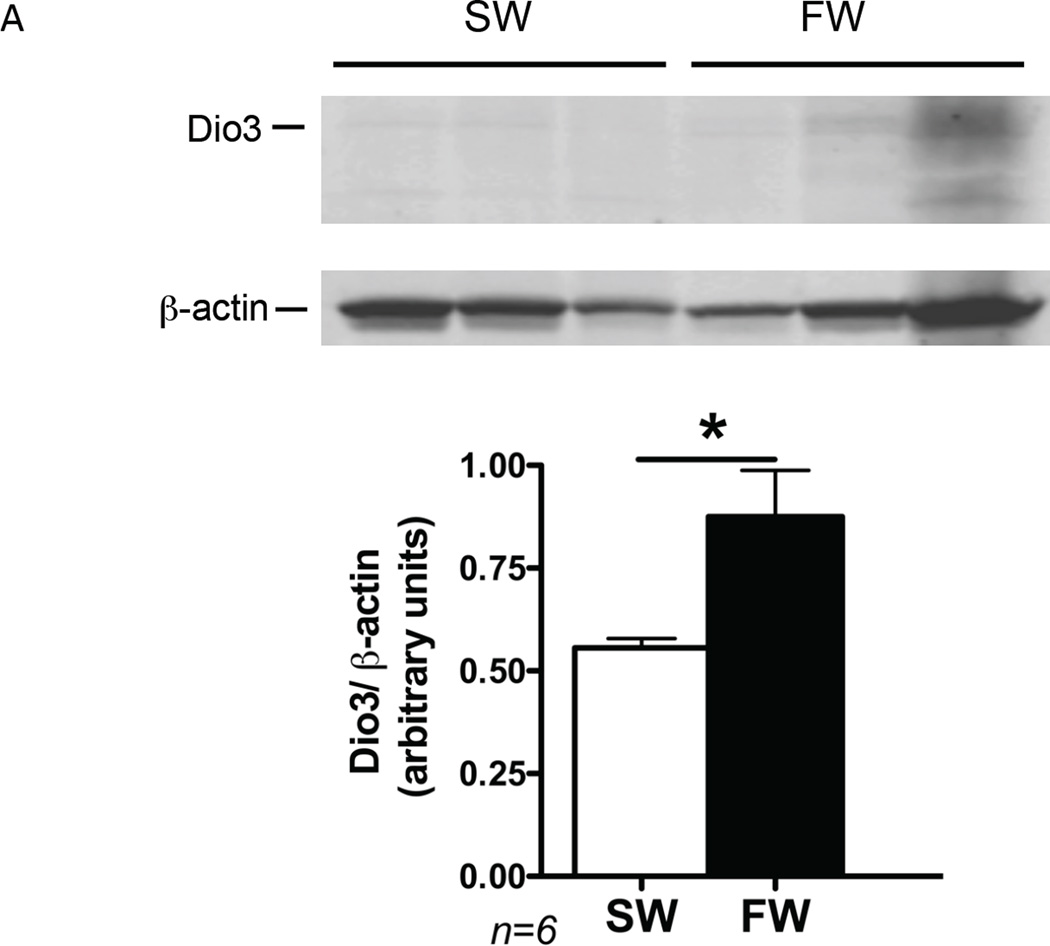
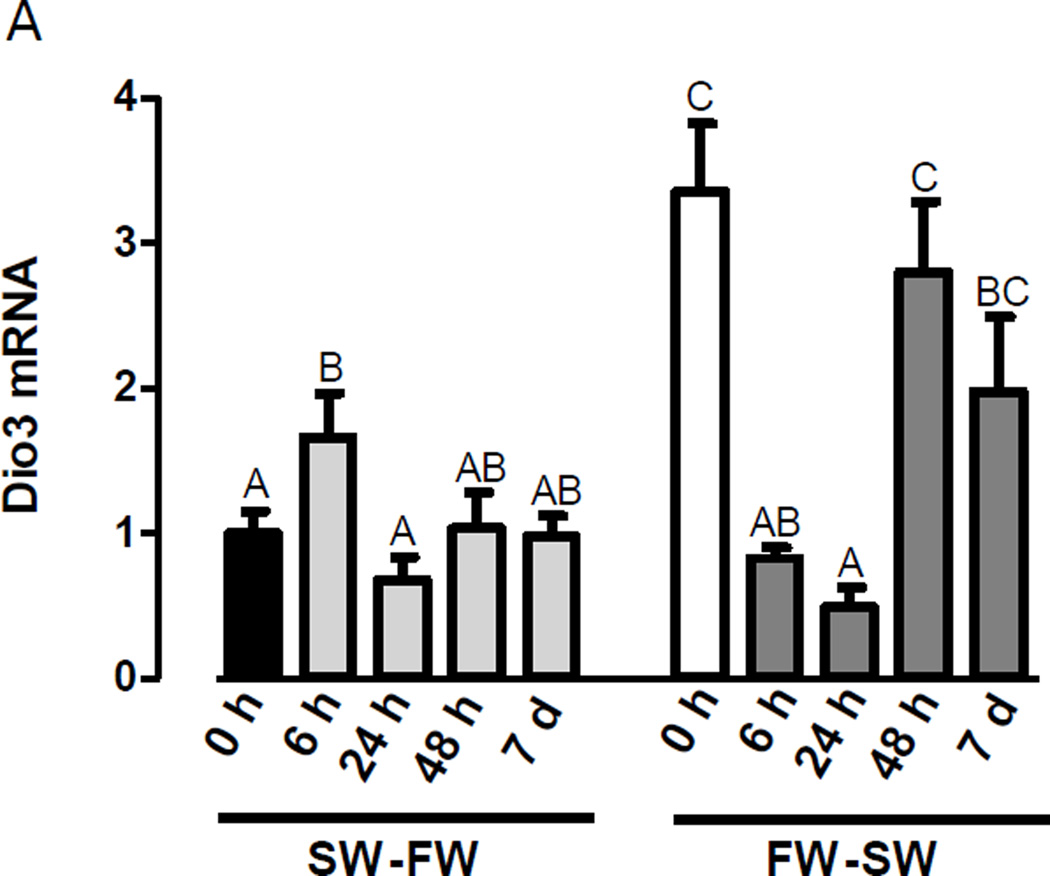
Selenoproteins are ubiquitously expressed, act on a variety of physiological redox-related processes, and are mostly regulated by selenium levels in animals. To date, the expression of most selenoproteins has not been verified in euryhaline fish models. The Mozambique tilapia, Oreochromis mossambicus, a euryhaline cichlid fish, has a high tolerance for changes in salinity and survives in fresh water (FW) and seawater (SW) environments which differ greatly in selenium availability. In the present study, we searched EST databases for cichlid selenoprotein mRNAs and screened for their differential expression in FW and SW-acclimated tilapia. The expression of mRNAs encoding iodothyronine deiodinases 1, 2 and 3 (Dio1, Dio2, Dio3), Fep15, glutathione peroxidase 2, selenoproteins J, K, L, M, P, S, and W, was measured in the brain, eye, gill, kidney, liver, pituitary, muscle, and intraperitoneal white adipose tissue. Gene expression of selenophosphate synthetase 1, Secp43, and selenocysteine lyase, factors involved in selenoprotein synthesis or in selenium metabolism, were also measured. The highest variation in selenoprotein and synthesis factor mRNA expression between FW- and SW-acclimated fish was found in gill and kidney. While the branchial expression of Dio3 was increased upon transferring tilapia from SW to FW, the inverse effect was observed when fish were transferred from FW to SW. Protein content of Dio3 was higher in fish acclimated to FW than in those acclimated to SW. Together, these results outline tissue distribution of selenoproteins in FW and SW-acclimated tilapia, and indicate that at least Dio3 expression is regulated by environmental salinity.
Keywords: Acclimation salinity; Euryhaline; Fish; Selenium; Selenoprotein; Tilapia.
Copyright © 2014 Elsevier GmbH. All rights reserved.
Figures


References
-
- Wen H, Carignan J. Ocean to continent transfer of atmospheric Se as revealed by epiphytic lichens. Environ Pollut. 2009;157(10):2790–2797. - PubMed
-
- Nriagu J. A global assessment of natural sources of atmospheric trace metals. Nature. 1989;338:47–49.
-
- Squires JE, Berry MJ. Eukaryotic selenoprotein synthesis: mechanistic insight incorporating new factors and new functions for old factors. IUBMB Life. 2008;60(4):232–235. - PubMed
-
- Low SC, Harney JW, Berry MJ. Cloning and functional characterization of human selenophosphate synthetase, an essential component of selenoprotein synthesis. J Biol Chem. 1995;270(37):21659–21664. - PubMed
Publication types
MeSH terms
Substances
Grants and funding
LinkOut - more resources
Full Text Sources
Other Literature Sources
Research Materials
