


Pancreatic cancer, inflammation, and microbiome
- PMID: 24855007
- PMCID: PMC4112373
- DOI: 10.1097/PPO.0000000000000045
Pancreatic cancer, inflammation, and microbiome
Abstract
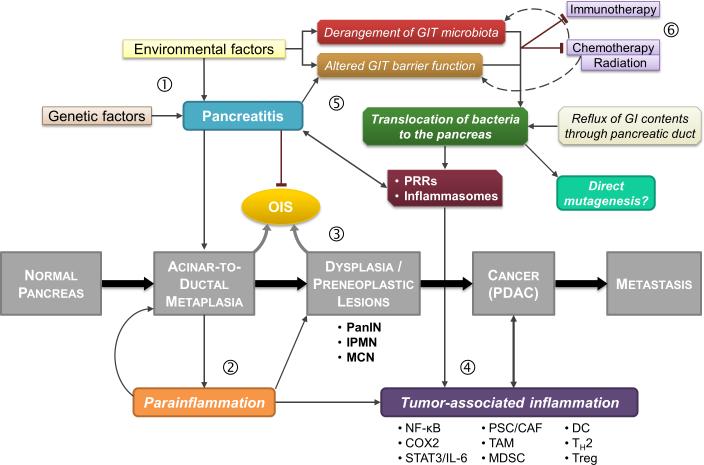
Pancreatic cancer is one of the most lethal cancers worldwide. No effective screening methods exist, and available treatment modalities do not effectively treat the disease. Inflammatory conditions such as pancreatitis represent a well-known risk factor for pancreatic cancer development. Yet only in the past 2 decades has pancreatic cancer been recognized as an inflammation-driven cancer, and the precise mechanisms underlying the pathogenic role of inflammation are beginning to be explored in detail. A substantial amount of preclinical and clinical evidence suggests that bacteria are likely to influence this process by activating immune receptors and perpetuating cancer-associated inflammation. The recent explosion of investigations of the human microbiome have highlighted how perturbations of commensal bacterial populations can promote inflammation and promote disease processes, including carcinogenesis. The elucidation of the interplay between inflammation and microbiome in the context of pancreatic carcinogenesis will provide novel targets for intervention to prevent and treat pancreatic cancer more efficiently. Further studies toward this direction are urgently needed.
Figures
References
-
- Vesely MD, Kershaw MH, Schreiber RD, et al. Natural innate and adaptive immunity to cancer. Annu Rev Immunol. 2011;29:235–71. - PubMed
-
- Hanahan D, Weinberg RA. Hallmarks of cancer: the next generation. Cell. 2011;144(5):646–74. - PubMed
-
- Bartsch DK, Gress TM, Langer P. Familial pancreatic cancer--current knowledge. Nature reviews Gastroenterology & Hepatology. 2012;9(8):445–53. - PubMed
Publication types
MeSH terms
Grants and funding
LinkOut - more resources
Full Text Sources
Other Literature Sources
Medical
Miscellaneous
