


Fermentation technologies for the optimization of marine microbial exopolysaccharide production
- PMID: 24857960
- PMCID: PMC4052328
- DOI: 10.3390/md12053005
Fermentation technologies for the optimization of marine microbial exopolysaccharide production
Abstract
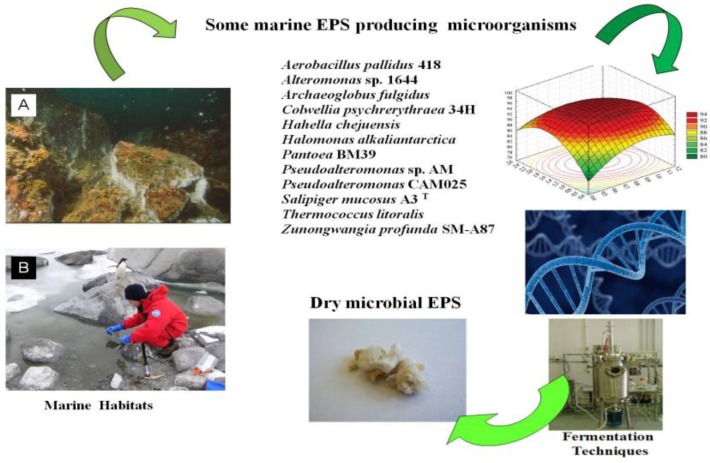
In the last decades, research has focused on the capabilities of microbes to secrete exopolysaccharides (EPS), because these polymers differ from the commercial ones derived essentially from plants or algae in their numerous valuable qualities. These biopolymers have emerged as new polymeric materials with novel and unique physical characteristics that have found extensive applications. In marine microorganisms the produced EPS provide an instrument to survive in adverse conditions: They are found to envelope the cells by allowing the entrapment of nutrients or the adhesion to solid substrates. Even if the processes of synthesis and release of exopolysaccharides request high-energy investments for the bacterium, these biopolymers permit resistance under extreme environmental conditions. Marine bacteria like Bacillus, Halomonas, Planococcus, Enterobacter, Alteromonas, Pseudoalteromonas, Vibrio, Rhodococcus, Zoogloea but also Archaea as Haloferax and Thermococcus are here described as EPS producers underlining biopolymer hyperproduction, related fermentation strategies including the effects of the chemical composition of the media, the physical parameters of the growth conditions and the genetic and predicted experimental design tools.
Figures
References
-
- Sponga F., Cavaletti L., Lazzarini A., Borghi A., Ciciliato I., Losi D., Marinelli F. Biodiversity and potentials of marine-derived microorganisms. J. Biotechnol. 1999;70:65–69. doi: 10.1016/S0168-1656(99)00059-0. - DOI
-
- Zanchetta P., Lagarde N., Guezennec J. A new bone-healing material: A hyaluronic acid-like bacterial exopolysaccharide. Calcif. Tissue Int. 2003;72:74–79. - PubMed
-
- Mansel P.W.A. Polysaccharides in skin care. Cosmet. Toilet. 1994;109:67–72.
Publication types
MeSH terms
Substances
LinkOut - more resources
Full Text Sources
Other Literature Sources
Molecular Biology Databases
