


IMPOSE (IMProving Outcomes after Sepsis)-the effect of a multidisciplinary follow-up service on health-related quality of life in patients postsepsis syndromes-a double-blinded randomised controlled trial: protocol
- PMID: 24861549
- PMCID: PMC4039866
- DOI: 10.1136/bmjopen-2014-004966
IMPOSE (IMProving Outcomes after Sepsis)-the effect of a multidisciplinary follow-up service on health-related quality of life in patients postsepsis syndromes-a double-blinded randomised controlled trial: protocol
Abstract
Introduction: Patients post sepsis syndromes have a poor quality of life and a high rate of recurring illness or mortality. Follow-up clinics have been instituted for patients postgeneral intensive care but evidence is sparse, and there has been no clinic specifically for survivors of sepsis. The aim of this trial is to investigate if targeted screening and appropriate intervention to these patients can result in an improved quality of life (Short Form 36 health survey (SF36V.2)), decreased mortality in the first 12 months, decreased readmission to hospital and/or decreased use of health resources.
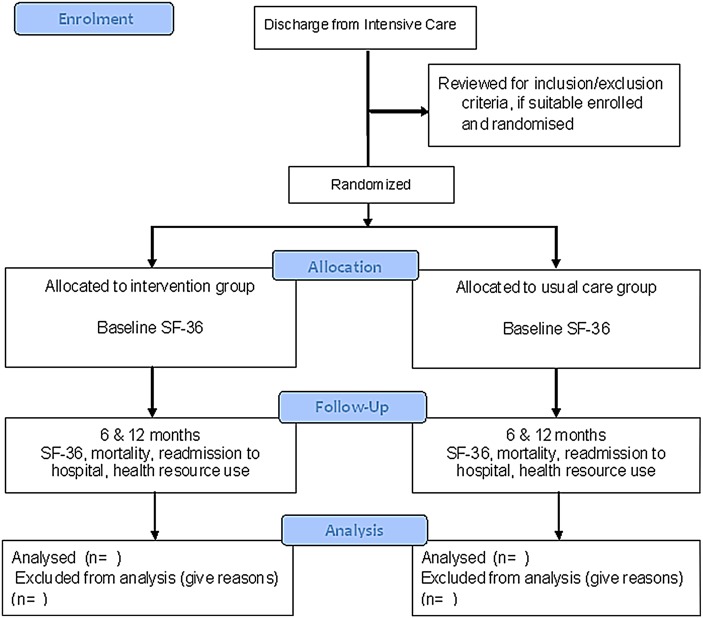
Methods and analysis: 204 patients postsepsis syndromes will be randomised to one of the two groups. The intervention group will attend an outpatient clinic two monthly for 6 months and receive screening and targeted intervention. The usual care group will remain under the care of their physician. To analyse the results, a baseline comparison will be carried out between each group. Generalised estimating equations will compare the SF36 domain scores between groups and across time points. Mortality will be compared between groups using a Cox proportional hazards (time until death) analysis. Time to first readmission will be compared between groups by a survival analysis. Healthcare costs will be compared between groups using a generalised linear model. Economic (health resource) evaluation will be a within-trial incremental cost utility analysis with a societal perspective.
Ethics and dissemination: Ethical approval has been granted by the Royal Brisbane and Women's Hospital Human Research Ethics Committee (HREC; HREC/13/QRBW/17), The University of Queensland HREC (2013000543), Griffith University (RHS/08/14/HREC) and the Australian Government Department of Health (26/2013). The results of this study will be submitted to peer-reviewed intensive care journals and presented at national and international intensive care and/or rehabilitation conferences.
Trial registration number: Australian and New Zealand Clinical Trials Registry ACTRN12613000528752.
Keywords: Rehabilitation Medicine.
Published by the BMJ Publishing Group Limited. For permission to use (where not already granted under a licence) please go to http://group.bmj.com/group/rights-licensing/permissions.
References
-
- Oeyen SG, Vandijck DM, Benoit DB, et al. Quality of life after intensive care: a systematic review of the literature. Crit Care Med 2010;38:2386–400 - PubMed
-
- Myhren H, Ekeberg O, Stokland O. Health related quality of life and return to work after critical illness in general intensive care unit patients: a 1-year follow up study. Crit Care Med 2010;38:1554–61 - PubMed
-
- Williams TA, Dobb GJ, Finn JC, et al. Long term survival from intensive care: a review. Intensive Care Med 2005;31:1306–15 - PubMed
-
- Desai SV, Law TJ, Needham DM. Long-term complications of critical care. Crit Care Med 2011;39:371–9 - PubMed
-
- Battle CE, Lovett S, Hutchings H. Chronic pain in survivors of critical illness: a retrospective analysis of incidence and risk factors. Crit Care 2013;17:R101 http://ccforum.com.contnet/17/3/R101 - PMC - PubMed
Publication types
MeSH terms
LinkOut - more resources
Full Text Sources
Other Literature Sources
Medical
Molecular Biology Databases
