AB5075, a Highly Virulent Isolate of Acinetobacter baumannii, as a Model Strain for the Evaluation of Pathogenesis and Antimicrobial Treatments
- PMID: 24865555
- PMCID: PMC4045072
- DOI: 10.1128/mBio.01076-14
AB5075, a Highly Virulent Isolate of Acinetobacter baumannii, as a Model Strain for the Evaluation of Pathogenesis and Antimicrobial Treatments
Abstract
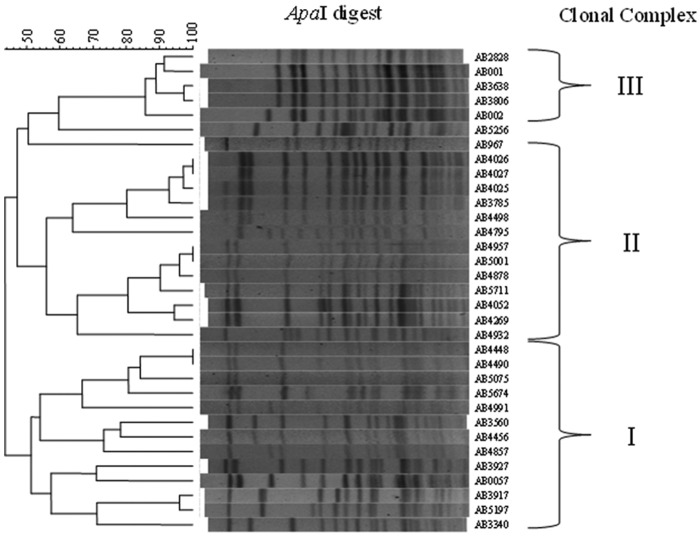
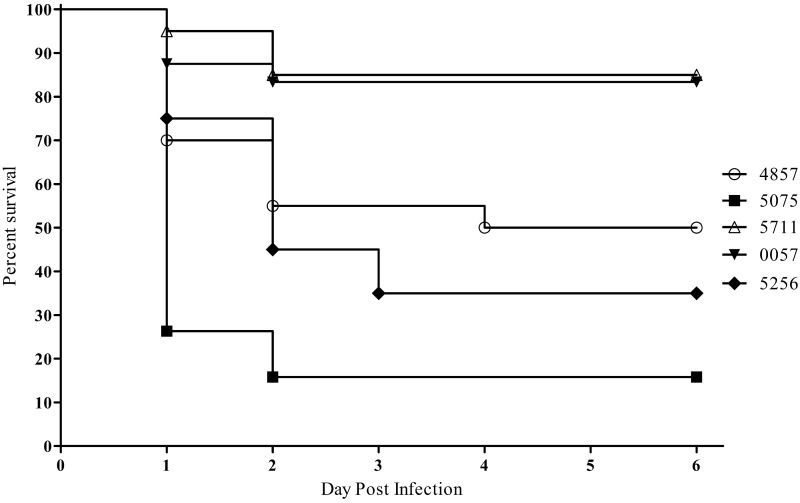
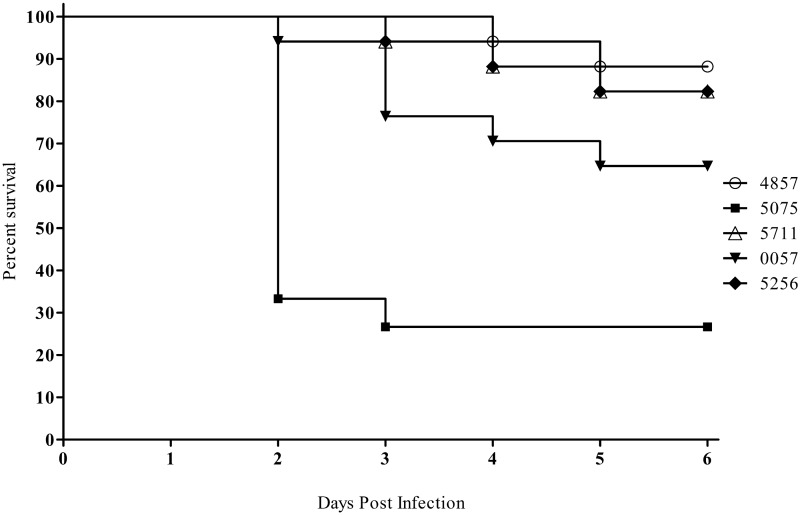
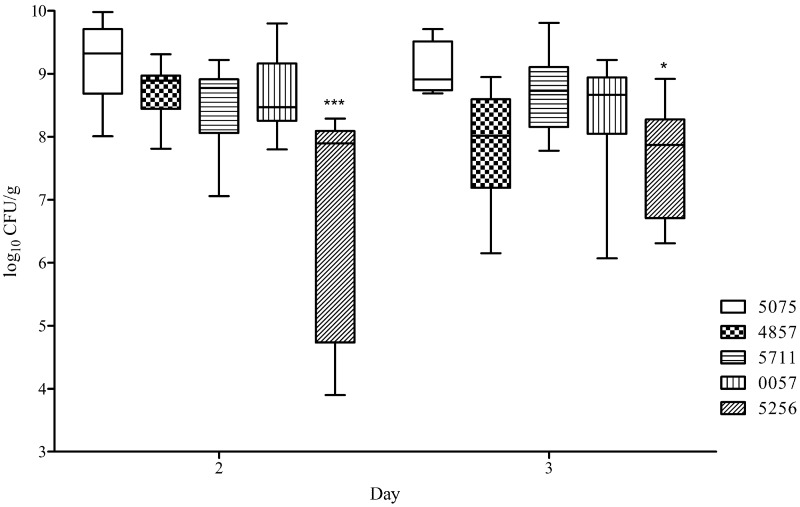
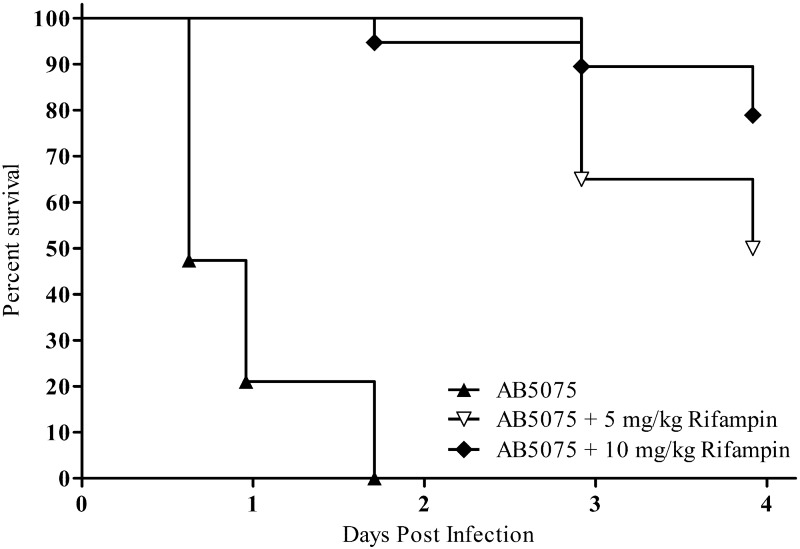
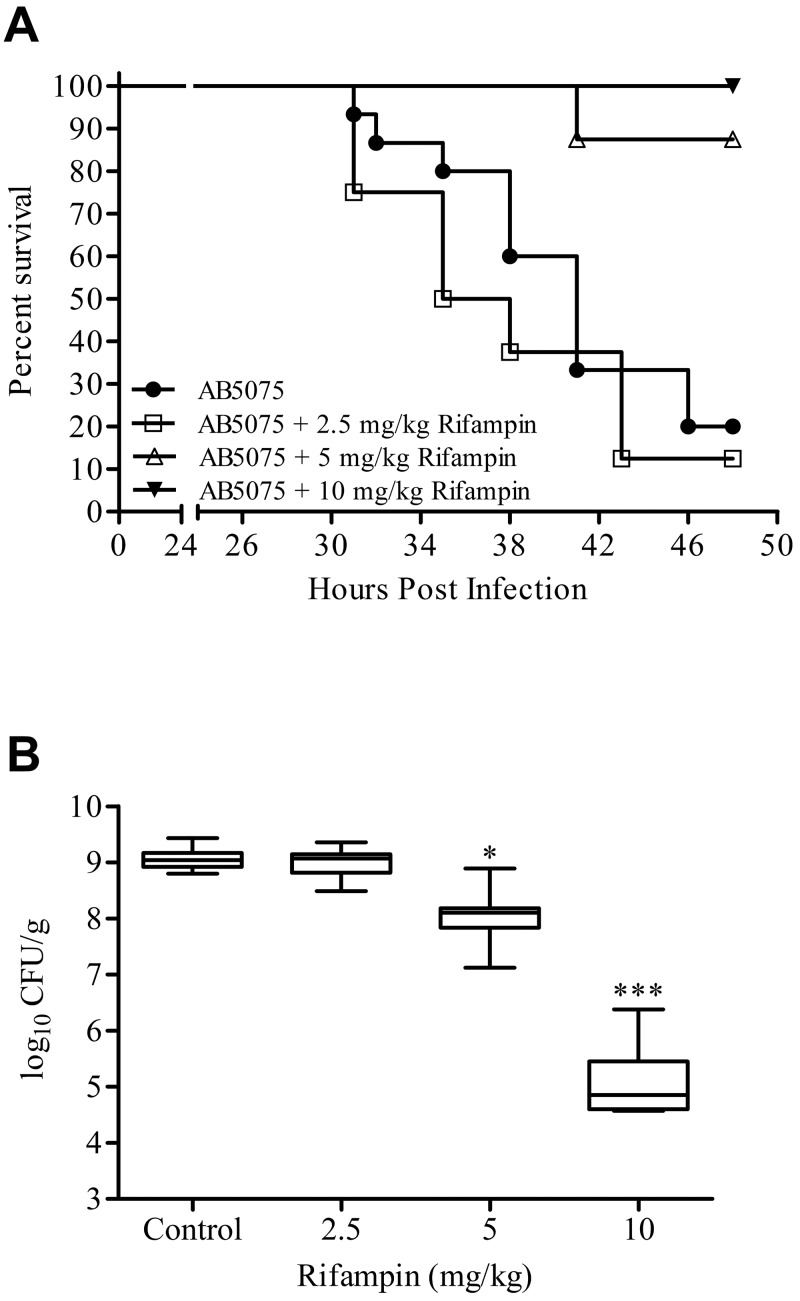
Acinetobacter baumannii is recognized as an emerging bacterial pathogen because of traits such as prolonged survival in a desiccated state, effective nosocomial transmission, and an inherent ability to acquire antibiotic resistance genes. A pressing need in the field of A. baumannii research is a suitable model strain that is representative of current clinical isolates, is highly virulent in established animal models, and can be genetically manipulated. To identify a suitable strain, a genetically diverse set of recent U.S. military clinical isolates was assessed. Pulsed-field gel electrophoresis and multiplex PCR determined the genetic diversity of 33 A. baumannii isolates. Subsequently, five representative isolates were tested in murine pulmonary and Galleria mellonella models of infection. Infections with one strain, AB5075, were considerably more severe in both animal models than those with other isolates, as there was a significant decrease in survival rates. AB5075 also caused osteomyelitis in a rat open fracture model, while another isolate did not. Additionally, a Tn5 transposon library was successfully generated in AB5075, and the insertion of exogenous genes into the AB5075 chromosome via Tn7 was completed, suggesting that this isolate may be genetically amenable for research purposes. Finally, proof-of-concept experiments with the antibiotic rifampin showed that this strain can be used in animal models to assess therapies under numerous parameters, including survival rates and lung bacterial burden. We propose that AB5075 can serve as a model strain for A. baumannii pathogenesis due to its relatively recent isolation, multidrug resistance, reproducible virulence in animal models, and genetic tractability.
Importance: The incidence of A. baumannii infections has increased over the last decade, and unfortunately, so has antibiotic resistance in this bacterial species. A. baumannii is now responsible for more than 10% of all hospital-acquired infections in the United States and has a >50% mortality rate in patients with sepsis and pneumonia. Most research on the pathogenicity of A. baumannii focused on isolates that are not truly representative of current multidrug-resistant strains isolated from patients. After screening of a panel of isolates in different in vitro and in vivo assays, the strain AB5075 was selected as more suitable for research because of its antibiotic resistance profile and increased virulence in animal models. Moreover, AB5075 is susceptible to tetracycline and hygromycin, which makes it amenable to genetic manipulation. Taken together, these traits make AB5075 a good candidate for use in studying virulence and pathogenicity of this species and testing novel antimicrobials.
Copyright © 2014 Jacobs et al.
Figures
References
-
- Hujer KM, Hujer AM, Hulten EA, Bajaksouzian S, Adams JM, Donskey CJ, Ecker DJ, Massire C, Eshoo MW, Sampath R, Thomson JM, Rather PN, Craft DW, Fishbain JT, Ewell AJ, Jacobs MR, Paterson DL, Bonomo RA. 2006. Analysis of antibiotic resistance genes in multidrug-resistant Acinetobacter sp. isolates from military and civilian patients treated at the Walter Reed Army Medical Center. Antimicrob. Agents Chemother. 50:4114–4123. 10.1128/AAC.00778-06 - DOI - PMC - PubMed
Publication types
MeSH terms
Substances
LinkOut - more resources
Full Text Sources
Other Literature Sources