. 2014 Jun;20(6):976-82.
doi: 10.3201/eid2006.131770.

High prevalence of Ancylostoma ceylanicum hookworm infections in humans, Cambodia, 2012

High prevalence of Ancylostoma ceylanicum hookworm infections in humans, Cambodia, 2012

Tawin Inpankaew et al. Emerg Infect Dis. 2014 Jun.

Abstract

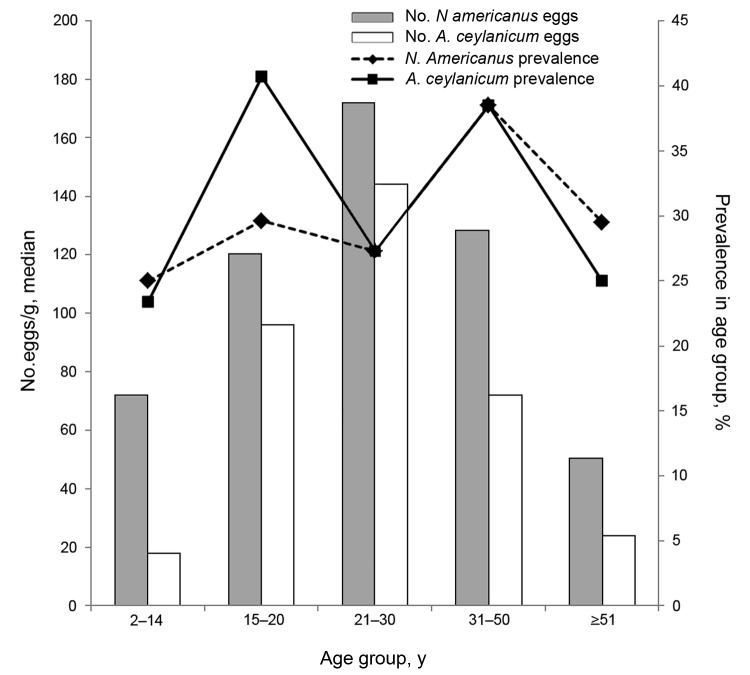
Ancylostoma ceylanicum, a hookworm of canids and felids in Asia, is becoming the second most common hookworm infecting humans. In 2012, we investigated the prevalence and infection dynamics of and risk factors for hookworm infections in humans and dogs in a rural Cambodian village. Over 57% of the population was infected with hookworms; of those, 52% harbored A. ceylanicum hookworms. The greatest intensities of A. ceylanicum eggs were in persons 21-30 years of age. Over 90% of dogs also harbored A. ceylanicum hookworms. Characterization of the cytochrome oxidase-1 gene divided isolates of A. ceylanicum hookworms into 2 groups, 1 containing isolates from humans only and the other a mix of isolates from humans and animals. We hypothesize that preventative chemotherapy in the absence of concurrent hygiene and animal health programs may be a factor leading to emergence of A. ceylanicum infections; thus, we advocate for a One Health approach to control this zoonosis.

Keywords: Ancylostoma ceylanicum; Cambodia; hookworm; humans; zoonosis.


Figures
Figure
Figure
Prevalence and intensity (eggs per gram) of Necator americanus and Ancylostoma ceylanicum hookworm infections in humans of different ages in rural Dong village, Rovieng District, Preah Vihear Province, Cambodia, 2012.

References

    1. Crompton DW. The public health importance of hookworm disease. Parasitology. 2000;121(Suppl):S39–50 . 10.1017/S0031182000006454 - DOI - PubMed
    1. Bethony J, Brooker S, Albonico M, Geiger SM, Loukas A, Diemert D, et al. Soil-transmitted helminth infections: ascariasis, trichuriasis, and hookworm. Lancet. 2006;367:1521–32 . 10.1016/S0140-6736(06)68653-4 - DOI - PubMed
    1. Jiraanankul V, Aphijirawat W, Mungthin M, Khositnithikul R, Rangsin R, Traub RJ, et al. Incidence and risk factors of hookworm infection in a rural community of central Thailand. Am J Trop Med Hyg. 2011;84:594–8 . 10.4269/ajtmh.2011.10-0189 - DOI - PMC - PubMed
    1. Traub RJ, Inpankaew T, Sutthikornchai C, Sukthana Y, Thompson RC. PCR-based coprodiagnostic tools reveal dogs as reservoirs of zoonotic ancylostomiasis caused by Ancylostoma ceylanicum in temple communities in Bangkok. Vet Parasitol. 2008;155:67–73 . 10.1016/j.vetpar.2008.05.001 - DOI - PubMed
    1. Conlan JV, Khamlome B, Vongxay K, Elliot A, Pallant L, Sripa B, et al. Soil-transmitted helminthiasis in Laos: a community-wide cross-sectional study of humans and dogs in a mass drug administration environment. Am J Trop Med Hyg. 2012;86:624–34 . 10.4269/ajtmh.2012.11-0413 - DOI - PMC - PubMed

Publication types

MeSH terms

Substances

LinkOut - more resources