


Neutrophils generate microparticles during exposure to inert gases due to cytoskeletal oxidative stress
- PMID: 24867949
- PMCID: PMC4081925
- DOI: 10.1074/jbc.M113.543702
Neutrophils generate microparticles during exposure to inert gases due to cytoskeletal oxidative stress
Abstract
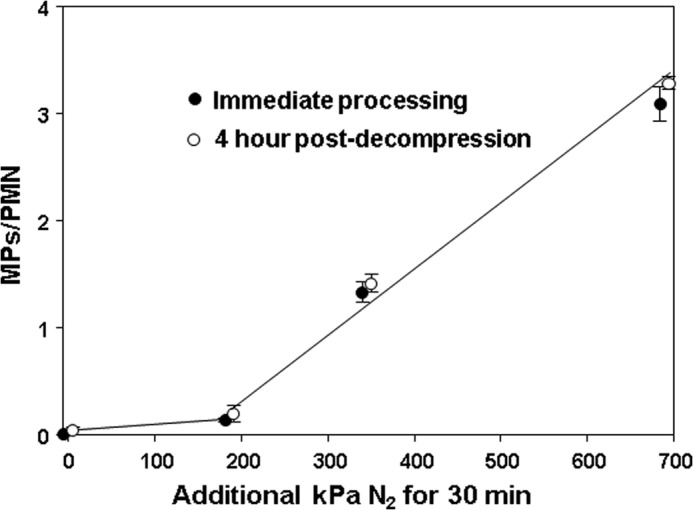
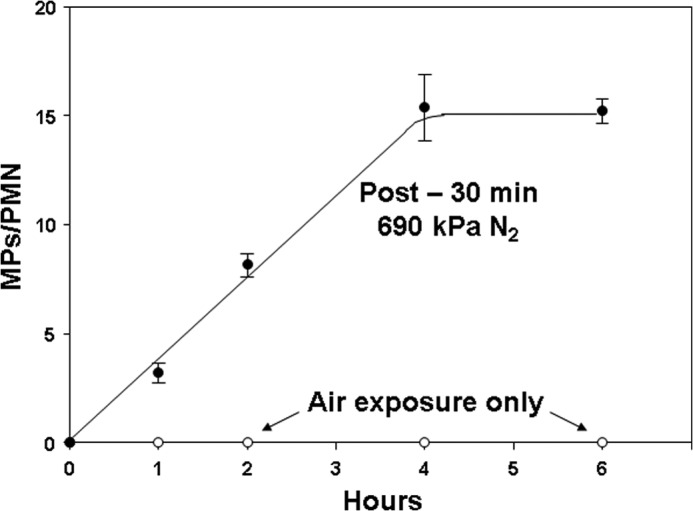
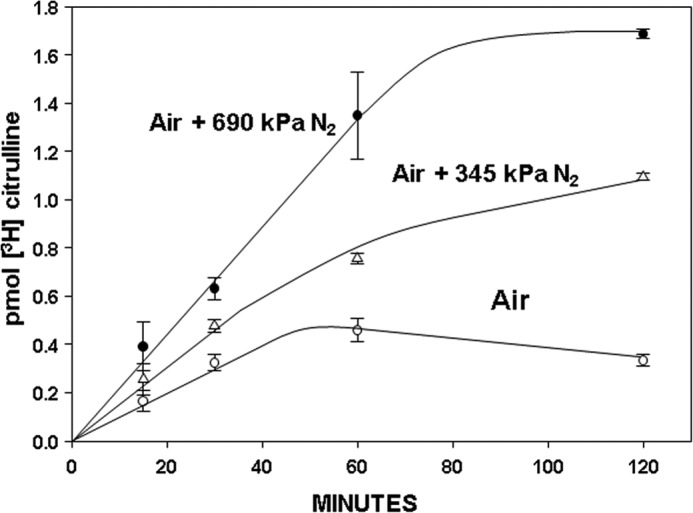
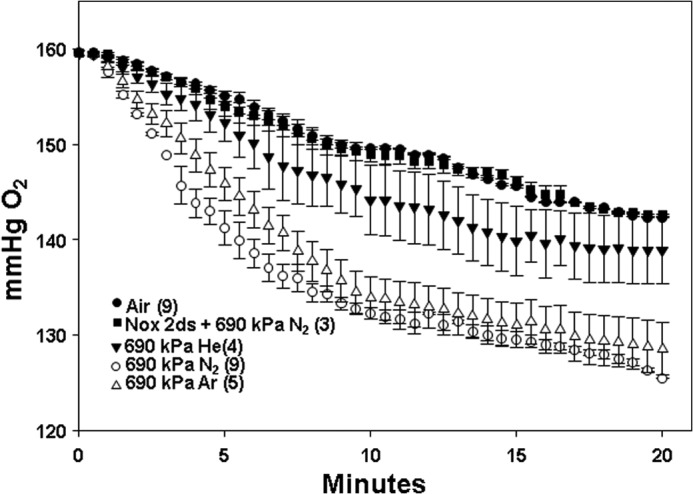
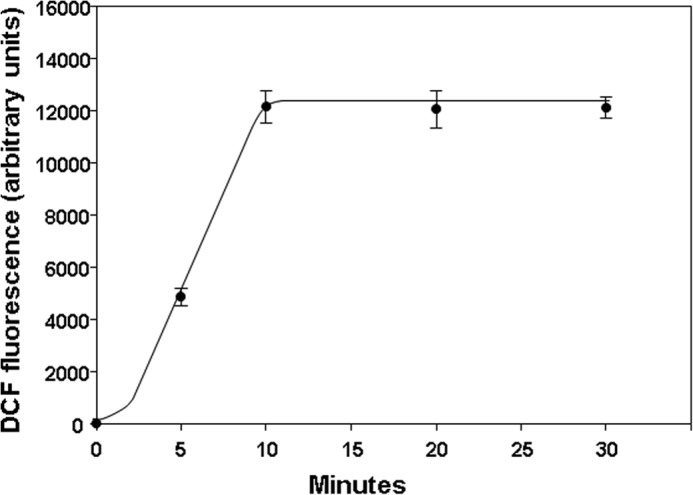
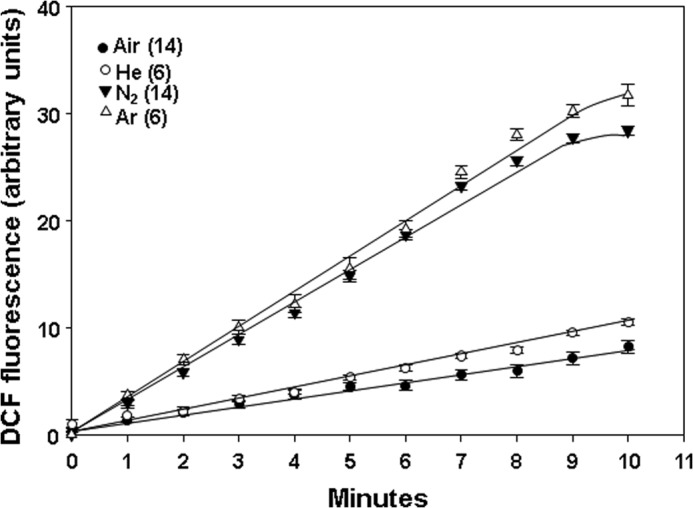
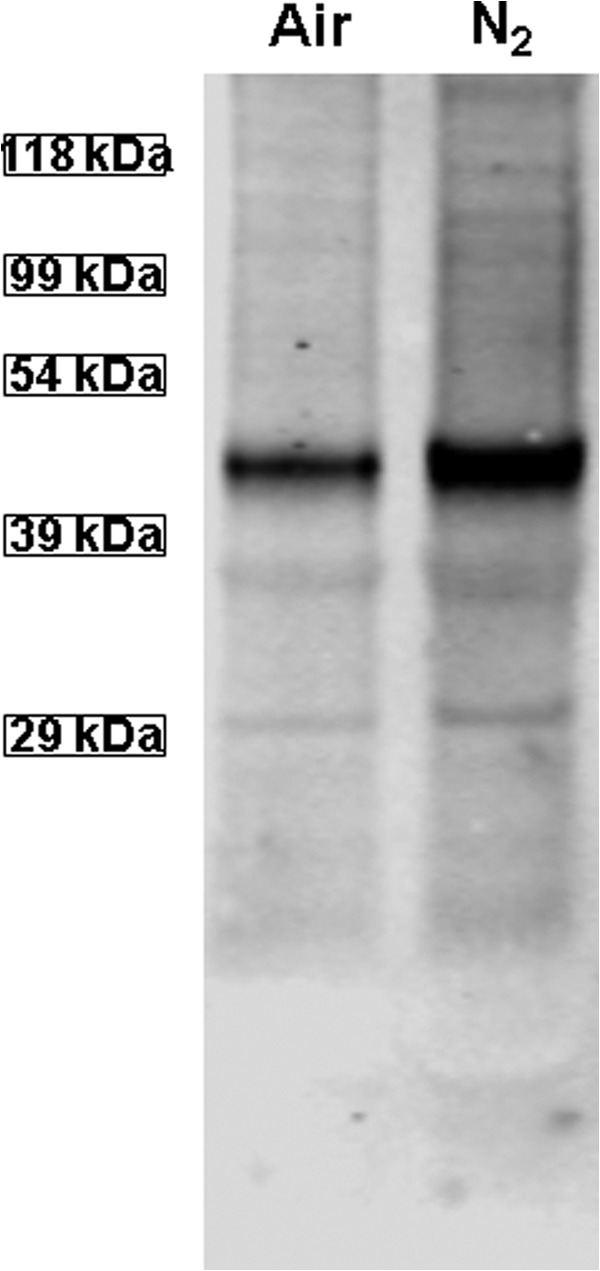
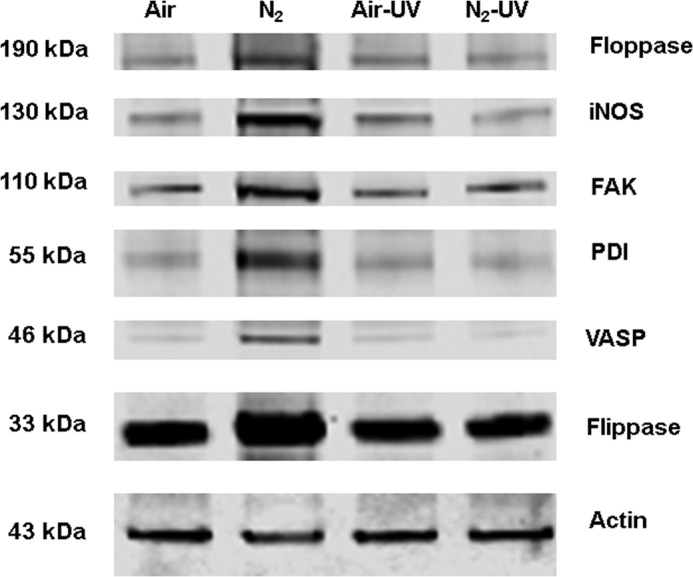
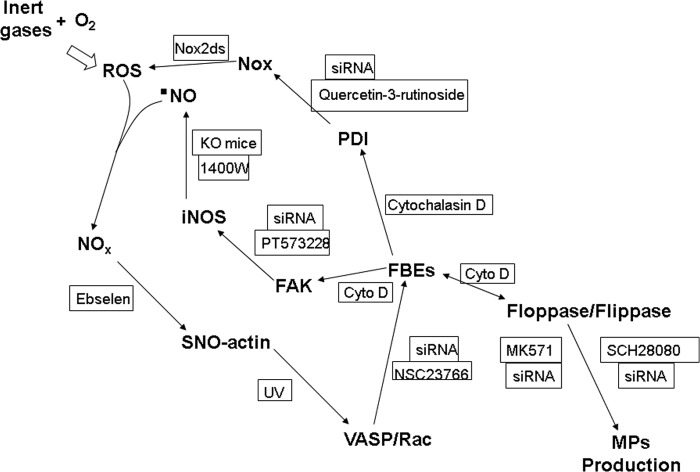
This investigation was to elucidate the mechanism for microparticle (MP) formation triggered by exposures to high pressure inert gases. Human neutrophils generate MPs at a threshold of ∼186 kilopascals with exposures of 30 min or more. Murine cells are similar, but MP production occurs at a slower rate and continues for ∼4 h, whether or not cells remain under pressure. Neutrophils exposed to elevated gas but not hydrostatic pressure produce MPs according to the potency series: argon ≃ nitrogen > helium. Following a similar pattern, gases activate type-2 nitric-oxide synthase (NOS-2) and NADPH oxidase (NOX). MP production does not occur with neutrophils exposed to a NOX inhibitor (Nox2ds) or a NOS-2 inhibitor (1400W) or with cells from mice lacking NOS-2. Reactive species cause S-nitrosylation of cytosolic actin that enhances actin polymerization. Protein cross-linking and immunoprecipitation studies indicate that increased polymerization occurs because of associations involving vasodilator-stimulated phosphoprotein, focal adhesion kinase, the H(+)/K(+) ATPase β (flippase), the hematopoietic cell multidrug resistance protein ABC transporter (floppase), and protein-disulfide isomerase in proximity to short actin filaments. Using chemical inhibitors or reducing cell concentrations of any of these proteins with small inhibitory RNA abrogates NOS-2 activation, reactive species generation, actin polymerization, and MP production. These effects were also inhibited in cells exposed to UV light, which photoreverses S-nitrosylated cysteine residues and by co-incubations with the antioxidant ebselen or cytochalasin D. The autocatalytic cycle of protein activation is initiated by inert gas-mediated singlet O2 production.
Keywords: Actin; Decompression; Focal Adhesion Kinase; NADPH Oxidase; Nitrosative Stress; Reactive Nitrogen Species (RNS); Reactive Oxygen Species (ROS); S-Nitrosylation; Singlet Oxygen.
© 2014 by The American Society for Biochemistry and Molecular Biology, Inc.
Figures
References
-
- Vince R. V., McNaughton L. R., Taylor L., Midgley A. W., Laden G., Madden L. A. (2009) Release of VCAM-1 associated endothelial microparticles following simulated SCUBA dives. Eur. J. Appl. Physiol. 105, 507–513 - PubMed
-
- Madden L. A., Chrismas B. C., Mellor D., Vince R. V., Midgley A. W., McNaughton L. R., Atkin S. L., Laden G. (2010) Endothelial function and stress response after simulated dives to 18 msw breathing air or oxygen. Aviat. Space Environ. Med. 81, 41–45 - PubMed
-
- Thom S. R., Milovanova T. N., Bogush M., Bhopale V. M., Yang M., Bushmann K., Pollock N. W., Ljubkovic M., Denoble P., Dujic Z. (2012) Microparticle production, neutrophil activation and intravascular bubbles following open-water SCUBA diving. J. Appl. Physiol. 112, 1268–1278 - PubMed
-
- Thom S. R., Milovanova T. N., Bogush M., Yang M., Bhopale V. M., Pollock N. W., Ljubkovic M., Denoble P., Madden D., Lozo M., Dujic Z. (2013) Bubbles, microparticles and neutrophil activation: changes with exercise level and breathing gas during open-water SCUBA diving. J. Appl. Physiol. 114, 1396–1405 - PubMed
-
- Pontier J. M., Gempp E., Ignatescu M. (2012) Blood platelet-derived microparticles release and bubble formation after an open-sea dive. Appl. Physiol. Nutr. Metab. 37, 888–892 - PubMed
Publication types
MeSH terms
Substances
LinkOut - more resources
Full Text Sources
Other Literature Sources
