Epidemiology of the Systemic Inflammatory Response Syndrome (SIRS) in the emergency department
- PMID: 24868313
- PMCID: PMC4025532
- DOI: 10.5811/westjem.2013.9.18064
Epidemiology of the Systemic Inflammatory Response Syndrome (SIRS) in the emergency department
Abstract
Introduction: Consensus guidelines recommend sepsis screening for adults with systemic inflammatory response syndrome (SIRS), but the epidemiology of SIRS among adult emergency department (ED) patients is poorly understood. Recent emphasis on cost-effective, outcomes-based healthcare prompts the evaluation of the performance of large-scale efforts such as sepsis screening. We studied a nationally representative sample to clarify the epidemiology of SIRS in the ED and subsequent category of illness.
Methods: This was a retrospective analysis of ED visits by adults from 2007 to 2010 in the National Hospital Ambulatory Medical Care Survey (NHAMCS). We estimated the incidence of SIRS using initial ED vital signs and a Bayesian construct to estimate white blood cell count based on test ordering. We report estimates with Bayesian modified credible intervals (mCIs).
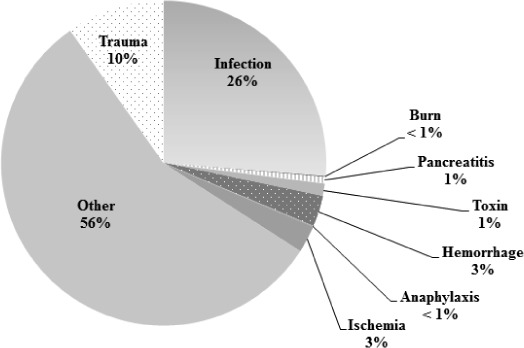
Results: We used 103,701 raw patient encounters in NHAMCS to estimate 372,844,465 ED visits over the 4-year period. The moderate estimate of SIRS in the ED was 17.8% (95% mCI: 9.7 to 26%). This yields a national moderate estimate of approximately 16.6 million adult ED visits with SIRS per year. Adults with and without SIRS had similar demographic characteristics, but those with SIRS were more likely to be categorized as emergent in triage (17.7% versus 9.9%, p<0.001), stay longer in the ED (210 minutes versus 153 minutes, p<0.0001), and were more likely to be admitted (31.5% versus 12.5%, p<0.0001). Infection accounted for only 26% of SIRS patients. Traumatic causes of SIRS comprised 10% of presentations; other traditional categories of SIRS were rare.
Conclusion: SIRS is very common in the ED. Infectious etiologies make up only a quarter of adult SIRS cases. SIRS may be more useful if modified by clinician judgment when used as a screening test in the rapid identification and assessment of patients with the potential for sepsis. [West J Emerg Med. 2014;15(3):329-336.].
Conflict of interest statement
Figures
References
-
- Bone RC, Balk RA, Cerra FB. Definitions for Sepsis and Organ Failure and Guidelines for the Use of Innovative Therapies in Sepsis. Chest. 1992;101:1644–1655. et al for the ACCP/SCCM Consensus Conference Committee. - PubMed
-
- Bone RC. Towards an Epidemiology and Natural History of SIRS (Systemic Inflammatory Response Syndrome) JAMA. 1992;268(24):3452–3455. - PubMed
-
- Levy MM, Dellinger RP, Townsend SR et al. The Surviving Sepsis Campaign: results of an international guideline-based performance improvement program targeting severe sepsis. Crit Care Med. 2010;38(2):367–374. - PubMed
-
- Whippy A, Skeath M, Crawford B et al. Kaiser Permanente's performance improvement system, part 3: multisite improvements in care for patients with sepsis. Jt Comm J Qual Patient Saf. 2011;37(11):483–93. p. - PubMed
-
- Joint Commission on Accreditation of Healthcare Organizations. Online Bulletin: Center launches project to reduce sepsis mortality. Joint Commision Online. June 27, 2012. http://www.jointcommission.org/ (Accessed March 20, 2013)
MeSH terms
LinkOut - more resources
Full Text Sources
Other Literature Sources
Medical