


Beat processing is pre-attentive for metrically simple rhythms with clear accents: an ERP study
- PMID: 24870123
- PMCID: PMC4037171
- DOI: 10.1371/journal.pone.0097467
Beat processing is pre-attentive for metrically simple rhythms with clear accents: an ERP study
Abstract
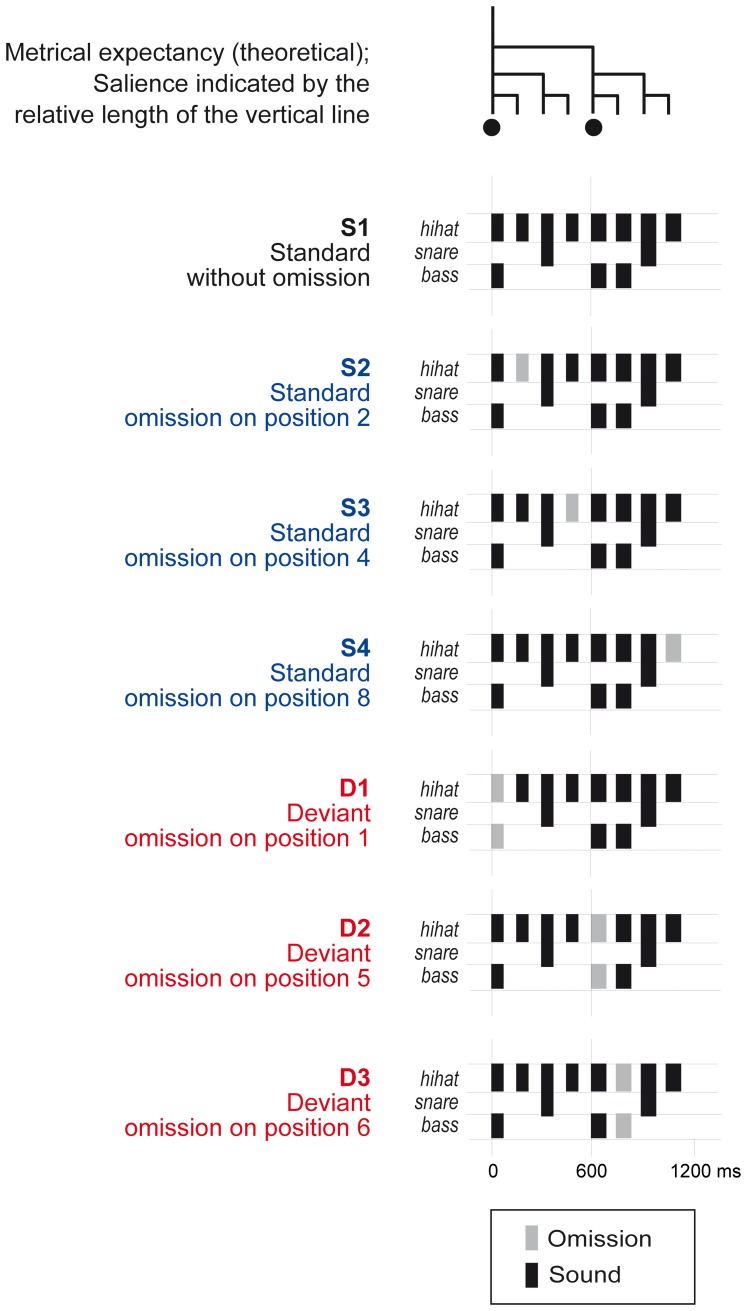
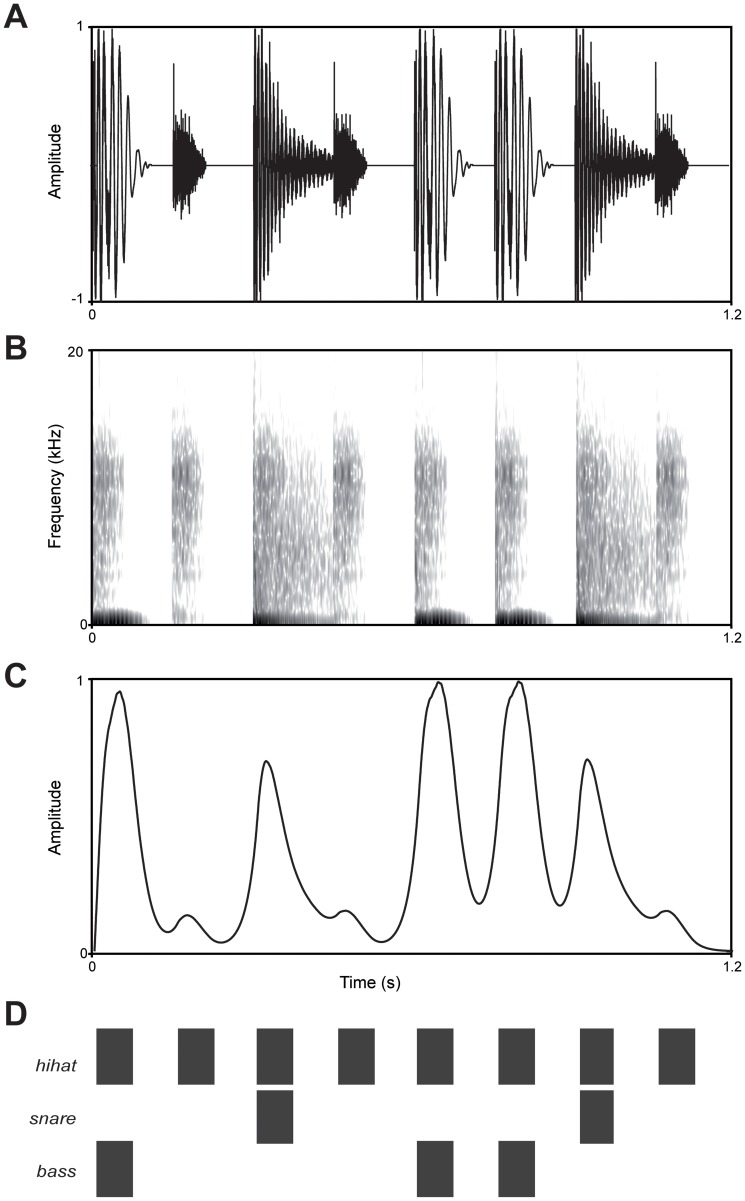
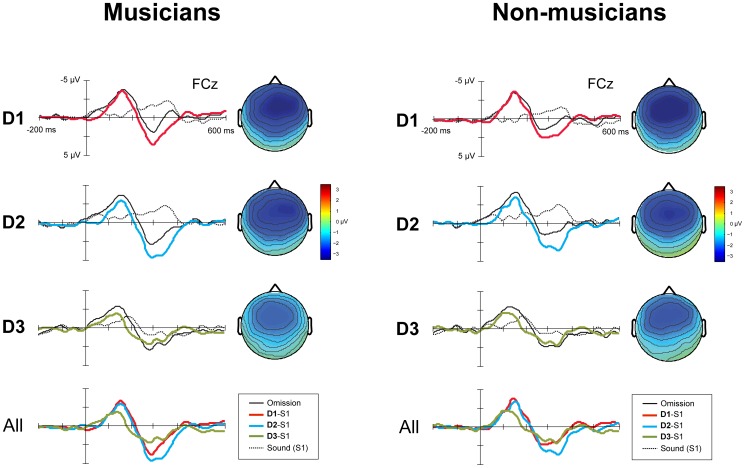
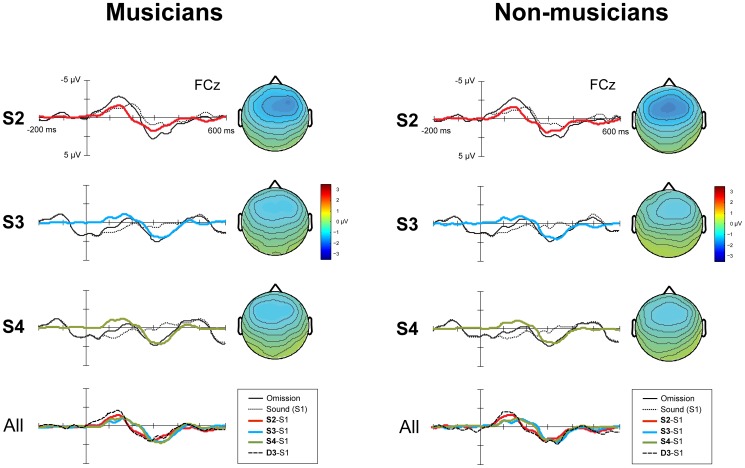
The perception of a regular beat is fundamental to music processing. Here we examine whether the detection of a regular beat is pre-attentive for metrically simple, acoustically varying stimuli using the mismatch negativity (MMN), an ERP response elicited by violations of acoustic regularity irrespective of whether subjects are attending to the stimuli. Both musicians and non-musicians were presented with a varying rhythm with a clear accent structure in which occasionally a sound was omitted. We compared the MMN response to the omission of identical sounds in different metrical positions. Most importantly, we found that omissions in strong metrical positions, on the beat, elicited higher amplitude MMN responses than omissions in weak metrical positions, not on the beat. This suggests that the detection of a beat is pre-attentive when highly beat inducing stimuli are used. No effects of musical expertise were found. Our results suggest that for metrically simple rhythms with clear accents beat processing does not require attention or musical expertise. In addition, we discuss how the use of acoustically varying stimuli may influence ERP results when studying beat processing.
Conflict of interest statement
Figures
References
-
- Cooper G, Meyer LB (1960) The rhythmic structure of music. Chicago, IL: University of Chicago Press.
-
- Honing H (2013) Structure and interpretation of rhythm in music. In: Deutsch D, editor. Psychology of Music. London: Academic Press. pp. 369–404.
-
- Honing H (2012) Without it no music: beat induction as a fundamental musical trait. Ann N Y Acad Sci 1252: 85–91. - PubMed
-
- Large EW (2008) Resonating to musical rhythm: theory and experiment. In: Grondin S, editor. Psychology of time. Bingley, UK: Emerald Group Publishing. pp. 189–231.
Publication types
MeSH terms
LinkOut - more resources
Full Text Sources
Other Literature Sources
