. 2014 May 28;9(5):e98111.
doi: 10.1371/journal.pone.0098111. eCollection 2014.

Autoinducer-2 plays a crucial role in gut colonization and probiotic functionality of Bifidobacterium breve UCC2003

Affiliations

Autoinducer-2 plays a crucial role in gut colonization and probiotic functionality of Bifidobacterium breve UCC2003

Steven E A Christiaen et al. PLoS One. .

Abstract

In the present study we show that luxS of Bifidobacterium breve UCC2003 is involved in the production of the interspecies signaling molecule autoinducer-2 (AI-2), and that this gene is essential for gastrointestinal colonization of a murine host, while it is also involved in providing protection against Salmonella infection in Caenorhabditis elegans. We demonstrate that a B. breve luxS-insertion mutant is significantly more susceptible to iron chelators than the WT strain and that this sensitivity can be partially reverted in the presence of the AI-2 precursor DPD. Furthermore, we show that several genes of an iron starvation-induced gene cluster, which are downregulated in the luxS-insertion mutant and which encodes a presumed iron-uptake system, are transcriptionally upregulated under in vivo conditions. Mutation of two genes of this cluster in B. breve UCC2003 renders the derived mutant strains sensitive to iron chelators while deficient in their ability to confer gut pathogen protection to Salmonella-infected nematodes. Since a functional luxS gene is present in all tested members of the genus Bifidobacterium, we conclude that bifidobacteria operate a LuxS-mediated system for gut colonization and pathogen protection that is correlated with iron acquisition.


Conflict of interest statement

Competing Interests: The authors have declared that no competing interests exist.

Figures

Figure 1
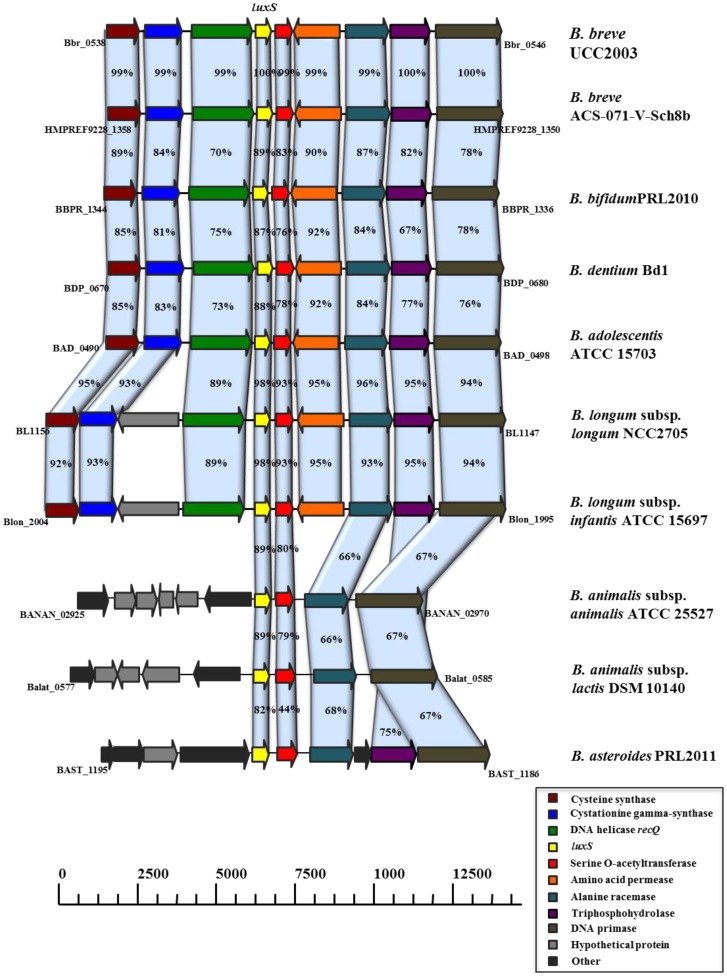
Figure 1. Comparison of the luxS genetic loci of B. breve UCC2003 with corresponding luxS loci from other sequenced bifidobacteria.
Each solid arrow indicates an open reading frame. The lengths of the arrows are proportional to the length of the predicted open reading frame. The colour coding which is indicative of putative function, is indicated within the arrow. Orthologs are marked with the same colour while the amino acid identity of each predicted protein is indicated as a percentage relative to its equivalent protein encoded by B. breve UCC2003.
Figure 2
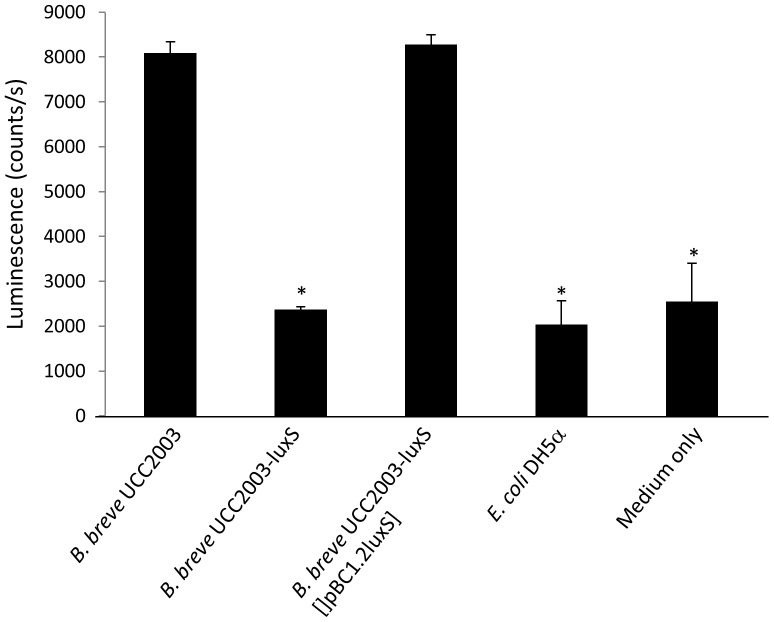
Figure 2. Luminescence signal of the V. harveyi BB170 biosensor strain in the presence of sterile and neutralized supernatant of B. breve UCC2003, the insertion mutant B. breve UCC2003-luxS and the complemented strain B. breve UCC2003-luxS [pBC1.2luxS].
Data obtained with E. coli DH5α (a strain not producing AI-2) and a medium-only control are included as reference. Data shown are means ± SEM. (*, luminescence is significantly lower than than produced with supernatant of B. breve UCC2003, p<0.05, compared to WT; n = 3).
Figure 3
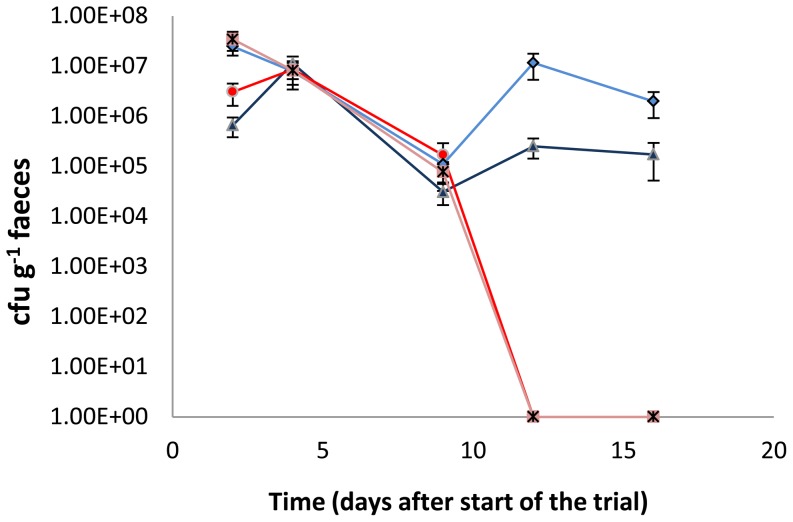
Figure 3. Murine colonization trial.
CFU g−1 feces of B. breve UCC2003 (dark blue) and B. breve UCC2003-luxS (red) administered individually, or simultaneously {a mixture of equal numbers of B. breve UCC2003 (pale blue) and B. breve UCC2003-luxS (pink)}. Administration started at day 0 and was continued for 3 consecutive days. Data shown are mean ± SEM. (n = 7).
Figure 4
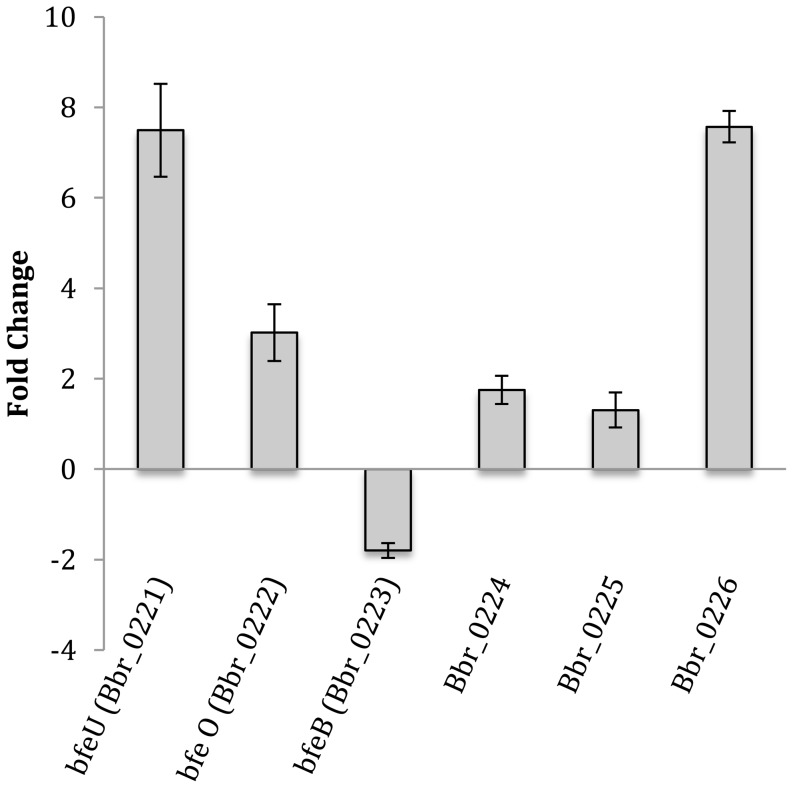
Figure 4. Relative normalized expression levels (obtained with qRT-PCR) of the iron regulated genes in B. breve UCC2003 retrieved from C. elegans gut, compared to in vitro grown B. breve UCC2003.
Data shown are means ± SEM. (*, p<0.05, compared to in vitro expression levels; n = 3).
Figure 5
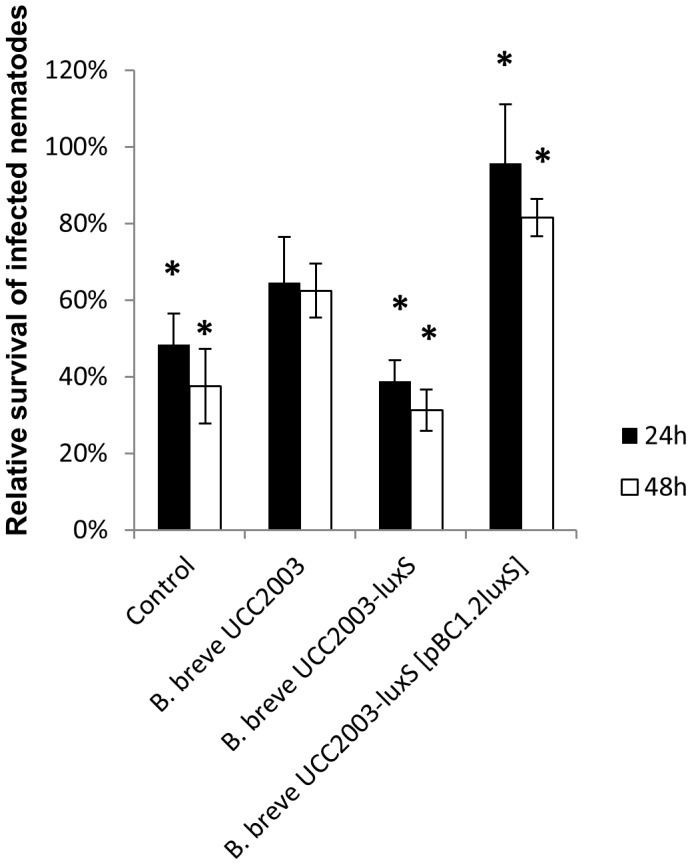
Figure 5. Relative survival of Salmonella-infected C. elegans nematodes to which B. breve UCC2003 WT and various mutants were administered (24 h{black bar} and 48 h{white bars} after Salmonella infection).
Data shown are means ± SEM. Control: infected nematodes that have not been administered any bifidobacteria. (*  =  significantly increased or decreased survival as compared to Salmonella-infected C. elegans nematodes to which B. breve UCC2003 WT was administered, p<0.05; n = 3).
Figure 6
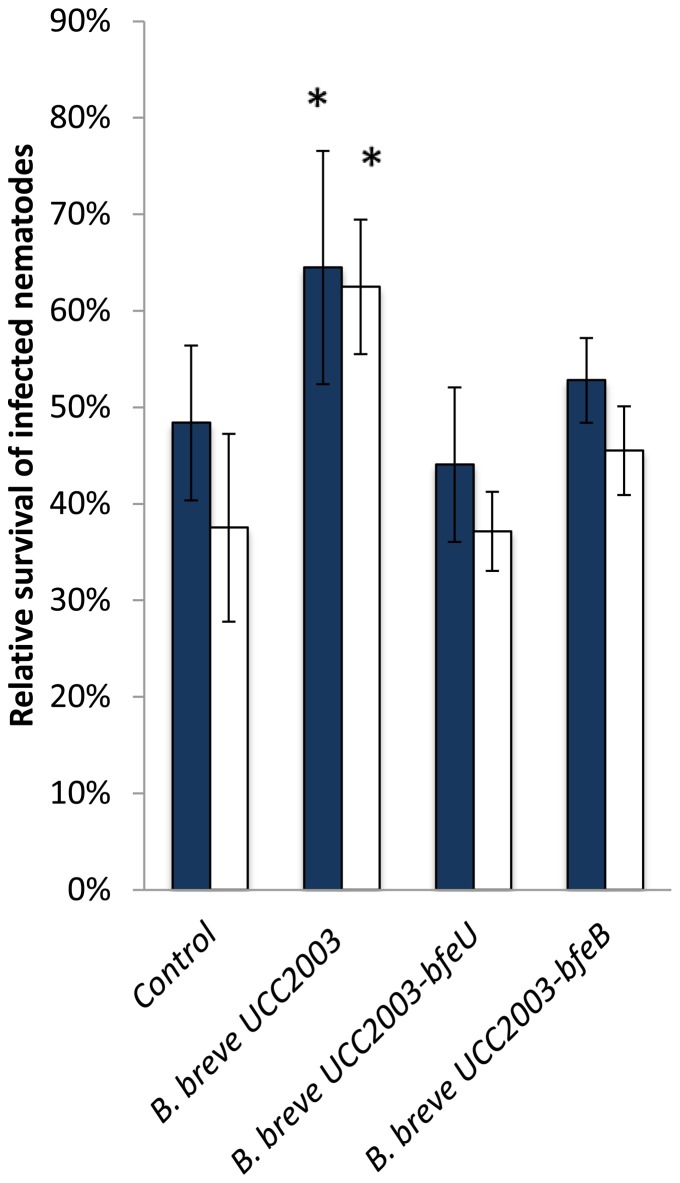
Figure 6. Relative survival of Salmonella-infected C. elegans nematodes to which B. breve UCC2003 WT or mutants UCC2003-bfeU or UCC2003-bfeB were administered (24 h {blue bars} and 48 h {white bars} after Salmonella infection).
Data shown are means ± SEM. Control: infected nematodes that have not been administered any bifidobacteria. (*  =  significantly different as compared to the control, p<0.05; n = 3).

References

    1. Isolauri E, Rautava S, Kalliomaki M, Kirjavainen P, Salminen S (2002) Role of probiotics in food hypersensitivity. Curr Opin Allergy Clin Immunol 2: 263–271. - PubMed
    1. Butler CC, Duncan D, Hood K (2012) Does taking probiotics routinely with antibiotics prevent antibiotic associated diarrhoea? BMJ 344: e682. - PubMed
    1. Gourbeyre P, Denery S, Bodinier M (2011) Probiotics, prebiotics, and synbiotics: impact on the gut immune system and allergic reactions. J Leukoc Biol 89: 685–695. - PubMed
    1. Jonkers D, Penders J, Masclee A, Pierik M (2012) Probiotics in the management of inflammatory bowel disease: a systematic review of intervention studies in adult patients. Drugs 72: 803–823. - PubMed
    1. Damman CJ, Miller SI, Surawicz CM, Zisman TL (2012) The microbiome and inflammatory bowel disease: is there a therapeutic role for fecal microbiota transplantation? Am J Gastroenterol 107: 1452–1459. - PubMed

Publication types

LinkOut - more resources