Protective Effects of N-acetylcysteine and a Prostaglandin E1 Analog, Alprostadil, Against Hepatic Ischemia: Reperfusion Injury in Rats
- PMID: 24872935
- PMCID: PMC4032844
- DOI: 10.4103/2225-4110.124351
Protective Effects of N-acetylcysteine and a Prostaglandin E1 Analog, Alprostadil, Against Hepatic Ischemia: Reperfusion Injury in Rats
Abstract
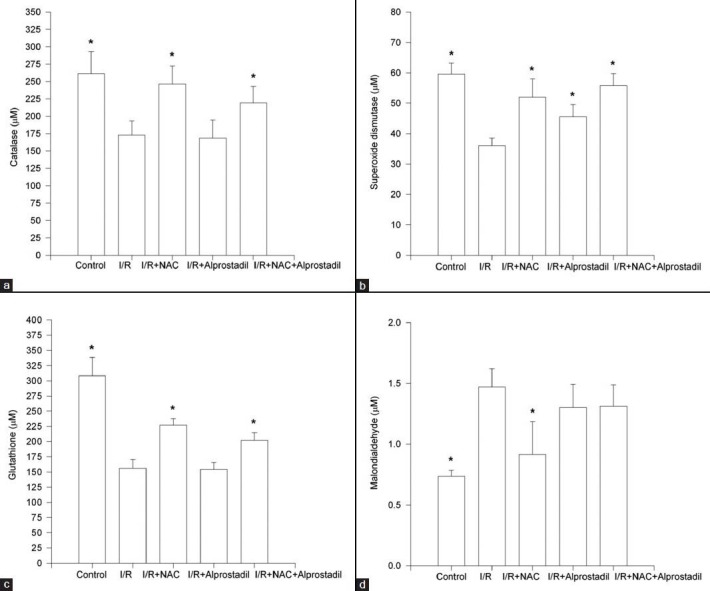
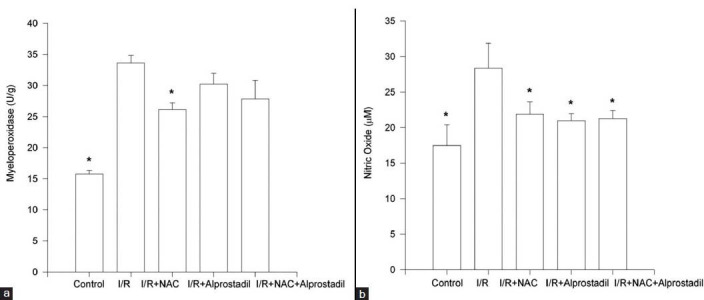
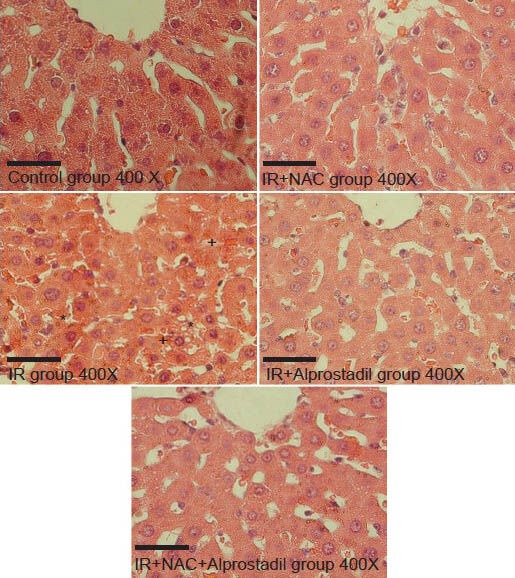
Ischemia-reperfusion (I/R) injury has a complex pathophysiology resulting from a number of contributing factors. Therefore, it is difficult to achieve effective treatment or protection by individually targeting the mediators or mechanisms. Our aim was to analyze the individual and combined effects of N-acetylcysteine (NAC) and the prostaglandin E1 (PGE1) analog alprostadil on hepatic I/R injury in rats. Thirty male Sprague-Dawley rats were randomly divided into five groups (six rats per group) as follows: Control group, I/R group, I/R + NAC group, I/R + alprostadil group, and I/R + NAC + alprostadil group. The rats received injections of NAC (150 mg/kg) and/or alprostadil (0.05 μg/kg) over a period of 30 min prior to ischemia. These rats were then subjected to 60 min of hepatic ischemia followed by a 60-min reperfusion period. Hepatic superoxide dismutase (SOD), catalase, and glutathione levels were significantly decreased as a result of I/R injury, but they were increased in groups treated with NAC. Hepatic malondialdehyde (MDA), myeloperoxidase (MPO), and nitric oxide (NO) activities were significantly increased after I/R injury, but they were decreased in the groups with NAC treatment. Alprostadil decreased NO production, but had no effect on MDA and MPO. Histological results showed that both NAC and alprostadil were effective in improving liver tissue morphology during I/R injury. Although NAC and alprostadil did not have a synergistic effect, our findings suggest that treatment with either NAC or alprostadil has benefits for ameliorating hepatic I/R injury.
Keywords: Alprostadil; Ischemia–reperfusion; N-acetylcysteine; Prostaglandin E1 analog.
Figures
References
-
- de la Monte SM, Arcidi JM, Moore GW, Hutchins GM. Midzonal necrosis as a pattern of hepatocellular injury after shock. Gastroenterology. 1984;86:627–31. - PubMed
-
- Yoshikawa T, Murakami M, Yoshida N, Seto O, Kondo M. Effects of superoxide dismutase and catalase on disseminated intravascular coagulation in rats. Thromb Haemost. 1983;50:869–72. - PubMed
-
- Arthur MJ. Reactive oxygen intermediates and liver injury. J Hepatol. 1988;6:125–31. - PubMed
-
- McCord JM. Oxygen-derived free radicals in postischemic tissue injury. N Engl J Med. 1985;312:159–63. - PubMed
LinkOut - more resources
Full Text Sources
Other Literature Sources
Research Materials
Miscellaneous