


Uncertainty in model predictions of Vibrio vulnificus response to climate variability and change: a Chesapeake Bay case study
- PMID: 24874082
- PMCID: PMC4038616
- DOI: 10.1371/journal.pone.0098256
Uncertainty in model predictions of Vibrio vulnificus response to climate variability and change: a Chesapeake Bay case study
Abstract
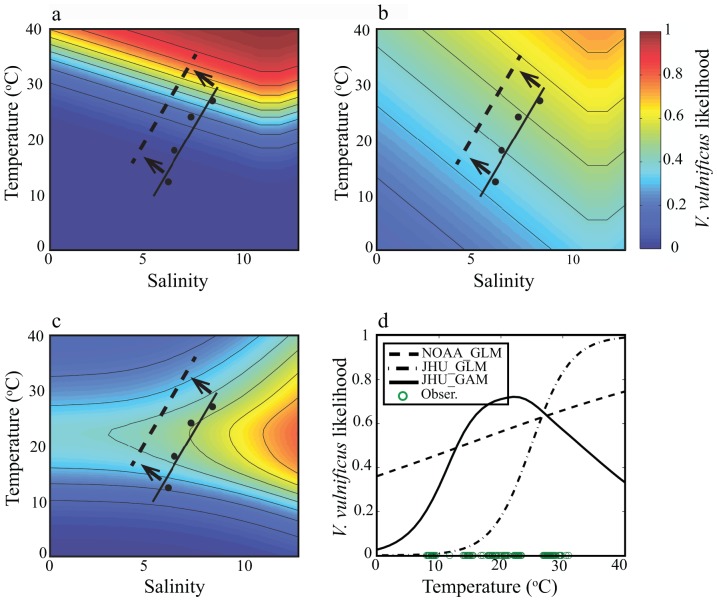
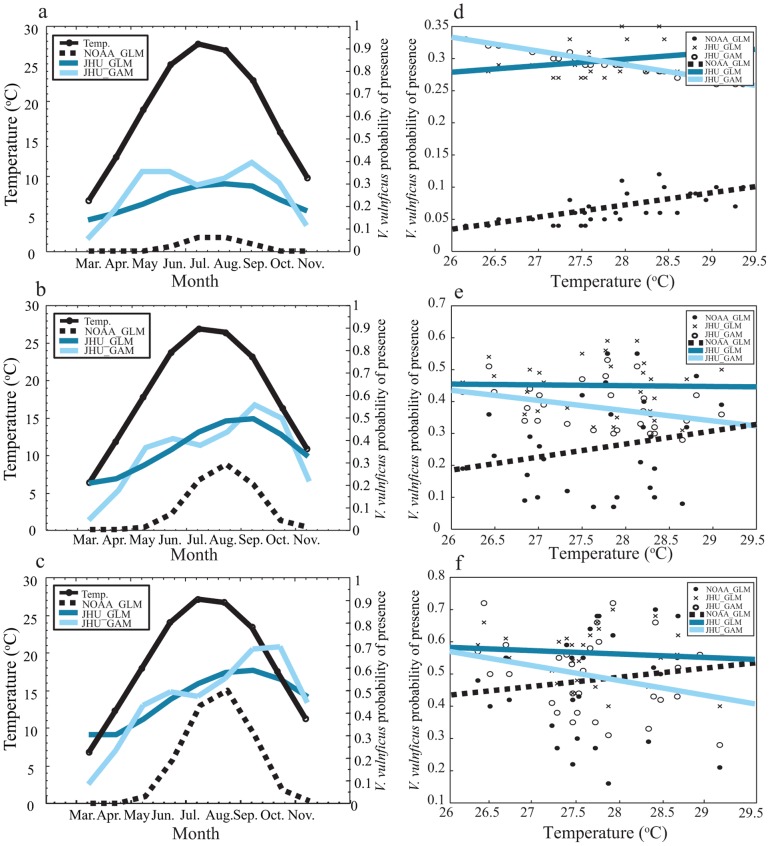
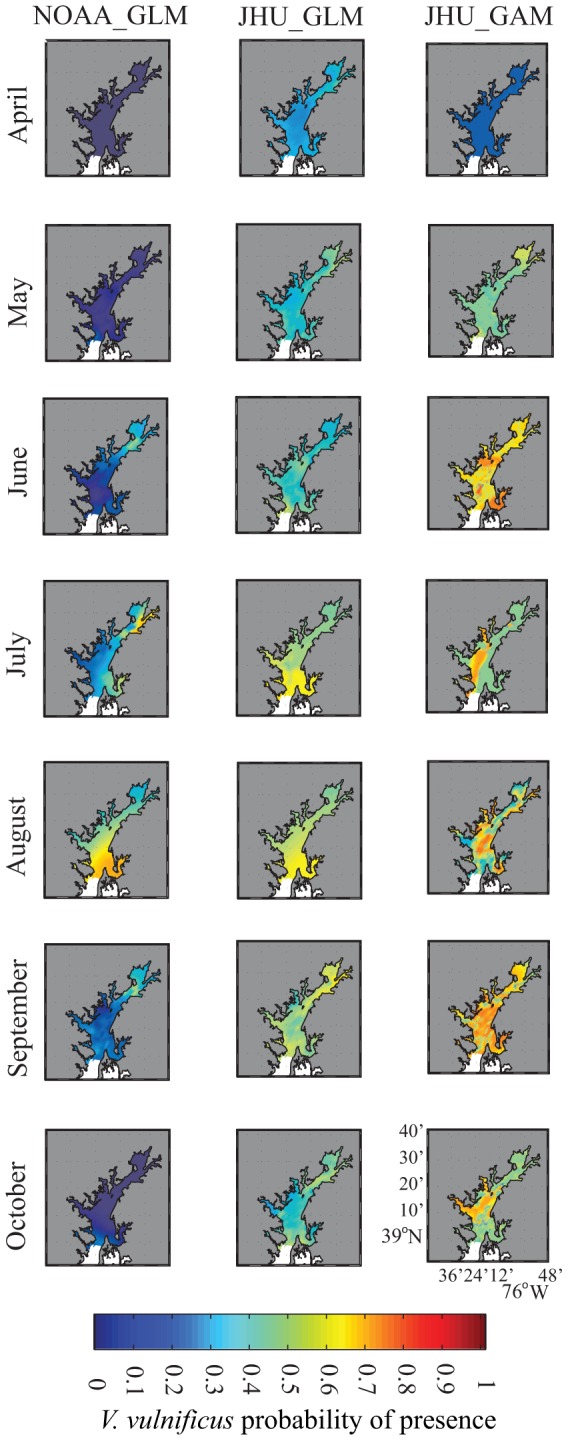
The effect that climate change and variability will have on waterborne bacteria is a topic of increasing concern for coastal ecosystems, including the Chesapeake Bay. Surface water temperature trends in the Bay indicate a warming pattern of roughly 0.3-0.4°C per decade over the past 30 years. It is unclear what impact future warming will have on pathogens currently found in the Bay, including Vibrio spp. Using historical environmental data, combined with three different statistical models of Vibrio vulnificus probability, we explore the relationship between environmental change and predicted Vibrio vulnificus presence in the upper Chesapeake Bay. We find that the predicted response of V. vulnificus probability to high temperatures in the Bay differs systematically between models of differing structure. As existing publicly available datasets are inadequate to determine which model structure is most appropriate, the impact of climatic change on the probability of V. vulnificus presence in the Chesapeake Bay remains uncertain. This result points to the challenge of characterizing climate sensitivity of ecological systems in which data are sparse and only statistical models of ecological sensitivity exist.
Conflict of interest statement
Figures
References
-
- Baker-Austin C, Trinanes JA, Taylor NG, Hartnell R, Siitonen A, et al. (2012) Emerging Vibrio risk at high latitudes in response to ocean warming. Nature Climate Change 3: 73–77.
-
- Oberbeckmann S, Fuchs BM, Meiners M, Wichels A, Wiltshire KH, et al. (2012) Seasonal dynamics and modeling of a Vibrio community in coastal waters of the North Sea. Microbial Ecology 63: 543–551. - PubMed
-
- Maryland Department of Health (2013) Cases of selected notifiable conditions reported in Maryland. URL http://phpa.dhmh.maryland.gov/SitePages/disease-conditions-count rates.aspx.
Publication types
MeSH terms
LinkOut - more resources
Full Text Sources
Other Literature Sources
Medical
Miscellaneous
