


Systems biology of cisplatin resistance: past, present and future
- PMID: 24874729
- PMCID: PMC4047912
- DOI: 10.1038/cddis.2013.428
Systems biology of cisplatin resistance: past, present and future
Abstract
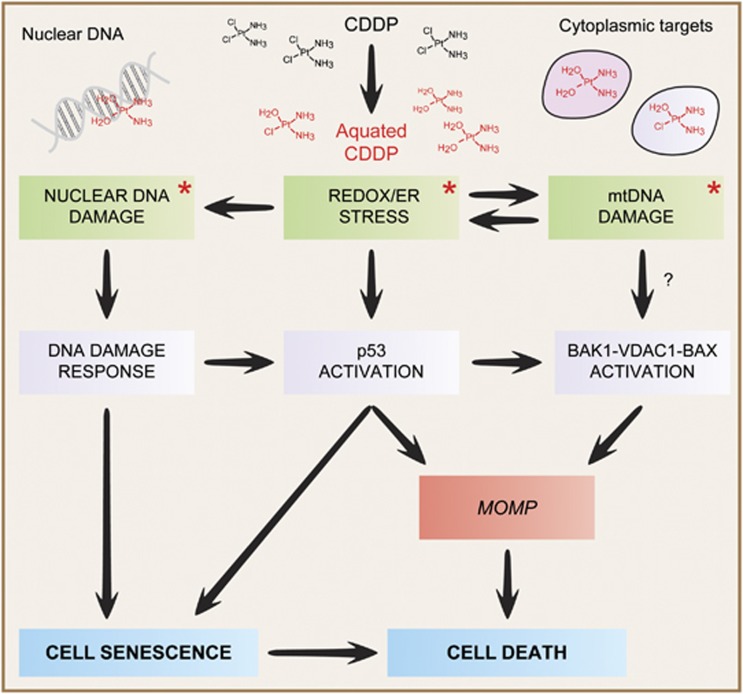
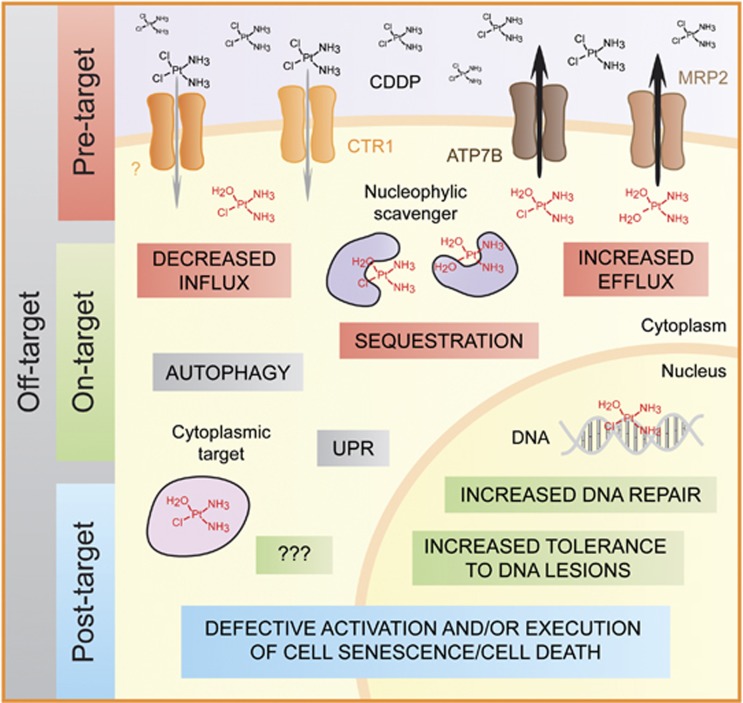
The platinum derivative cis-diamminedichloroplatinum(II), best known as cisplatin, is currently employed for the clinical management of patients affected by testicular, ovarian, head and neck, colorectal, bladder and lung cancers. For a long time, the antineoplastic effects of cisplatin have been fully ascribed to its ability to generate unrepairable DNA lesions, hence inducing either a permanent proliferative arrest known as cellular senescence or the mitochondrial pathway of apoptosis. Accumulating evidence now suggests that the cytostatic and cytotoxic activity of cisplatin involves both a nuclear and a cytoplasmic component. Despite the unresolved issues regarding its mechanism of action, the administration of cisplatin is generally associated with high rates of clinical responses. However, in the vast majority of cases, malignant cells exposed to cisplatin activate a multipronged adaptive response that renders them less susceptible to the antiproliferative and cytotoxic effects of the drug, and eventually resume proliferation. Thus, a large fraction of cisplatin-treated patients is destined to experience therapeutic failure and tumor recurrence. Throughout the last four decades great efforts have been devoted to the characterization of the molecular mechanisms whereby neoplastic cells progressively lose their sensitivity to cisplatin. The advent of high-content and high-throughput screening technologies has accelerated the discovery of cell-intrinsic and cell-extrinsic pathways that may be targeted to prevent or reverse cisplatin resistance in cancer patients. Still, the multifactorial and redundant nature of this phenomenon poses a significant barrier against the identification of effective chemosensitization strategies. Here, we discuss recent systems biology studies aimed at deconvoluting the complex circuitries that underpin cisplatin resistance, and how their findings might drive the development of rational approaches to tackle this clinically relevant problem.
Figures
References
-
- Peyrone M. Ueber die Einwirkung des Ammoniaks auf Platinchlorür. Ann Chemie Pharm. 1844;51:1–29.
-
- Burchenal JH, Kalaher K, Dew K, Lokys L. Rationale for development of platinum analogs. Cancer Treat Rep. 1979;63:1493–1498. - PubMed
-
- Rosenberg B, Vancamp L, Krigas T. Inhibition of cell division in Escherichia coli by electrolysis products from a platinum electrode. Nature. 1965;205:698–699. - PubMed
-
- Rosenberg B, VanCamp L, Trosko JE, Mansour VH. Platinum compounds: a new class of potent antitumour agents. Nature. 1969;222:385–386. - PubMed
-
- Lebwohl D, Canetta R. Clinical development of platinum complexes in cancer therapy: an historical perspective and an update. Eur J Cancer. 1998;34:1522–1534. - PubMed
Publication types
MeSH terms
Substances
LinkOut - more resources
Full Text Sources
Other Literature Sources
Miscellaneous
