


The Prevalence of Clinical and Electrocardiographic Risk Factors of Cardiovascular Death Among On-duty Professional Firefighters
- PMID: 24874885
- PMCID: PMC4247346
- DOI: 10.1097/JCN.0000000000000165
The Prevalence of Clinical and Electrocardiographic Risk Factors of Cardiovascular Death Among On-duty Professional Firefighters
Abstract
Background: Firefighters have twice as many cardiovascular deaths as police officers and 4 times as many as emergency medical responders. The etiology for this high rate of mortality remains unknown. The electrocardiogram (ECG) is a widely used tool to screen populations at risk, yet there are no available on-duty, high-resolution ECG recordings from firefighters.
Objective: We sought to evaluate the prevalence of clinical and ECG risk factors among on-duty professional firefighters during 12-lead ECG holter monitoring and exercise stress testing.
Methods: Firefighters were recruited from Surveying & Assessing Firefighters Fitness & Electrocardiogram (SAFFE) study. This descriptive study recruited firefighters from 7 firehouses across Upstate New York who completed on-duty 24-hour Holter ECG monitoring and a standard exercise stress test. All analyses were completed by a reviewer blinded to all clinical data.
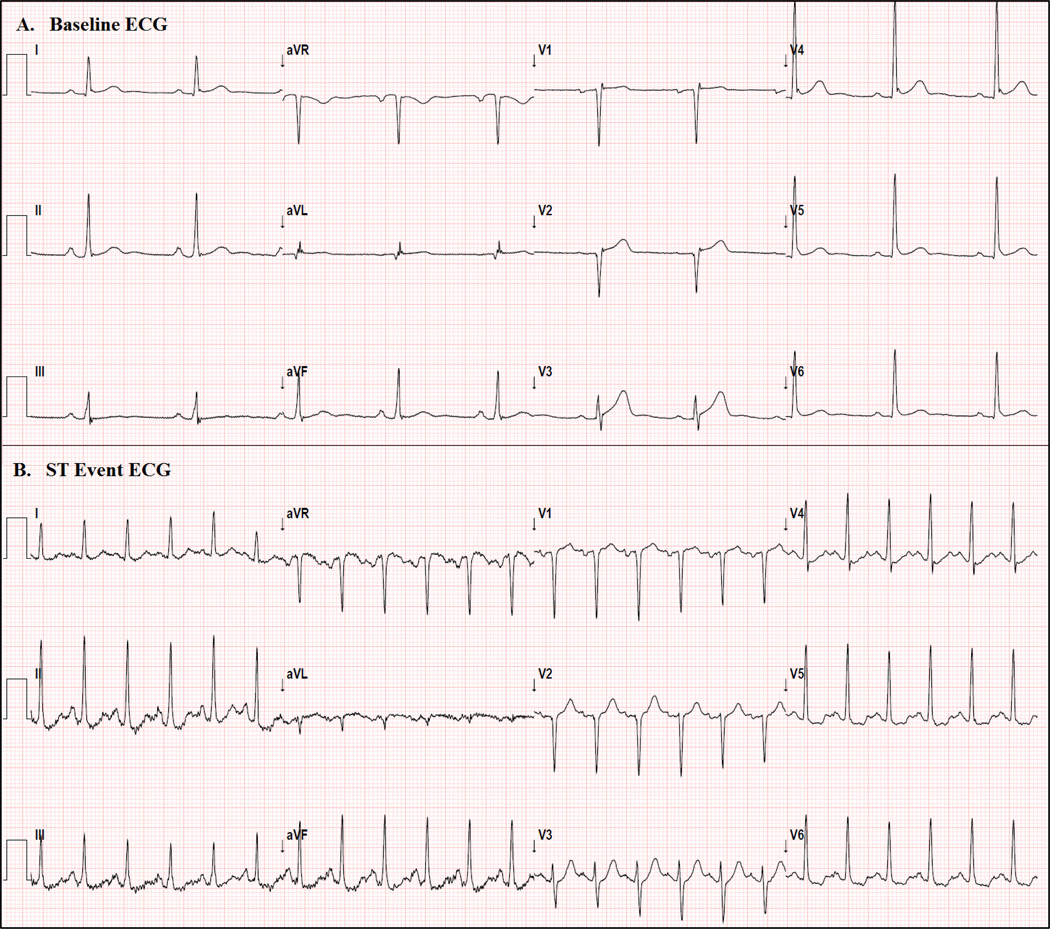
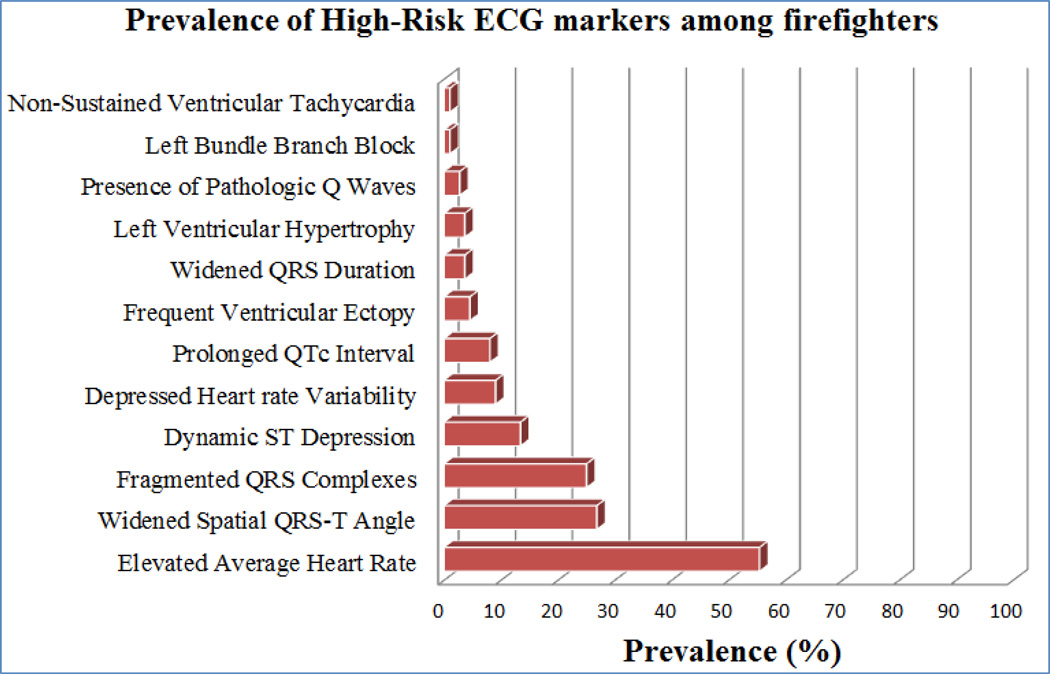
Results: A total of 112 firefighters (mean [SD] age, 44 [8] years; mostly white men) completed the study. Although all firefighters were in normal sinus rhythm, more than half of them had at least 1 high-risk ECG risk factor present, including abnormal sympathetic tone (elevated heart rate, 54%), abnormal repolarization (wide QRS-T angle, 25%), myocardial scarring (fragmented QRS, 24%), and myocardial ischemia (ST depression, 24%). Most firefighters tolerated the treadmill exercise stress test well (metabolic equivalent tasks, 11.8 + 2.5]); however, almost one-third had abnormal results of stress tests that required further evaluation to rule out subclinical coronary artery disease.
Conclusions: Among on-duty professional firefighters, high-risk ECG markers of fatal cardiac events and abnormal stress test results that warrant further evaluation are prevalent. Annual physical checkups with routine 12-lead ECG can identify those who might benefit from preventive cardiovascular services.
Conflict of interest statement
No Conflict of Interests
Figures
References
-
- Fahy R. US firefights fatalities due to sudden cardiac death 1995–2004. National Fire Protection Association National Institute for Occupational Safety and Health (NIOSH); 2005.
-
- Kales SN, Soteriades ES, Christophi CA, Christiani DC. Emergency duties and deaths from heart disease among firefighters in the United States. New England Journal of Medicine. 2007;356:1207–1215. - PubMed
Publication types
MeSH terms
Grants and funding
LinkOut - more resources
Full Text Sources
Medical
