


Increased acid responsiveness in vagal sensory neurons in a guinea pig model of eosinophilic esophagitis
- PMID: 24875100
- PMCID: PMC4101676
- DOI: 10.1152/ajpgi.00097.2014
Increased acid responsiveness in vagal sensory neurons in a guinea pig model of eosinophilic esophagitis
Abstract
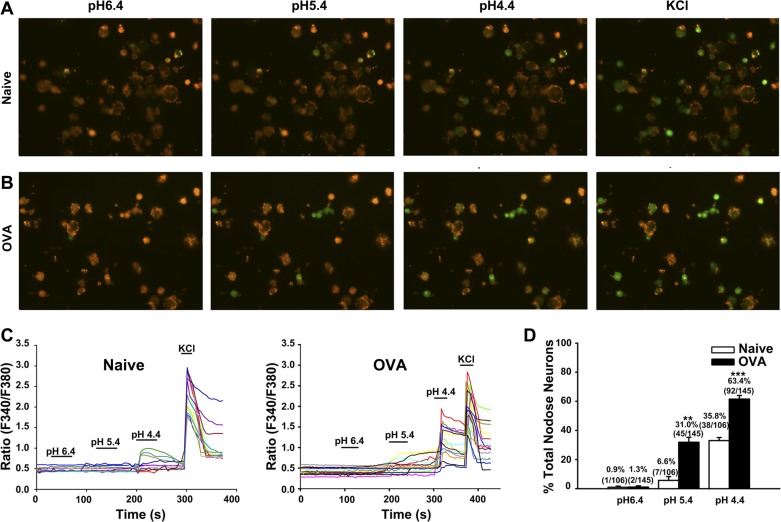
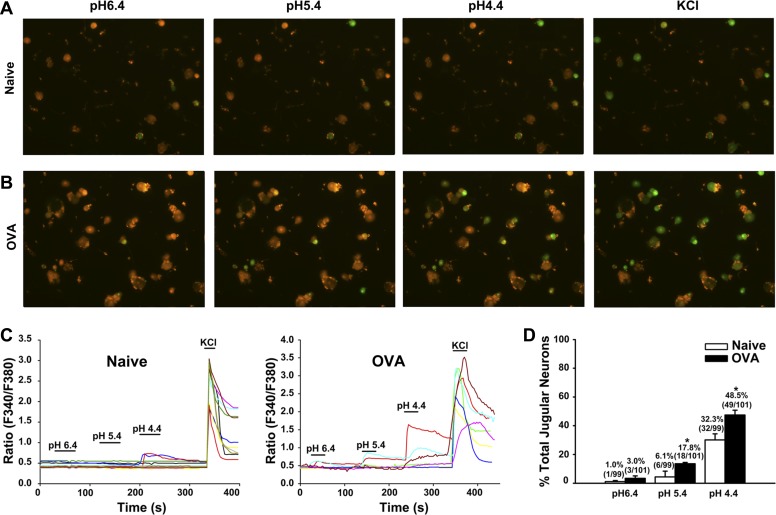
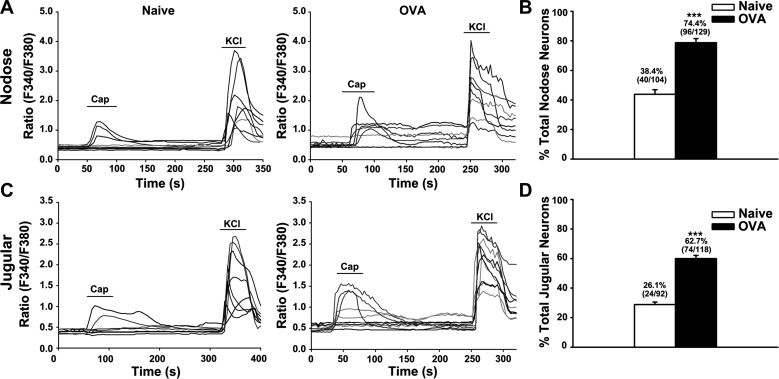
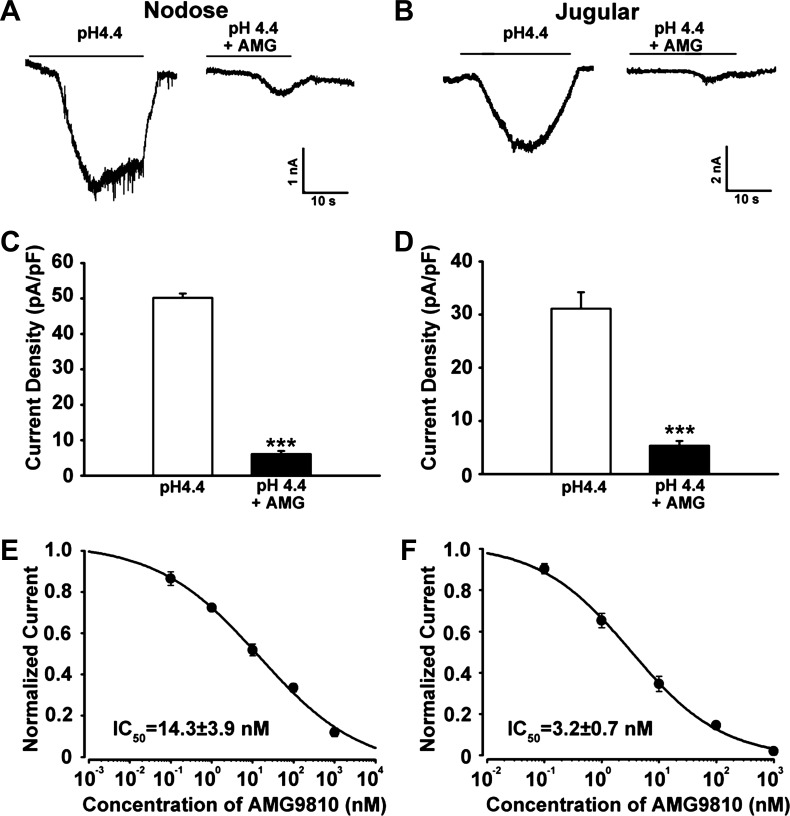
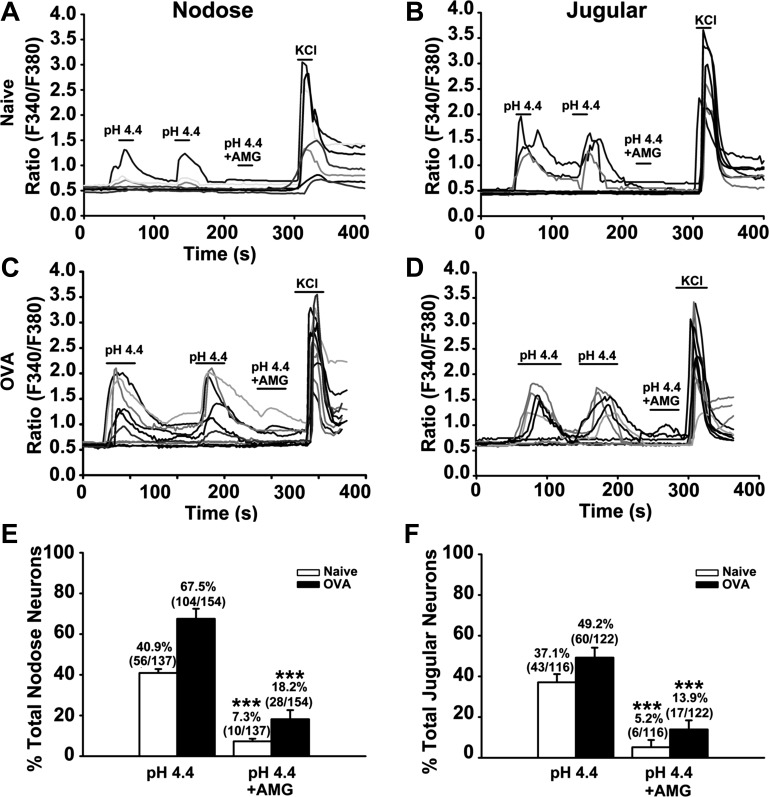
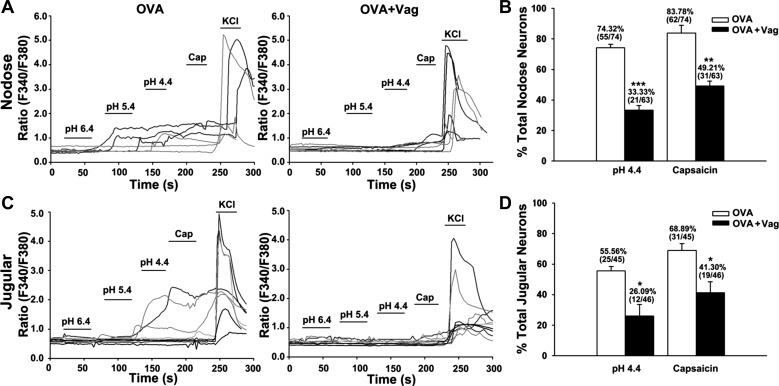
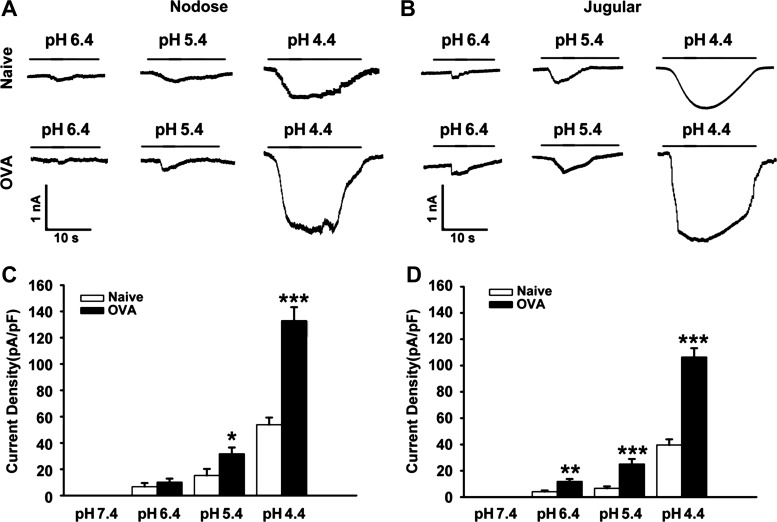
Eosinophilic esophagitis (EoE) is characterized with eosinophils and mast cells predominated allergic inflammation in the esophagus and present with esophageal dysfunctions such as dysphagia, food impaction, and heartburn. However, the underlying mechanism of esophageal dysfunctions is unclear. This study aims to determine whether neurons in the vagal sensory ganglia are modulated in a guinea pig model of EoE. Animals were actively sensitized by ovalbumin (OVA) and then challenged with aerosol OVA inhalation for 2 wk. This results in a mild esophagitis with increases in mast cells and eosinophils in the esophageal wall. Vagal nodose and jugular neurons were disassociated, and their responses to acid, capsaicin, and transient receptor potential vanilloid type 1 (TRPV1) antagonist AMG-9810 were studied by calcium imaging and whole cell patch-clamp recording. Compared with naïve animals, antigen challenge significantly increased acid responsiveness in both nodose and jugular neurons. Their responses to capsaicin were also increased after antigen challenge. AMG-9810, at a concentration that blocked capsaicin-evoked calcium influx, abolished the increase in acid-induced activation in both nodose and jugular neurons. Vagotomy strongly attenuated those increased responses of nodose and jugular neurons to both acid and capsaicin induced by antigen challenge. These data for the first time demonstrated that prolonged antigen challenge significantly increases acid responsiveness in vagal nodose and jugular ganglia neurons. This sensitization effect is mediated largely through TRPV1 and initiated at sensory nerve endings in the peripheral tissues. Allergen-induced enhancement of responsiveness to noxious stimulation by acid in sensory nerve may contribute to the development of esophageal dysfunctions such as heartburn in EoE.
Keywords: antigen; transient receptor potential vanilloid type 1.
Copyright © 2014 the American Physiological Society.
Figures
References
-
- Abonia JP, Rothenberg ME. Eosinophilic esophagitis: rapidly advancing insights. Annu Rev Med 63: 421–434, 2012 - PubMed
-
- Caterina MJ, Julius D. The vanilloid receptor: a molecular gateway to the pain pathway. Annu Rev Neurosci 24: 487–517, 2001 - PubMed
-
- Chuaychoo B, Hunter DD, Myers AC, Kollarik M, Undem BJ. Allergen-induced substance P synthesis in large-diameter sensory neurons innervating the lungs. J Allergy Clin Immunol 116: 325–331, 2005 - PubMed
-
- Gavva NR, Tamir R, Qu Y, Klionsky L, Zhang TJ, Immke D, Wang J, Zhu D, Vanderah TW, Porreca F, Doherty EM, Norman MH, Wild KD, Bannon AW, Louis JC, Treanor JJ. AMG 9810 [(E)-3-(4-t-butylphenyl)-N-(2,3-dihydrobenzo[b][1,4] dioxin-6-yl)acrylamide], a novel vanilloid receptor 1 (TRPV1) antagonist with antihyperalgesic properties. J Pharmacol Exp Ther 313: 474–484, 2005 - PubMed
Publication types
MeSH terms
Substances
Grants and funding
LinkOut - more resources
Full Text Sources
Other Literature Sources
Medical
