


PCR-Based Detection of Babesia ovis in Rhipicephalus bursa and Small Ruminants
- PMID: 24876944
- PMCID: PMC4020301
- DOI: 10.1155/2014/294704
PCR-Based Detection of Babesia ovis in Rhipicephalus bursa and Small Ruminants
Abstract
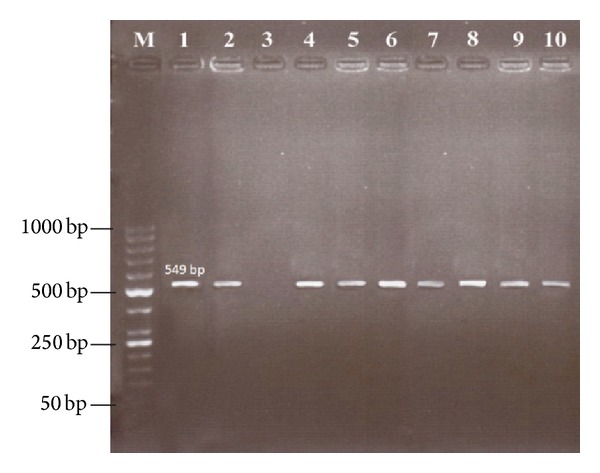
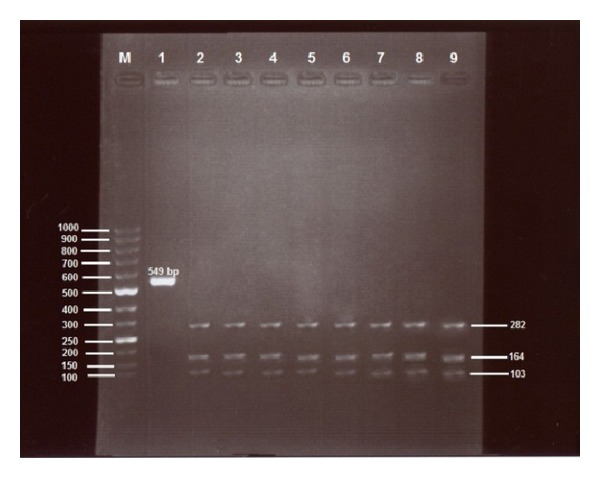
This study aimed to assess the prevalence of Babesia ovis infection in adult Rhipicephalus bursa and small ruminants in West Azerbaijan province, Iran. Blood samples were collected from 280 sheep and 122 goats of forty randomly selected flocks. Specific B. ovis fragment was detected in 67 animals (16.7%), of which 52 animals (18.6%) were sheep and 15 animals (12.2%) goats (P < 0.05). Of the 848 R. bursa collected from naturally infested small ruminants and farm dogs, Babesia ovis was detected by PCR in salivary glands of 94 adult ticks. The frequency of B. ovis infection was higher in flocks with tick in comparison with animals without tick (P < 0.05). Positive amplification from blood of ruminants, ticks, oviposition ticks, eggs, and larvae was subjected to restriction digestion with HphI. One RFLP profile was produced. The PCR-RFLP results indicated that one strain of B. ovis exists in this area. The results showed that the PCR was useful method to investigate the epidemiology of small ruminants' babesiosis. Furthermore, R. Bursa, which can transovarially transmit B. ovis and as well as being widely distributed in West Azerbaijan province, Iran, might play an important role in the field as a natural vector of B. ovis.
Figures
References
-
- Rahbari S, Nabian S, Khaki Z, Alidadi N, Ashrafihelan J. Clinical, haematologic and pathologic aspects of experimental ovine babesiosis in Iran. Iranian Journal of Veterinary Research. 2008;9(1):59–64.
-
- Yeruham I, Hadani A, Galker F. Some epizootiological and clinical aspects of ovine babesiosis caused by Babesia ovis—a review. Veterinary Parasitology. 1998;74(2-4):153–163. - PubMed
-
- Rahbari S, Nabian S, Shayan P. Primary report on distribution of tick fauna in Iran. Parasitology Research. 2007;101(supplement 2):S175–S177. - PubMed
-
- Wagner G, Cruz D, Holman P, et al. Non-immunologic methods of diagnosis of babesiosis. Memorias do Instituto Oswaldo Cruz. 1992;87(supplement 3):193–199. - PubMed
LinkOut - more resources
Full Text Sources
Other Literature Sources
