


Two ellagic acids isolated from roots of Sanguisorba officinalis L. promote hematopoietic progenitor cell proliferation and megakaryocyte differentiation
- PMID: 24879588
- PMCID: PMC6271460
- DOI: 10.3390/molecules19045448
Two ellagic acids isolated from roots of Sanguisorba officinalis L. promote hematopoietic progenitor cell proliferation and megakaryocyte differentiation
Abstract
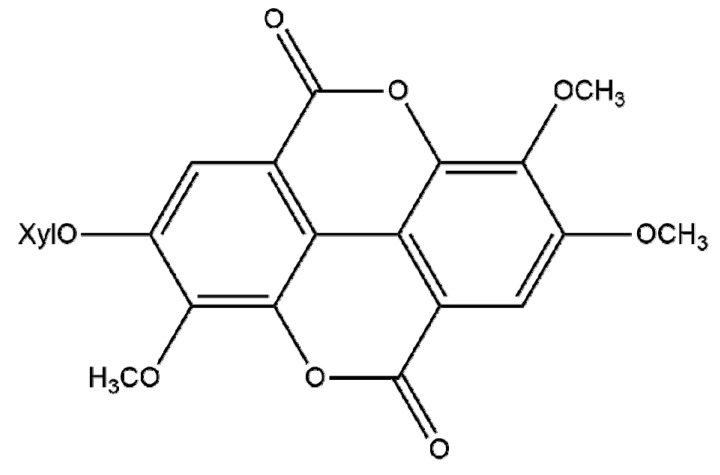
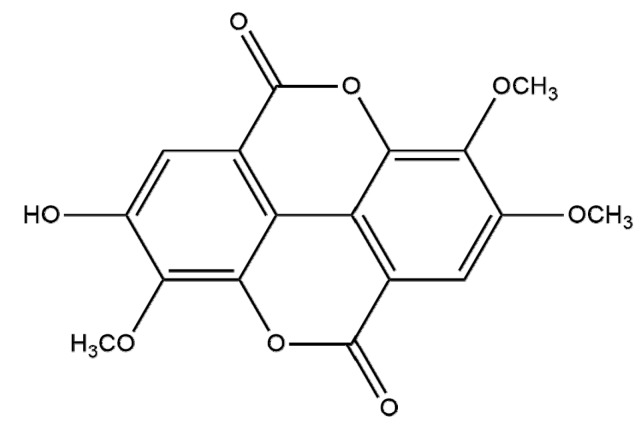
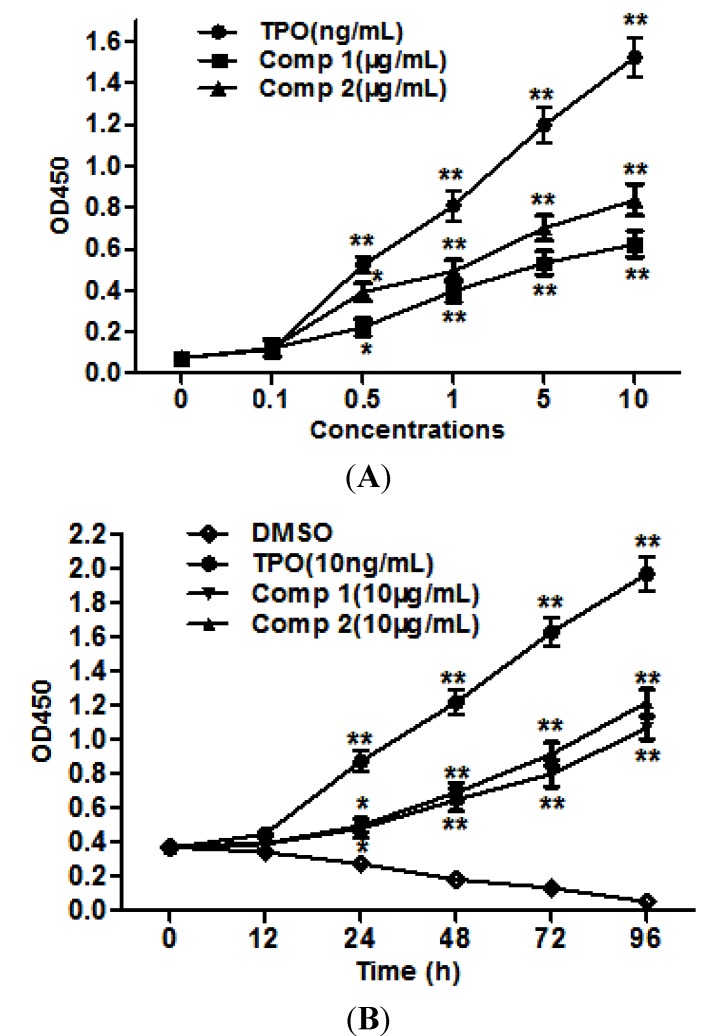
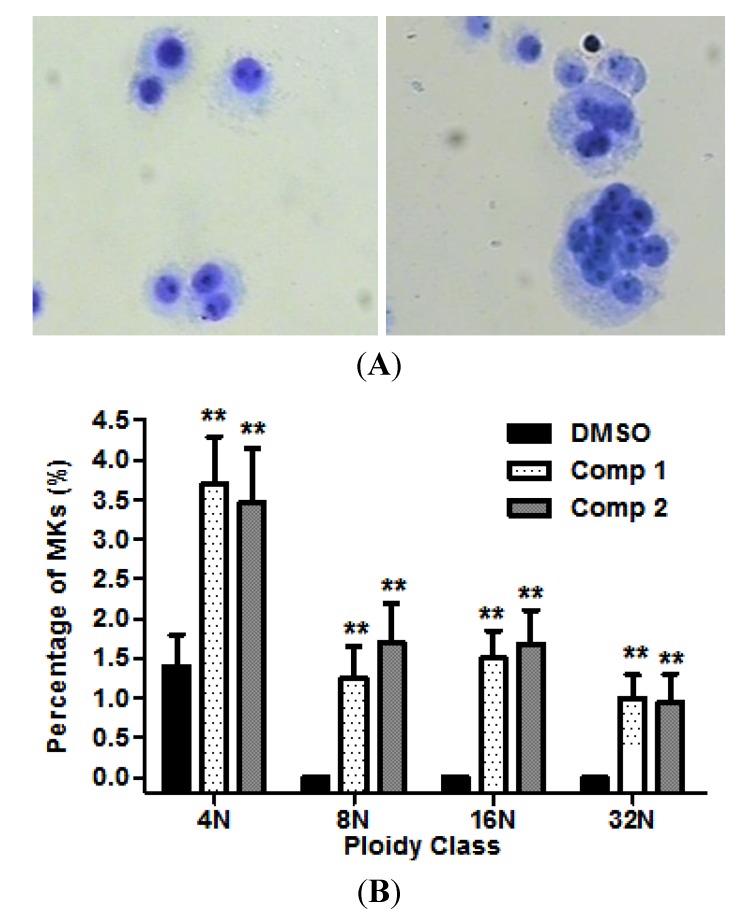
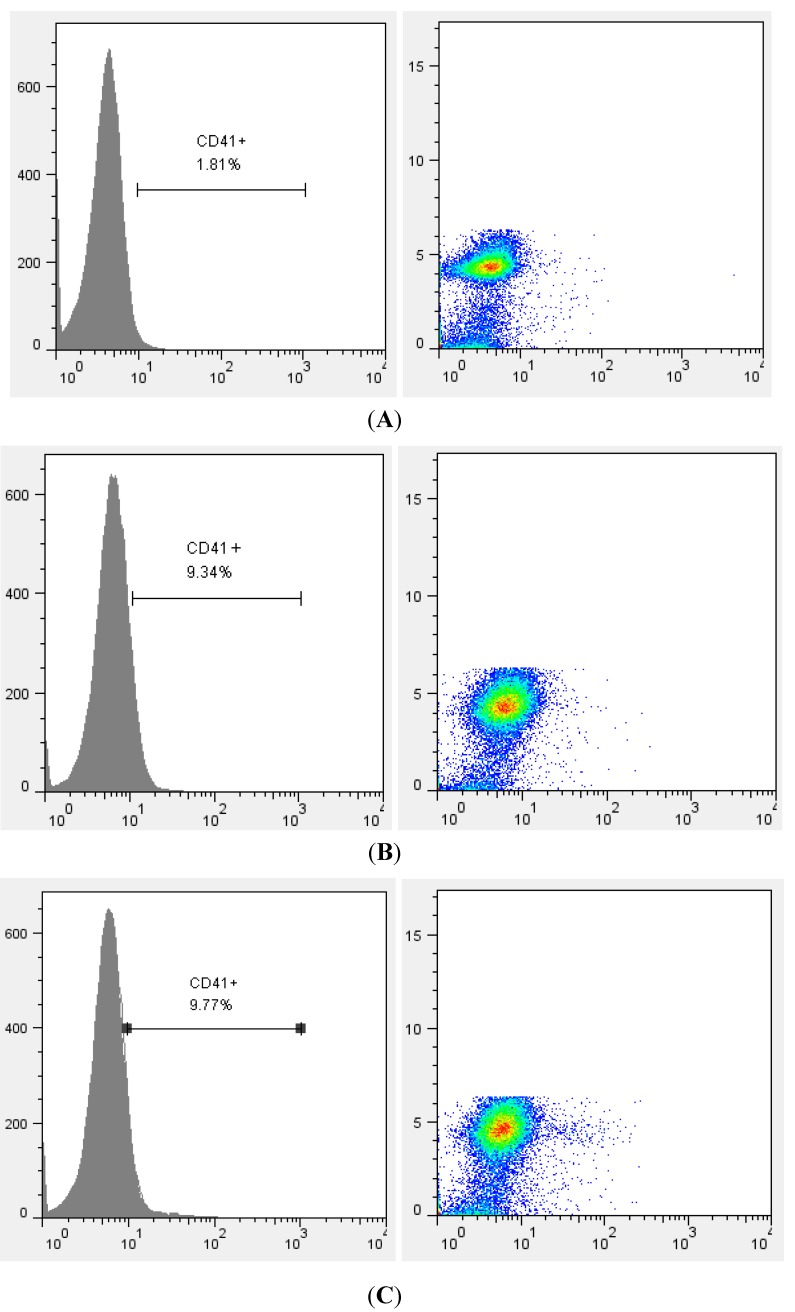
Using a bioassay-directed chromatographic separation, two ellagic acids were obtained from the ethyl acetate extract of the roots of Sanguisorba officinalis L. On the basis of chemical and spectroscopic methods, the two ellagic acids were identified as 3,3',4-tri-O-methylellagic acid-4'-O-β-d-xyloside and 3,3',4-tri-O-methylellagic acid. Stimulation of cell proliferation was assayed in hematopoietic progenitor cells using the Cell Counting kit-8 method. The megakaryocyte differentiation was determined in human erythroleukemia (HEL) cells using Giemsa staining and flow cytometry analysis. The ellagic acids significantly stimulated the proliferation of Baf3/Mpl cells. Morphology analysis and megakaryocyte specific-marker CD41 staining confirmed that the ellagic acids induced megakaryocyte differentiation in HEL cells. This is the first time that 3,3',4-tri-O-methylellagic acid or 3,3',4-tri-O-methylellagic acid-4'-O-β-d-xyloside are reported to induce megakaryopoiesis, suggesting a class of small molecules which differ from others non-peptidyl, and appears to have potential for clinical development as a therapeutic agent for patients with blood platelet disorders.
Conflict of interest statement
The authors declare no conflict of interest.
Figures
References
-
- Vadhan_Raj S., Murray L.J., Bueso-Ramos C., Patel S., Reddy S.P., Hoots W.K., Johnston T., Papadopolous N.E., Hittelman W.N., Johnston D.A., et al. Stimulation of megakaryocyte and platelet production by a single dose of recombinant human thrombopoietin in patients with cancer. Ann. Intern. Med. 1997;126:673–681. doi: 10.7326/0003-4819-126-9-199705010-00001. - DOI - PubMed
-
- Vadhan_Raj S., Verschraegen C.F., Bueso-Ramos C., Broxmeyer H.E., Kudelka A.P., Freedman R.S., Edwards C.L., Gershenson D., Jones D., Ashby M., et al. Recombinant human thrombopoietin attenuates carboplatin-induced severe thrombocytopenia and the need for platlet transfusions in patients with gynecologic cancer. Ann. Intern. Med. 2000;132:364–368. - PubMed
-
- Li J., Yang C., Bertino A., Glaspy J., Roberts M., Kuter D.J. Thrommbocytopenia caused by the development of antibodies to thrombopoietin. Blood. 2001:3241–3248. - PubMed
-
- Basser R.L., O’Flaherty E., Green M., Edmonds M., Nichol J., Menchaca D.M., Cohen B., Begley C.G. Development of pancytopenia with neutralizing antibodies to thrombopoietin after multicycle chemotherapy supported by megakaryocyte growth and development factor. Blood. 2002;99:2599–2602. doi: 10.1182/blood.V99.7.2599. - DOI - PubMed
-
- Nogami W., Yoshida H., Koizumi K., Yamada H., Abe K., Arimura A., Yamane N., Takahashi K., Yamane A., Oda A., et al. The effect of a novel, small non-peptidyl molecule butyzamide on human thrombopoietin receptor and megakaryoopoisis. Haematologica. 2008;93:1495–1504. doi: 10.3324/haematol.12752. - DOI - PubMed
Publication types
MeSH terms
Substances
LinkOut - more resources
Full Text Sources
Other Literature Sources
Medical
