


Effects of a TELephone Counselling Intervention by Pharmacist (TelCIP) on medication adherence, patient beliefs and satisfaction with information for patients starting treatment: study protocol for a cluster randomized controlled trial
- PMID: 24885317
- PMCID: PMC4050986
- DOI: 10.1186/1472-6963-14-219
Effects of a TELephone Counselling Intervention by Pharmacist (TelCIP) on medication adherence, patient beliefs and satisfaction with information for patients starting treatment: study protocol for a cluster randomized controlled trial
Abstract
Background: Adherence to medication is often low. Pharmacists may improve adherence, but a one-size-fits-all approach will not work: different patients have different needs. Goal of the current study is to assess the effectiveness of a patient-tailored, telephone-based intervention by a pharmacist at the start of pharmacotherapy aimed at improving medication adherence, satisfaction with information and counselling and the beliefs about medicines.
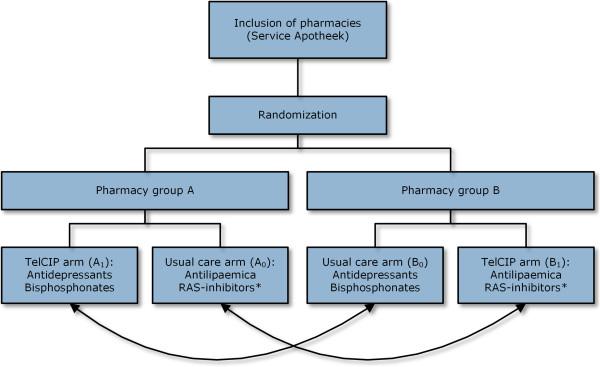
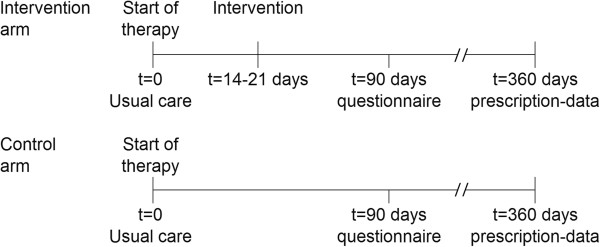
Methods/design: A cluster randomized controlled intervention trial in 30 Dutch pharmacies, randomly assigned to 1 of 2 intervention groups. Each group consists of an intervention arm and an usual care arm. The intervention arm in the first group is the usual care arm in the second group and vice versa. One intervention arm focuses on patients starting with antidepressants or bisphosphonates and the other on antilipaemic drugs or renin angiotensin system (RAS)-inhibitors. The intervention consists of a telephone call by a pharmacist 2 or 3 weeks after a new prescription. A random sample of pharmacies will send questionnaires 3 months after the first prescription. This contains socio-demographic questions, a measure of beliefs about medicines (BMQ), satisfaction with information received (SIMS, abbreviated) and frequency of pharmacy counselling (Consumer Quality Index, CQI, abbreviated). The primary outcome measure will be medication adherence calculated from dispensing records retrieved 12 months after the intervention. Patients' beliefs on medication, perception of the quality of information received and pharmacy counselling are secondary outcomes.
Discussion: The TelCIP study will determine the effectiveness of telephone counselling to improve adherence in patients initiating a new treatment. By measuring satisfaction with information and counselling and beliefs about medication the study will also give clues for the reason of a potential increase in adherence. Finally the study will provide information on which patients are most likely to benefit from this intervention.
Trial registration: The trial is registered at http://www.trialregister.nl under the identifier NTR3237.
Figures
References
-
- WHO. ADHERENCE TO LONG-TERM THERAPIES Evidence for action. 2003. - PubMed
Publication types
MeSH terms
Associated data
LinkOut - more resources
Full Text Sources
Other Literature Sources
Medical
Miscellaneous
