


An interprofessional nurse-led mental health promotion intervention for older home care clients with depressive symptoms
- PMID: 24886344
- PMCID: PMC4019952
- DOI: 10.1186/1471-2318-14-62
An interprofessional nurse-led mental health promotion intervention for older home care clients with depressive symptoms
Abstract
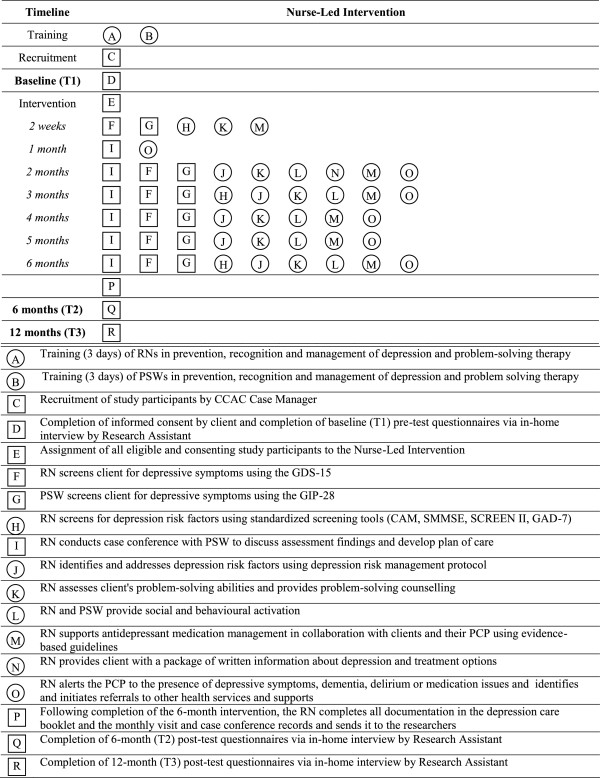
Background: Depressive symptoms in older home care clients are common but poorly recognized and treated, resulting in adverse health outcomes, premature institutionalization, and costly use of health services. The objectives of this study were to examine the feasibility and acceptability of a new six-month interprofessional (IP) nurse-led mental health promotion intervention, and to explore its effects on reducing depressive symptoms in older home care clients (≥ 70 years) using personal support services.
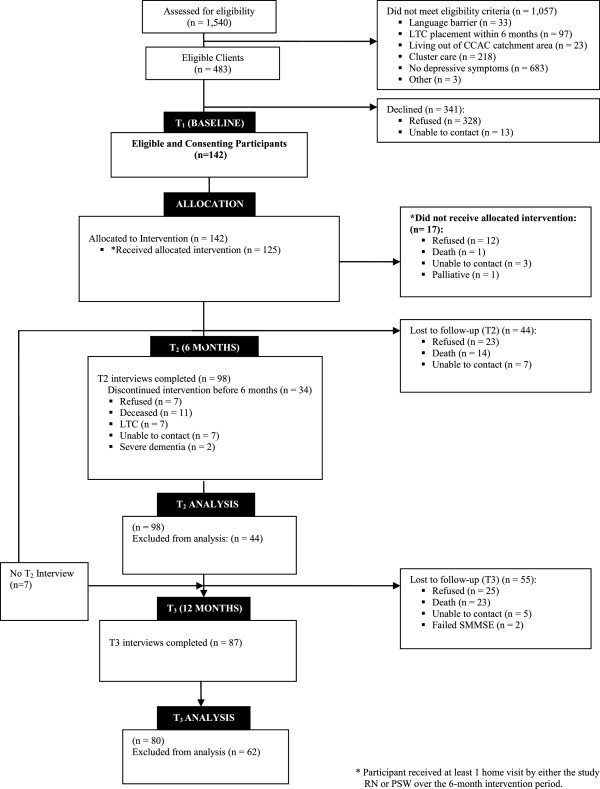
Methods: A prospective one-group pre-test/post-test study design was used. The intervention was a six-month evidence-based depression care management strategy led by a registered nurse that used an IP approach. Of 142 eligible consenting participants, 98 (69%) completed the six-month and 87 (61%) completed the one-year follow-up. Outcomes included depressive symptoms, anxiety, health-related quality of life (HRQoL), and the costs of use of all types of health services at baseline and six-month and one-year follow-up. An interpretive descriptive design was used to explore clients', nurses', and personal support workers' perceptions about the intervention's appropriateness, benefits, and barriers and facilitators to implementation.
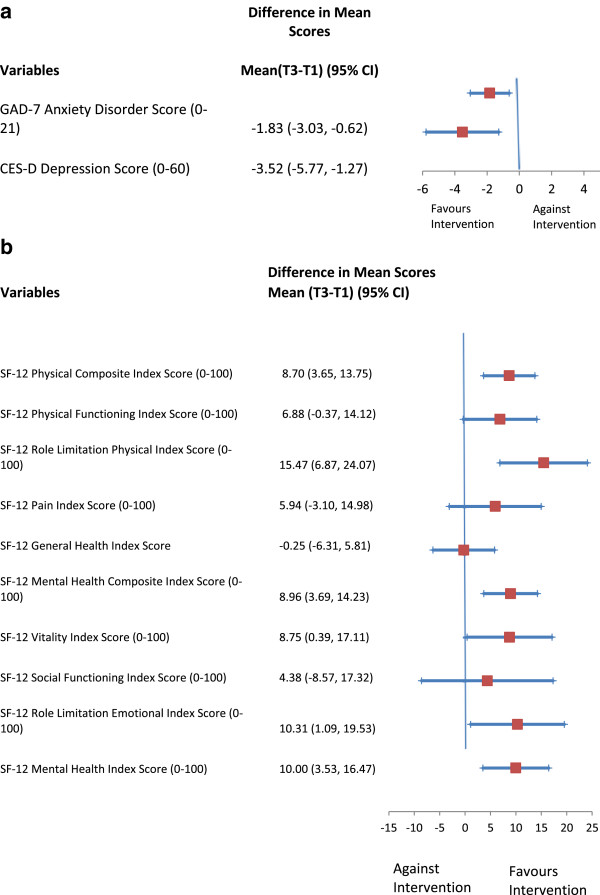
Results: Of the 142 participants, 56% had clinically significant depressive symptoms, with 38% having moderate to severe symptoms. The intervention was feasible and acceptable to older home care clients with depressive symptoms. It was effective in reducing depressive symptoms and improving HRQoL at six-month follow-up, with small additional improvements six months after the intervention. The intervention also reduced anxiety at one year follow-up. Significant reductions were observed in the use of hospitalization, ambulance services, and emergency room visits over the study period.
Conclusions: Our findings provide initial evidence for the feasibility, acceptability, and sustained effects of the nurse-led mental health promotion intervention in improving client outcomes, reducing use of expensive health services, and improving clinical practice behaviours of home care providers. Future research should evaluate its efficacy using a randomized clinical trial design, in different settings, with an adequate sample of older home care recipients with depressive symptoms.
Trial registration: Clinicaltrials.gov identifier: NCT01407926.
Figures
References
-
- Gallegos-Carrillo K, Garcia-Pena C, Mudgal J, Romero X, Duran-Arenas L, Salmeron J. Role of depressive symptoms and comorbid chronic disease on health-related quality of life among community-dwelling older adults. J Psychosom Res. 2009;14:127–135. doi: 10.1016/j.jpsychores.2008.07.007. - DOI - PubMed
-
- Markle-Reid M, Browne G, Gafni A, Roberts J, Weir R, Thabane L, Miles M, Vaitonis V, Hecimovich C, Baxter P, Henderson S. The effects and costs of a multifactorial and interdisciplinary team approach to falls prevention for older home care clients “at risk” for falling: a randomized controlled trial. Can J Aging. 2010;14(1):139–161. doi: 10.1017/S0714980809990377. - DOI - PubMed
Publication types
MeSH terms
Associated data
Grants and funding
LinkOut - more resources
Full Text Sources
Other Literature Sources
Medical
