


The effects of bromocriptine treatment during early pregnancy on postpartum maternal behaviors in rats
- PMID: 24889499
- PMCID: PMC4772405
- DOI: 10.1002/dev.21224
The effects of bromocriptine treatment during early pregnancy on postpartum maternal behaviors in rats
Abstract
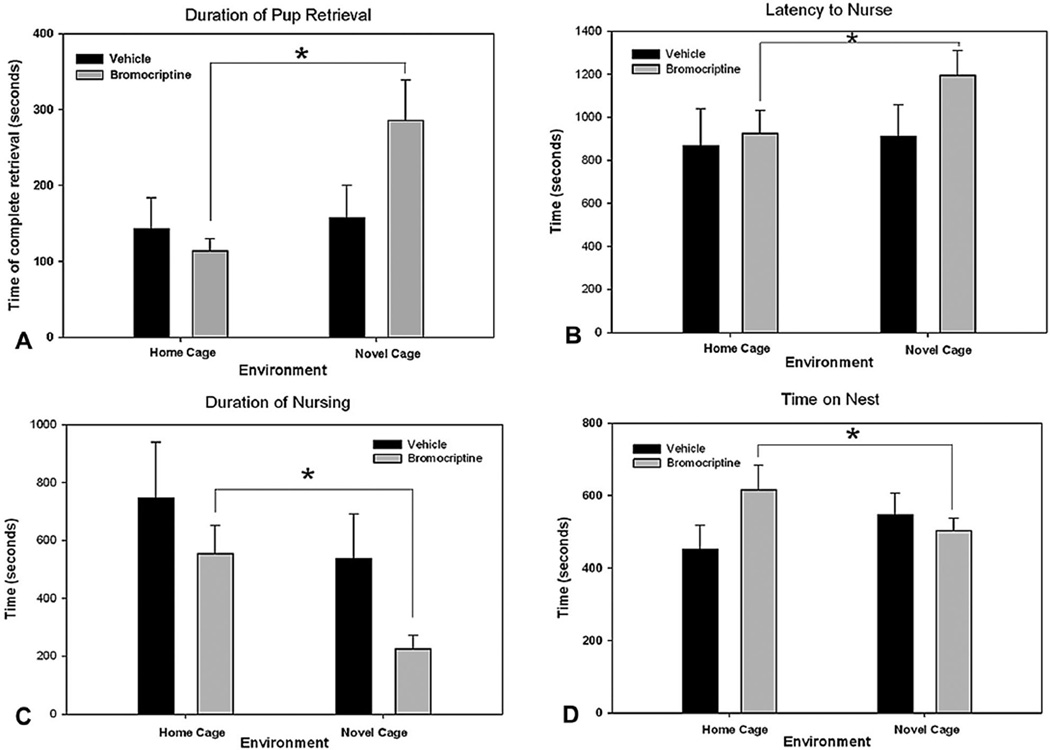
Prolactin, a hormone of the anterior pituitary, is involved in initiating maternal behavior, alleviating postpartum anxiety, and stimulating lactogenesis. Bromocriptine, a dopamine D2 receptor agonist, inhibits prolactin secretion. Bromocriptine administration represses postpartum maternal behaviors (pup retrieval) in mice, and causes elevated anxiety in the elevated plus maze [Larsen & Grattan (2010). Endocrinology 151(8): 3805-3814]. Whether similar effects exist in other species is unknown. The present study examined the possible involvement of prolactin during early gestation on maternal behavior and anxiety in rats. Bromocriptine given on days 2-4 of pregnancy resulted in impaired postpartum maternal behaviors in a novel environment during early lactation. However, compared to controls, bromocriptine-treated subjects did not exhibit increased postpartum anxiety in the elevated plus maze. These findings support work in mice that bromocriptine treatment during early gestation impedes postpartum maternal care, and indicate that early gestational hormonal status affects postpartum behavior more broadly in other mammals.
Keywords: anxiety; dopamine agonist; postpartum maternal behavior; rats.
© 2014 Wiley Periodicals, Inc.
Conflict of interest statement
The authors have no conflict of interest, and are responsible for the writing and the content of this paper.
Figures
References
-
- Ben-Jonathan N, Hnasko R. Dopamine as a prolactin inhibitor. Endocrine Reviews. 2001;22(6):724–763. - PubMed
-
- Bridges RS, DiBiase R, Loundes DD, Doherty PC. Prolactin stimulation of maternal behavior in female rats. Science. 1985;227(4688):782–784. - PubMed
-
- Bridges RS, Felicio LF, Pellerin LJ, Stuer AM, Mann PE. Prior parity reduces post-coital diurnal and nocturnal prolactin surges in rats. Life Sciences. 1993;53:439–445. - PubMed
Publication types
MeSH terms
Substances
Grants and funding
LinkOut - more resources
Full Text Sources
Other Literature Sources
Medical
