


Effectiveness of programs for reducing the stigma associated with mental disorders. A meta-analysis of randomized controlled trials
- PMID: 24890069
- PMCID: PMC4102289
- DOI: 10.1002/wps.20129
Effectiveness of programs for reducing the stigma associated with mental disorders. A meta-analysis of randomized controlled trials
Abstract
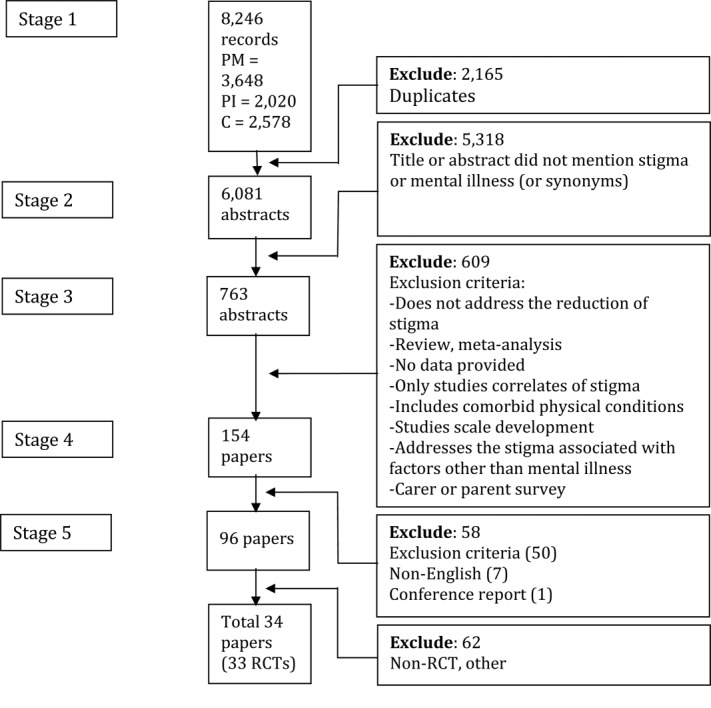
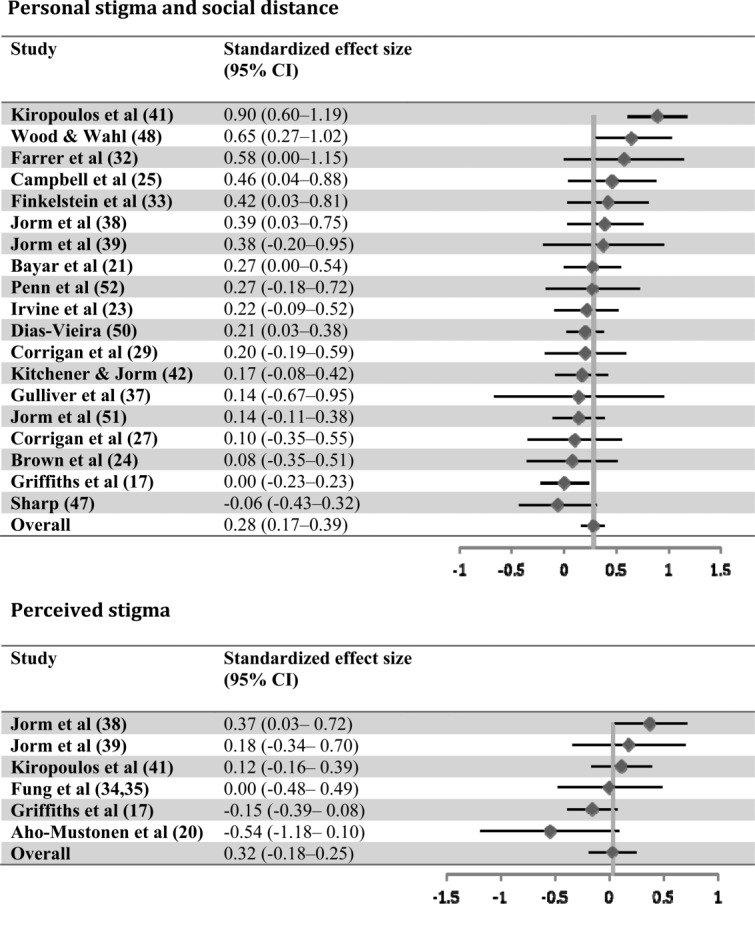
The stigma associated with mental disorders is a global public health problem. Programs to combat it must be informed by the best available evidence. To this end, a meta-analysis was undertaken to investigate the effectiveness of existing programs. A systematic search of PubMed, PsycINFO and Cochrane databases yielded 34 relevant papers, comprising 33 randomized controlled trials. Twenty-seven papers (26 trials) contained data that could be incorporated into a quantitative analysis. Of these trials, 19 targeted personal stigma or social distance (6,318 participants), six addressed perceived stigma (3,042 participants) and three self-stigma (238 participants). Interventions targeting personal stigma or social distance yielded small but significant reductions in stigma across all mental disorders combined (d=0.28, 95% CI: 0.17-0.39, p<0.001) as well as for depression (d=0.36, 95% CI: 0.10-0.60, p<0.01), psychosis (d=0.20, 95% CI: 0.06-0.34, p<0.01) and generic mental illness (d=0.30, 95% CI: 0.10-0.50, p<0.01). Educational interventions were effective in reducing personal stigma (d=0.33, 95% CI: 0.19-0.42, p<0.001) as were interventions incorporating consumer contact (d=0.47, 95% CI: 0.17-0.78, p<0.001), although there were insufficient studies to demonstrate an effect for consumer contact alone. Internet programs were at least as effective in reducing personal stigma as face-to-face delivery. There was no evidence that stigma interventions were effective in reducing perceived or self-stigma. In conclusion, there is an evidence base to inform the roll out of programs for improving personal stigma among members of the community. However, there is a need to investigate methods for improving the effectiveness of these programs and to develop interventions that are effective in reducing perceived and internalized stigma.
Keywords: Internet programs; Stigma; consumer contact; depression; educational interventions; mental illness; perceived stigma; personal stigma; schizophrenia; self-stigma; social distance.
Copyright © 2014 World Psychiatric Association.
Figures
References
-
- Barney LJ, Griffiths KM, Jorm AF, et al. Stigma about depression and its impact on help-seeking intentions. Aust N Z J Psychiatry. 2006;40:51–4. - PubMed
-
- Corrigan PW, Edwards AB, Green A, et al. Prejudice, social distance, and familiarity with mental illness. Schizophr Bull. 2001;27:219–25. - PubMed
-
- Link BG, Struening EL, Rahav M, et al. On stigma and its consequences: evidence from a longitudinal study of men with dual diagnoses of mental illness and substance abuse. J Health Soc Behav. 1997;38:177–90. - PubMed
LinkOut - more resources
Full Text Sources
Other Literature Sources
