


Defining nephrotic syndrome from an integrative genomics perspective
- PMID: 24890338
- PMCID: PMC4241380
- DOI: 10.1007/s00467-014-2857-9
Defining nephrotic syndrome from an integrative genomics perspective
Abstract
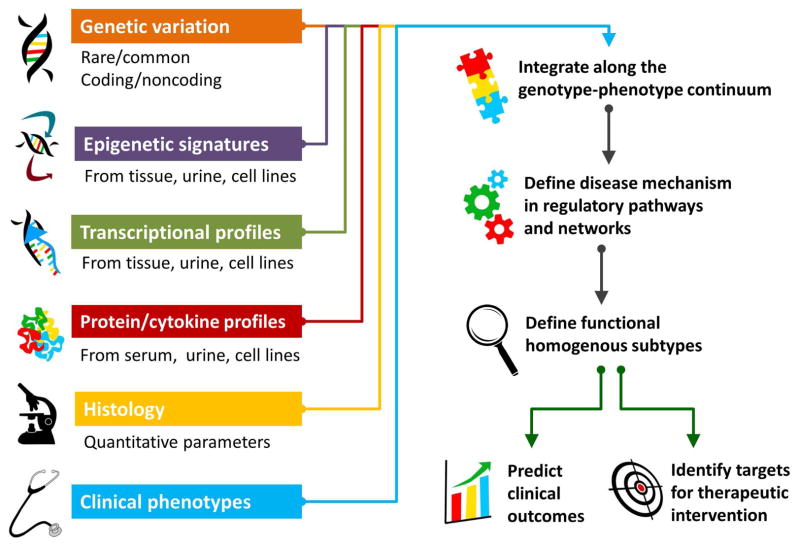
Nephrotic syndrome (NS) is a clinical condition with a high degree of morbidity and mortality, caused by failure of the glomerular filtration barrier, resulting in massive proteinuria. Our current diagnostic, prognostic and therapeutic decisions in NS are largely based upon clinical or histological patterns such as "focal segmental glomerulosclerosis" or "steroid sensitive". Yet these descriptive classifications lack the precision to explain the physiologic origins and clinical heterogeneity observed in this syndrome. A more precise definition of NS is required to identify mechanisms of disease and capture various clinical trajectories. An integrative genomics approach to NS applies bioinformatics and computational methods to comprehensive experimental, molecular and clinical data for holistic disease definition. A unique aspect is analysis of data together to discover NS-associated molecules, pathways, and networks. Integrating multidimensional datasets from the outset highlights how molecular lesions impact the entire individual. Data sets integrated range from genetic variation to gene expression, to histologic changes, to progression of chronic kidney disease (CKD). This review will introduce the tenets of integrative genomics and suggest how it can increase our understanding of NS from molecular and pathophysiological perspectives. A diverse group of genome-scale experiments are presented that have sought to define molecular signatures of NS. Finally, the Nephrotic Syndrome Study Network (NEPTUNE) will be introduced as an international, prospective cohort study of patients with NS that utilizes an integrated systems genomics approach from the outset. A major NEPTUNE goal is to achieve comprehensive disease definition from a genomics perspective and identify shared molecular drivers of disease.
Figures

References
-
- The primary nephrotic syndrome in children. Identification of patients with minimal change nephrotic syndrome from initial response to prednisone. A report of the International Study of Kidney Disease in Children. J Pediatr. 1981;98:561–564. - PubMed
-
- Eddy AA, Symons JM. Nephrotic syndrome in childhood. Lancet. 2003;362:629–639. - PubMed
-
- Gipson DS, Massengill SF, Yao L, Nagaraj S, Smoyer WE, Mahan JD, Wigfall D, Miles P, Powell L, Lin JJ, Trachtman H, Greenbaum LA. Management of childhood onset nephrotic syndrome. Pediatrics. 2009;124:747–757. - PubMed
-
- Greenbaum LA, Benndorf R, Smoyer WE. Childhood nephrotic syndrome--current and future therapies. Nat Rev Nephrol. 2012;8:445–458. - PubMed
Publication types
MeSH terms
Grants and funding
LinkOut - more resources
Full Text Sources
Other Literature Sources
Molecular Biology Databases
Miscellaneous
