Case Reports
. 2014 Jun 3;9(6):e98686.
doi: 10.1371/journal.pone.0098686. eCollection 2014.

Dubowitz syndrome is a complex comprised of multiple, genetically distinct and phenotypically overlapping disorders

Affiliations
Case Reports

Dubowitz syndrome is a complex comprised of multiple, genetically distinct and phenotypically overlapping disorders

Douglas R Stewart et al. PLoS One. .

Abstract

Dubowitz syndrome is a rare disorder characterized by multiple congenital anomalies, cognitive delay, growth failure, an immune defect, and an increased risk of blood dyscrasia and malignancy. There is considerable phenotypic variability, suggesting genetic heterogeneity. We clinically characterized and performed exome sequencing and high-density array SNP genotyping on three individuals with Dubowitz syndrome, including a pair of previously-described siblings (Patients 1 and 2, brother and sister) and an unpublished patient (Patient 3). Given the siblings' history of bone marrow abnormalities, we also evaluated telomere length and performed radiosensitivity assays. In the siblings, exome sequencing identified compound heterozygosity for a known rare nonsense substitution in the nuclear ligase gene LIG4 (rs104894419, NM_002312.3:c.2440C>T) that predicts p.Arg814X (MAF:0.0002) and an NM_002312.3:c.613delT variant that predicts a p.Ser205Leufs*29 frameshift. The frameshift mutation has not been reported in 1000 Genomes, ESP, or ClinSeq. These LIG4 mutations were previously reported in the sibling sister; her brother had not been previously tested. Western blotting showed an absence of a ligase IV band in both siblings. In the third patient, array SNP genotyping revealed a de novo ∼ 3.89 Mb interstitial deletion at chromosome 17q24.2 (chr 17:62,068,463-65,963,102, hg18), which spanned the known Carney complex gene PRKAR1A. In all three patients, a median lymphocyte telomere length of ≤ 1st centile was observed and radiosensitivity assays showed increased sensitivity to ionizing radiation. Our work suggests that, in addition to dyskeratosis congenita, LIG4 and 17q24.2 syndromes also feature shortened telomeres; to confirm this, telomere length testing should be considered in both disorders. Taken together, our work and other reports on Dubowitz syndrome, as currently recognized, suggest that it is not a unitary entity but instead a collection of phenotypically similar disorders. As a clinical entity, Dubowitz syndrome will need continual re-evaluation and re-definition as its constituent phenotypes are determined.


Conflict of interest statement

Competing Interests: Lisa Leathwood and Maureen Risch both of Westat, Inc (supported by NCI contract number HHSN261201100018C) were involved in data collection, specifically, recruitment of patients 1 and 2. Leslie Biesecker receives royalties from Genentech Corporation and is an uncompensated consultant to the Illumina Corporation. There are no patents, products in development or marketed products to declare. This does not alter the authors' adherence to all the PLOS ONE policies on sharing data and materials.

Figures

Figure 1
Figure 1. Frontal view of Patient 1 at age 41 years.
He was originally diagnosed with Dubowitz syndrome (Opitz et al, 1973; Walters and Desposito, 1985). This is the first published photograph of this seminal patient. Exome sequencing identified compound heterozygote mutations in LIG4, confirming the formal diagnosis of LIG4 syndrome. Dysmorphic features include microcephaly (<3rd centile), bilateral downslanted palpebral fissures, low anterior hairline, and a long tubular nose with prominent bulbar tip.
Figure 2
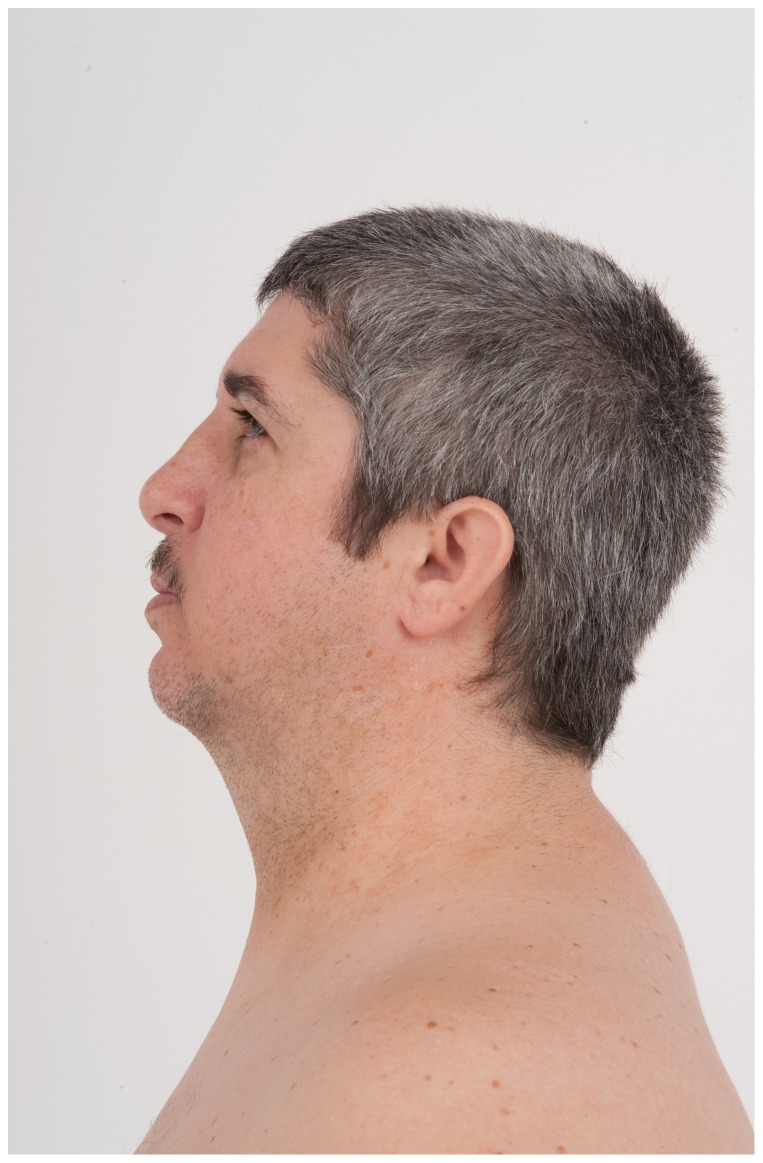
Figure 2. Profile view of Patient 1 at age 41 years.
Dysmorphic features include a low posterior hairline, small (<−2 standard deviation), low-set ears and a high nasal bridge.
Figure 3
Figure 3. Frontal view of Patient 3 at age 15 years.
He was originally diagnosed with Dubowitz syndrome and was determined to harbor a 3.89 Mb deletion on chromosome 17q24.2. Dysmorphic features include bilateral upslanted palpebral fissures with apparent telecanthus, broad nasal bridge and a bulbous nose.
Figure 4
Figure 4. Profile view of Patient 3 at age 15 years.
Dysmorphic features include low set ears.
Figure 5
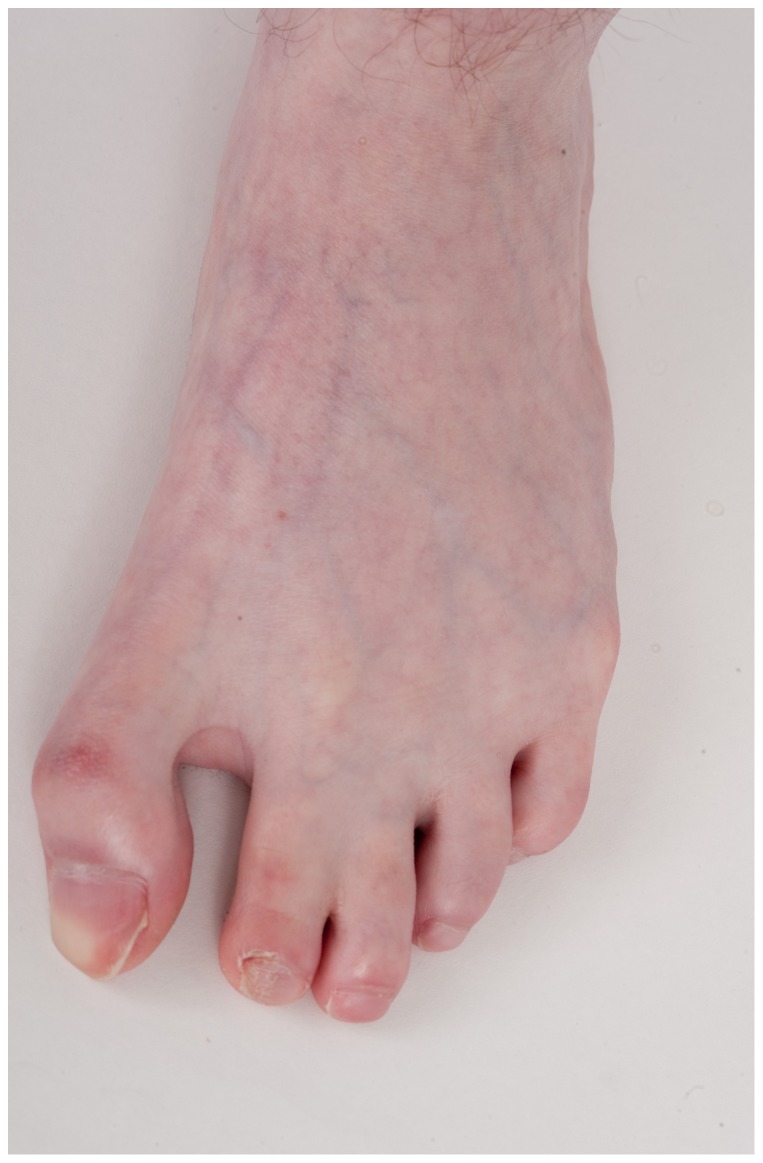
Figure 5. 2–3 cutaneous syndactyly and appearance of cutis marmorata telangiectasia congenita in Patient 3.
Figure 6
Figure 6. Median telomere lengths in lymphocytes, as determined by flow cytometry with fluorescent in situ hybridization (flow FISH).
Patients 1 (two time points), 2 and 3 are plotted against population norms. yrs  =  years; MTL  =  median telomere length; kb  =  kilobase
Figure 7
Figure 7. Colony survival assay demonstrates cellular radiosensitivity in Patient 1.
Fibroblasts from Patient 1 were highly sensitive to increasing doses of ionizing radiation. Experiments were performed in triplicate with the average of three experiments shown. WT  =  wild type; A-T  =  ataxia-telangiectasia control.
Figure 8
Figure 8. Colony survival assay demonstrates cellular radiosensitivity in Patients 2 and 3.
Lymphoblastoid cell lines from Patients 2 and 3 were radiosensitive, as compared to controls. Experiments were performed in triplicate with the average of three experiments shown. WT  =  wild type; A-T  =  ataxia-telangiectasia control. Ligase IV  =  Ligase IV-deficient control.
Figure 9
Figure 9. Neutral comet assay compatible with a DNA double-strand break repair disorder.
(a). Tail moment of WT, A-T and patient cells at 0, 30 minutes and 5 hours post-irradiation. All cells show damage at 30 minutes post-irradiation. WT returns to near baseline levels after 5 hours, while A-T and patient cells show long comet tails after 5 hours, indicating significant levels of unrepaired DNA. (b). Ratio of unrepaired DNA at 5/0 hours. A-T as well as Patient 2 and 3 cells show statistically significantly lower levels of repair at 5 hours post-irradiation compared to wild type cells (* p<0.05). Experiments were performed in triplicate with the average of three experiments shown. WT  =  wild type; A-T  =  ataxia-telangiectasia control.
Figure 10
Figure 10. Sanger sequencing of LIG4 c.613delT variant in Patients 1 and 2.
Figure 11
Figure 11. Sanger sequencing of LIG4 c.2440C>T variant in Patients 1 and 2.
Figure 12
Figure 12. Western blot of whole cell lysates from Patient 1 fibroblasts and Patient 2 lymphblastoid cell lines.
Patients 1 and 2 show an absence of ligase IV protein. Lanes were loaded with 50 µg protein/lane. LCL  =  lymphoblastoid cell line;

References

    1. Dubowitz V (1965) Familial low birthweight dwarfism with an unusual facies and a skin eruption. J Med Genet 42: 12–17. - PMC - PubMed
    1. Opitz JM, Pfeiffer RA, Hermann JP, Kushnick T (1973) Studies of malformation syndromes of man XXIV B: the Dubowitz syndrome. Further observations. Z Kinderheilkd 116: 1–12. - PubMed
    1. Tsukahara M, Opitz JM (1996) Dubowitz syndrome: review of 141 cases including 36 previously unreported patients. Am J Med Genet 63: 277–289. - PubMed
    1. Ahmad A, Amalfitano A, Chen YT, Kishnani PS, Miller C, et al. (1999) Dubowitz syndrome: a defect in the cholesterol biosynthetic pathway? Am J Med Genet 86: 503–504. - PubMed
    1. Hennekam RCM, Krantz ID, Allanson JE (2010) Dubowitz syndrome. Gorlin's Syndromes of the Head and Neck. 5th ed. Oxford: Oxford University Press. pp. 434–436.

Publication types

MeSH terms

Supplementary concepts