


Impairments in the initiation of maternal behavior in oxytocin receptor knockout mice
- PMID: 24892749
- PMCID: PMC4044031
- DOI: 10.1371/journal.pone.0098839
Impairments in the initiation of maternal behavior in oxytocin receptor knockout mice
Abstract
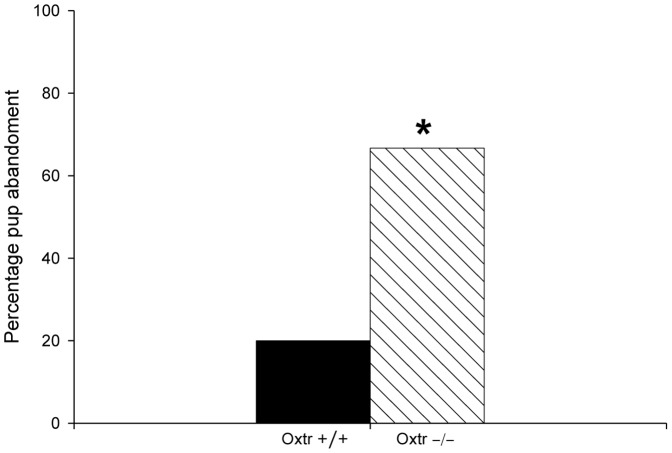
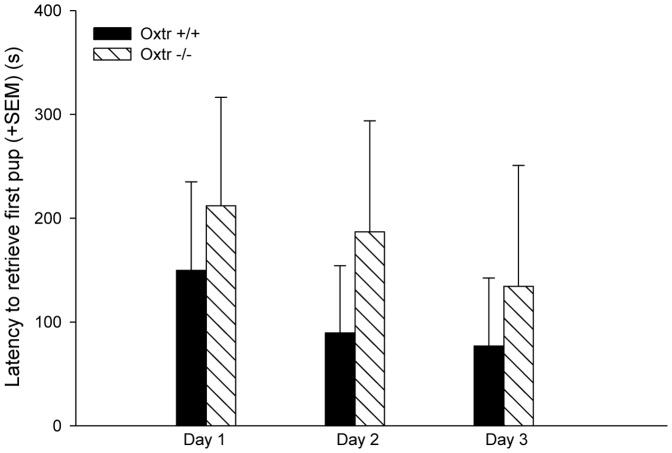
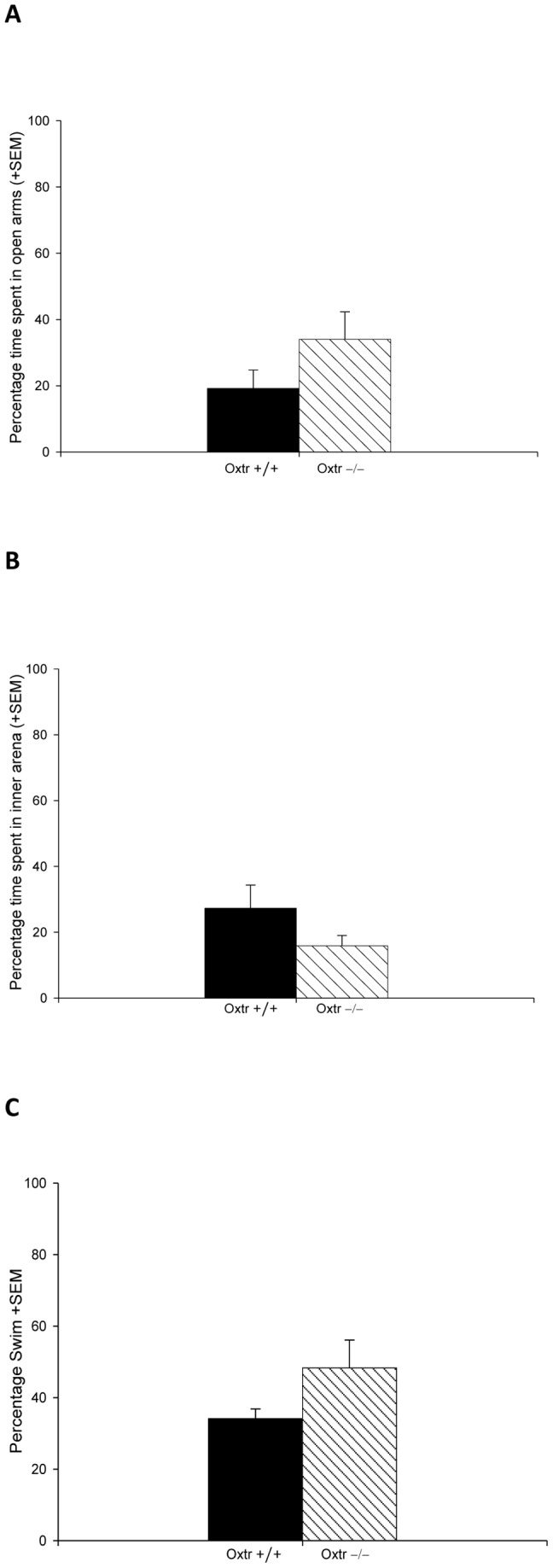
Oxytocin (Oxt) acting through its single receptor subtype, the Oxtr, is important for the coordination of physiology and behavior associated with parturition and maternal care. Knockout mouse models have been helpful in exploring the contributions of Oxt to maternal behavior, including total body Oxt knockout (Oxt -/-) mice, forebrain conditional Oxtr knockout (Oxtr FB/FB) mice, and total body Oxtr knockout (Oxtr -/-) mice. Since Oxtr -/- mice are unable to lactate, maternal behavior has only been examined in virgin females, or in dams within a few hours of parturition, and there have been no studies that have examined their anxiety-like and depression-like behavior following parturition. To improve our understanding of how the absence of Oxt signaling affects maternal behavior, mood and anxiety, we designed a study using Oxtr -/- mice that separated nursing behavior from other aspects of maternal care, such as licking and grooming by thelectomizing (i.e. removing the nipples) of Oxtr +/+ mice and sham-thelectomizing Oxtr -/- mice, and pairing both genotypes with a wet nurse. We then measured pup abandonment, maternal behavior, and postpartum anxiety-like and depression-like behaviors. We hypothesized that genetic disruption of the Oxtr would impact maternal care, mood and anxiety. Specifically, we predicted that Oxtr -/- dams would have impaired maternal care and increased anxiety-like and depression-like behaviors in the postpartum period. We found that Oxtr -/- dams had significantly higher levels of pup abandonment compared to controls, which is consistent with previous work in Oxtr FB/FB mice. Interestingly, Oxtr -/- dams that initiated maternal care did not differ from wildtype controls in measures of maternal behavior. We also did not find any evidence of altered anxiety-like or depressive-like behavior in the postpartum period of Oxtr -/- dams. Thus, our data suggest that Oxt lowers the threshold for the initiation of maternal behavior.
Conflict of interest statement
Figures
References
-
- Kimura T, Ogita K, Tsutsui T, Shimoya K, Koyama M, et al. (2006) Molecular background of parturition: lessons from knockout models. Textbook of Perinatal Medicine. pp. 619–631.
-
- Blanks AM, Thornton S (2003) The role of oxytocin in parturition. BJOG 110 Suppl 20 46–51. - PubMed
-
- Bosch OJ, Neumann ID (2012) Both oxytocin and vasopressin are mediators of maternal care and aggression in rodents: from central release to sites of action. Horm Behav 61: 293–303. - PubMed
-
- Kendrick KM, Keverne EB (1992) Control of synthesis and release of oxytocin in the sheep brain. Ann N Y Acad Sci 652: 102–121. - PubMed
-
- Van Tol HH, Bolwerk EL, Liu B, Burbach JP (1988) Oxytocin and vasopressin gene expression in the hypothalamo-neurohypophyseal system of the rat during the estrous cycle, pregnancy, and lactation. Endocrinology 122: 945–951. - PubMed
Publication types
MeSH terms
Substances
LinkOut - more resources
Full Text Sources
Other Literature Sources
Molecular Biology Databases
