


A systematic review of the Robson classification for caesarean section: what works, doesn't work and how to improve it
- PMID: 24892928
- PMCID: PMC4043665
- DOI: 10.1371/journal.pone.0097769
A systematic review of the Robson classification for caesarean section: what works, doesn't work and how to improve it
Abstract
Background: Caesarean sections (CS) rates continue to increase worldwide without a clear understanding of the main drivers and consequences. The lack of a standardized internationally-accepted classification system to monitor and compare CS rates is one of the barriers to a better understanding of this trend. The Robson's 10-group classification is based on simple obstetrical parameters (parity, previous CS, gestational age, onset of labour, fetal presentation and number of fetuses) and does not involve the indication for CS. This classification has become very popular over the last years in many countries. We conducted a systematic review to synthesize the experience of users on the implementation of this classification and proposed adaptations.
Methods: Four electronic databases were searched. A three-step thematic synthesis approach and a qualitative metasummary method were used.
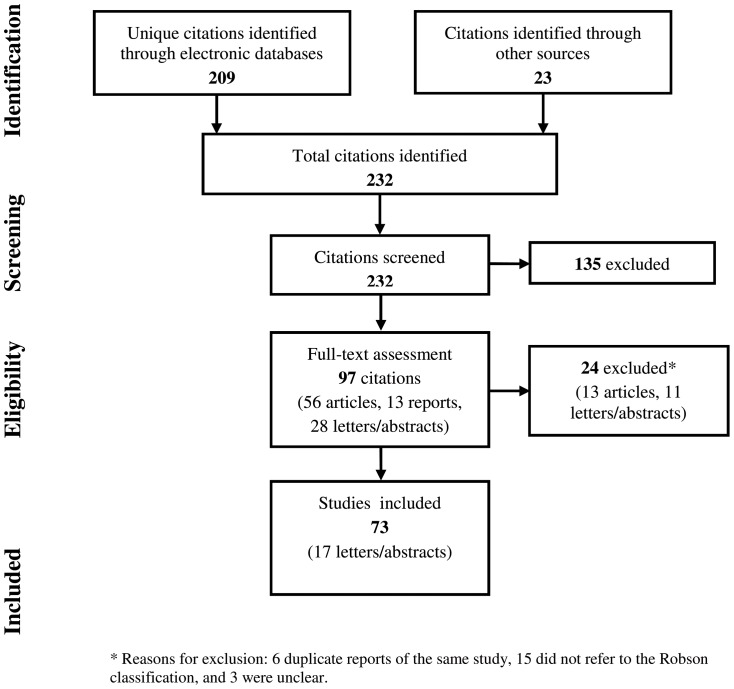
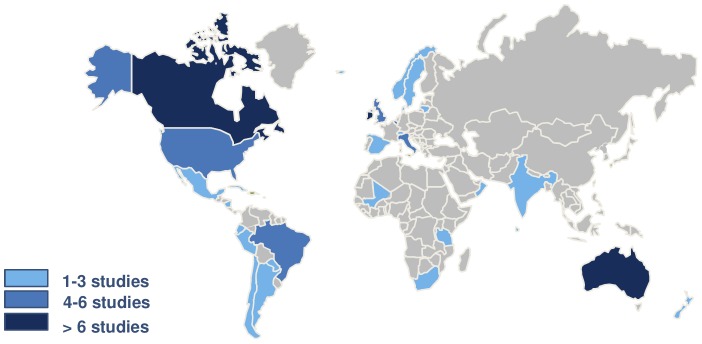
Results: 232 unique reports were identified, 97 were selected for full-text evaluation and 73 were included. These publications reported on the use of Robson's classification in over 33 million women from 31 countries. According to users, the main strengths of the classification are its simplicity, robustness, reliability and flexibility. However, missing data, misclassification of women and lack of definition or consensus on core variables of the classification are challenges. To improve the classification for local use and to decrease heterogeneity within groups, several subdivisions in each of the 10 groups have been proposed. Group 5 (women with previous CS) received the largest number of suggestions.
Conclusions: The use of the Robson classification is increasing rapidly and spontaneously worldwide. Despite some limitations, this classification is easy to implement and interpret. Several suggested modifications could be useful to help facilities and countries as they work towards its implementation.
Conflict of interest statement
Figures
References
-
- WHO (1985) Appropriate technology for birth. Lancet 2: 436–437. - PubMed
-
- Villar J, Valladares E, Wojdyla D, Zavaleta N, Carroli G, et al. (2006) Caesarean delivery rates and pregnancy outcomes: the 2005 WHO global survey on maternal and perinatal health in Latin America. Lancet 367: 1819–1829. - PubMed
-
- Lumbiganon P, Laopaiboon M, Gulmezoglu AM, Souza JP, Taneepanichskul S, et al. (2010) Method of delivery and pregnancy outcomes in Asia: the WHO global survey on maternal and perinatal health 2007–08. Lancet 375: 490–499. - PubMed
-
- Betran AP, Merialdi M, Lauer JA, Bing-shun W, Thomas J, et al. (2007) Rates of caesarean section: analysis of global, regional and national estimates. Paediatric and Perinatal Epidemiology 21: 98–113. - PubMed
Publication types
MeSH terms
Grants and funding
LinkOut - more resources
Full Text Sources
Other Literature Sources
Medical
