Review
. 2014 Jun 2;15(6):9809-25.
doi: 10.3390/ijms15069809.

Inhibitors of acetylcholinesterase and butyrylcholinesterase meet immunity

Affiliations
Review

Inhibitors of acetylcholinesterase and butyrylcholinesterase meet immunity

Miroslav Pohanka. Int J Mol Sci. .

Abstract

Acetylcholinesterase (AChE) inhibitors are widely used for the symptomatic treatment of Alzheimer's disease and other dementias. More recent use is for myasthenia gravis. Many of these inhibitors interact with the second known cholinesterase, butyrylcholinesterase (BChE). Further, evidence shows that acetylcholine plays a role in suppression of cytokine release through a "cholinergic anti-inflammatory pathway" which raises questions about the role of these inhibitors in the immune system. This review covers research and discussion of the role of the inhibitors in modulating the immune response using as examples the commonly available drugs, donepezil, galantamine, huperzine, neostigmine and pyridostigmine. Major attention is given to the cholinergic anti-inflammatory pathway, a well-described link between the central nervous system and terminal effector cells in the immune system.


Figures
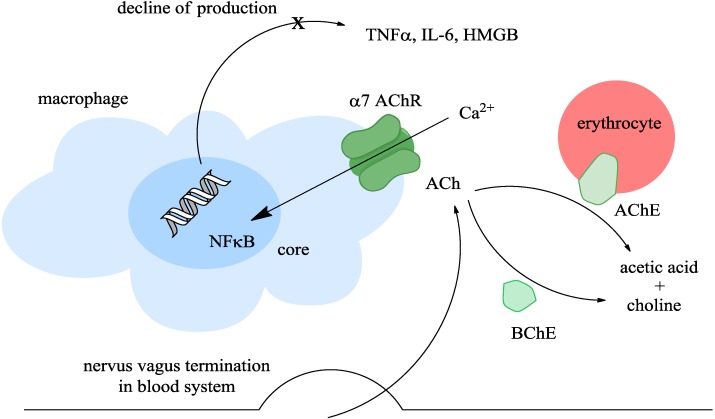
Figure 1
Figure 1
Principle of the cholinergic anti-inflammatory pathway; abbreviations: ACh-acetylcholine; AChE-acetylcholinesterase; BChE-butyrylcholinesterase; HMGB-high mobility group box; IL-6-interleukin 6; NFκB-nuclear factor kappa B; TNFα-tumor necrosis factor alpha.
Figure 2
Figure 2
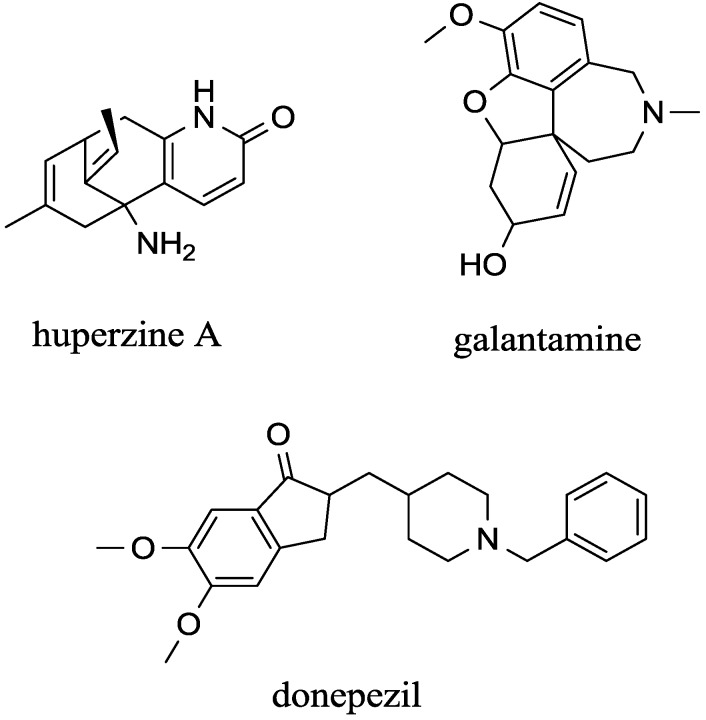
Structure of cited compounds that cross the blood brain barrier.
Figure 3
Figure 3
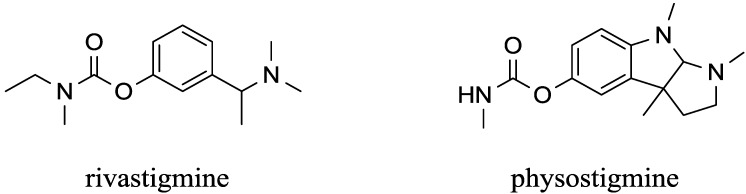
Structure of carbamates that cross the blood brain barrier.
Figure 4
Figure 4
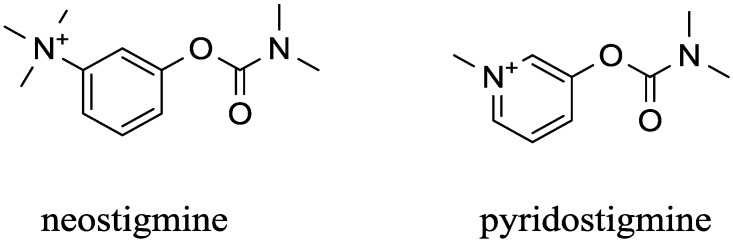
Structure of carbamate inhibitors that do not cross the blood brain barrier.
Figure 5
Figure 5
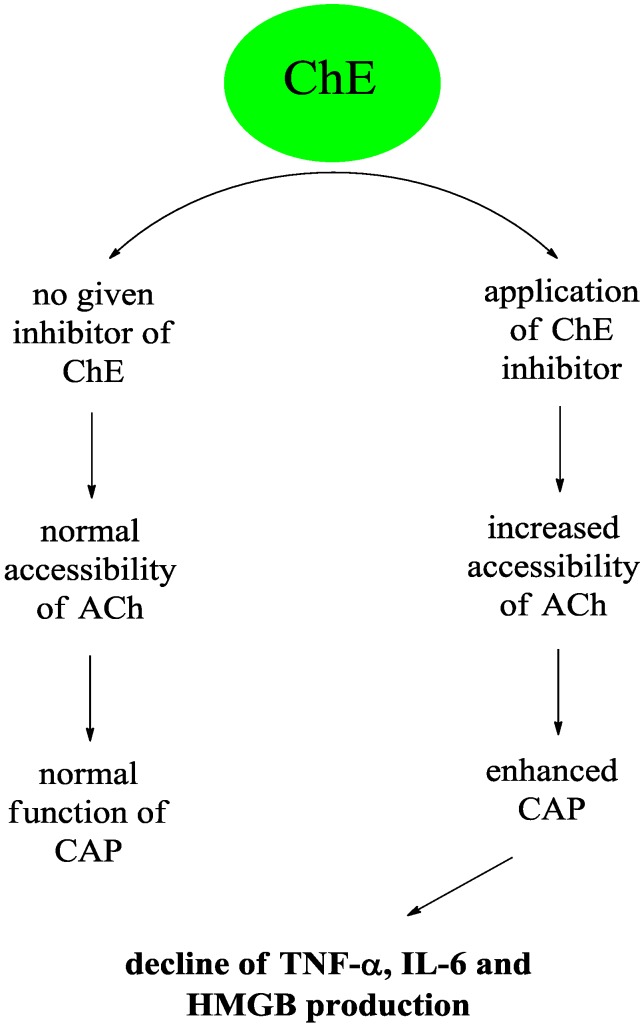
Simplified scheme for showing how inhibitors of cholinesterases may be involved in regulation of immunity using the cholinergic anti-inflammatory pathway. Abbreviations used in the figure: ACh—acetylcholine; CAP—cholinergic anti-inflammatory pathway; ChE—cholinesterase; HMGB—high mobility group box proteins.

References

    1. Ofek K., Soreq H. Cholinergic involvement and manipulation approaches in multiple system disorders. Chem. Biol. Interact. 2013;203:113–119. doi: 10.1016/j.cbi.2012.07.007. - DOI - PubMed
    1. De los Rios C. Cholinesterase inhibitors: A patent review (2007–2011) Expert Opin. Ther. Pat. 2012;22:853–869. doi: 10.1517/13543776.2012.701619. - DOI - PubMed
    1. Silman I., Sussman J.L. Acetylcholinesterase: “Classical” and “non-classical” functions and pharmacology. Curr. Opin. Pharmacol. 2005;5:293–302. doi: 10.1016/j.coph.2005.01.014. - DOI - PubMed
    1. Tayeb H.O., Yang H.D., Price B.H., Tarazi F.I. Pharmacotherapies for Alzheimer’s disease: Beyond cholinesterase inhibitors. Pharmacol. Ther. 2012;134:8–25. - PubMed
    1. Haines S.R., Thurtell M.J. Treatment of ocular myasthenia gravis. Curr. Treat. Option Neurol. 2012;14:103–112. - PubMed

MeSH terms