


A non-randomised, controlled clinical trial of an innovative device for negative pressure wound therapy of pressure ulcers in traumatic paraplegia patients
- PMID: 24894079
- PMCID: PMC7949708
- DOI: 10.1111/iwj.12309
A non-randomised, controlled clinical trial of an innovative device for negative pressure wound therapy of pressure ulcers in traumatic paraplegia patients
Abstract
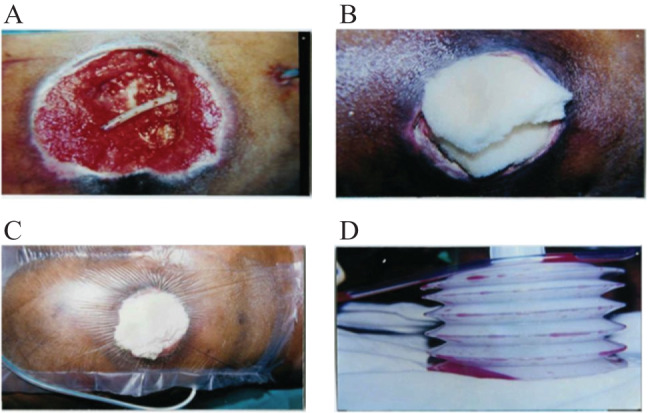
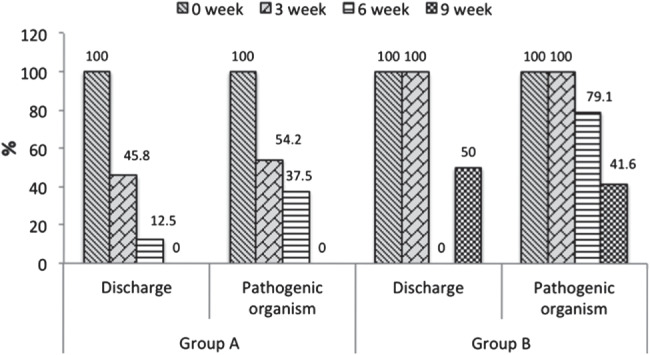
The conventional methods of treatment of pressure ulcers (PUs) by serial debridement and daily dressings require prolonged hospitalisation, associated with considerable morbidity. There is, however, recent evidence to suggest that negative pressure wound therapy (NPWT) accelerates healing. The commercial devices for NPWT are costly, cumbersome, and electricity dependent. We compared PU wound healing in traumatic paraplegia patients by conventional dressing and by an innovative negative pressure device (NPD). In this prospective, non-randomised trial, 48 traumatic paraplegia patients with PUs of stages 3 and 4 were recruited. Patients were divided into two groups: group A (n = 24) received NPWT with our NPD, and group B (n = 24) received conventional methods of dressing. All patients were followed up for 9 weeks. At week 9, all patients on NPD showed a statistically significant improvement in PU healing in terms of slough clearance, granulation tissue formation, wound discharge and culture. A significant reduction in wound size and ulcer depth was observed in NPD as compared with conventional methods at all follow-up time points (P = 0·0001). NPWT by the innovative device heals PUs at a significantly higher rate than conventional treatment. The device is safe, easy to apply and cost-effective.
Keywords: Negative pressure wound therapy; Out patient department procedure; Pressure ulcer; Traumatic paraplegia.
© 2014 The Authors. International Wound Journal © 2014 Medicalhelplines.com Inc and John Wiley & Sons Ltd.
Figures
References
-
- Kuffler DP. Techniques for wound healing with a focus on pressure ulcers elimination. Open Circ Vasc J 2010;3:72–84.
-
- Sella EJ, Barrette C. Staging of Charcot neuroarthropathy along the medial column of the foot in the diabetic patient. J Foot Ankle Surg 1999;38:34–40. - PubMed
-
- Levine JM. Historical perspective: the neurotrophic theory of skin ulceration. J Am Geriatr Soc 1992;40:1281–3. - PubMed
-
- Levine JM. Historical perspective on pressure ulcers: the decubitus ominosus of Jean‐Martin Charcot. J Am Geriatr Soc 2005;53:1248–51. - PubMed
-
- Venturi ML, Attinger CE, Mesbahi AN, Hess CL, Graw KS. Mechanisms and clinical applications of the vacuum‐assisted closure (VAC). Am J Clin Dermatol 2005;6:185–94. - PubMed
Publication types
MeSH terms
LinkOut - more resources
Full Text Sources
Other Literature Sources
Medical
