


Effect of female genital schistosomiasis and anti-schistosomal treatment on monocytes, CD4+ T-cells and CCR5 expression in the female genital tract
- PMID: 24896815
- PMCID: PMC4045760
- DOI: 10.1371/journal.pone.0098593
Effect of female genital schistosomiasis and anti-schistosomal treatment on monocytes, CD4+ T-cells and CCR5 expression in the female genital tract
Abstract
Background: Schistosoma haematobium is a waterborne parasite that may cause female genital schistosomiasis (FGS), characterized by genital mucosal lesions. There is clinical and epidemiological evidence for a relationship between FGS and HIV. We investigated the impact of FGS on HIV target cell density and expression of the HIV co-receptor CCR5 in blood and cervical cytobrush samples. Furthermore we evaluated the effect of anti-schistosomal treatment on these cell populations.
Design: The study followed a case-control design with post treatment follow-up, nested in an on-going field study on FGS.
Methods: Blood and cervical cytobrush samples were collected from FGS negative and positive women for flow cytometry analyses. Urine samples were investigated for schistosome ova by microscopy and polymerase chain reaction (PCR).
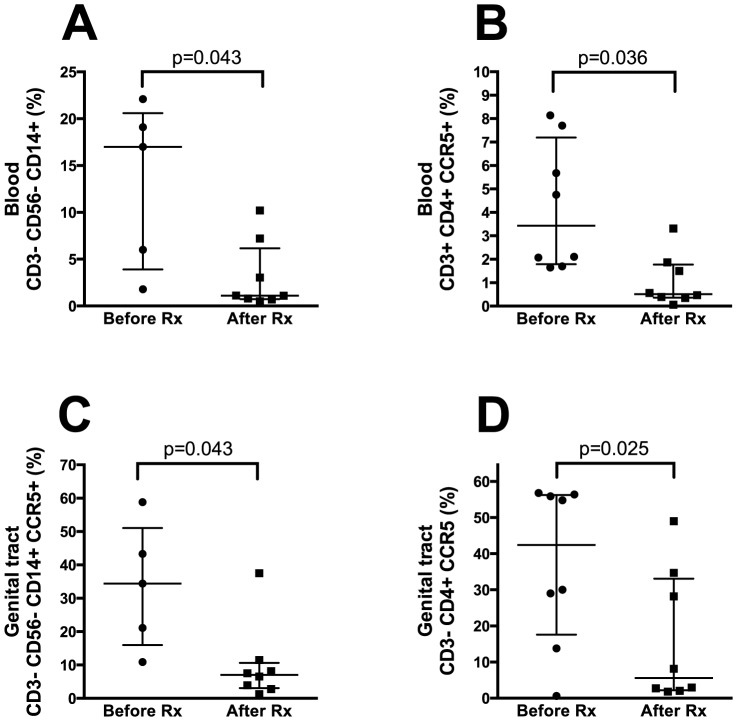
Results: FGS was associated with a higher frequency of CD14+ cells (monocytes) in blood (11.5% in FGS+ vs. 2.2% in FGS-, p = 0.042). Frequencies of CD4+ cells expressing CCR5 were higher in blood samples from FGS+ than from FGS- women (4.7% vs. 1.5%, p = 0.018). The CD14+ cell population decreased significantly in both compartments after anti-schistosomal treatment (p = 0.043). Although the frequency of CD4+ cells did not change after treatment, frequencies of CCR5 expression by CD4+ cells decreased significantly in both compartments (from 3.4% to 0.5% in blood, p = 0.036; and from 42.4% to 5.6% in genital samples, p = 0.025).
Conclusions: The results support the hypothesis that FGS may increase the risk of HIV acquisition, not only through damage of the mucosal epithelial barrier, but also by affecting HIV target cell populations, and that anti-schistosomal treatment can modify this.
Conflict of interest statement
Figures
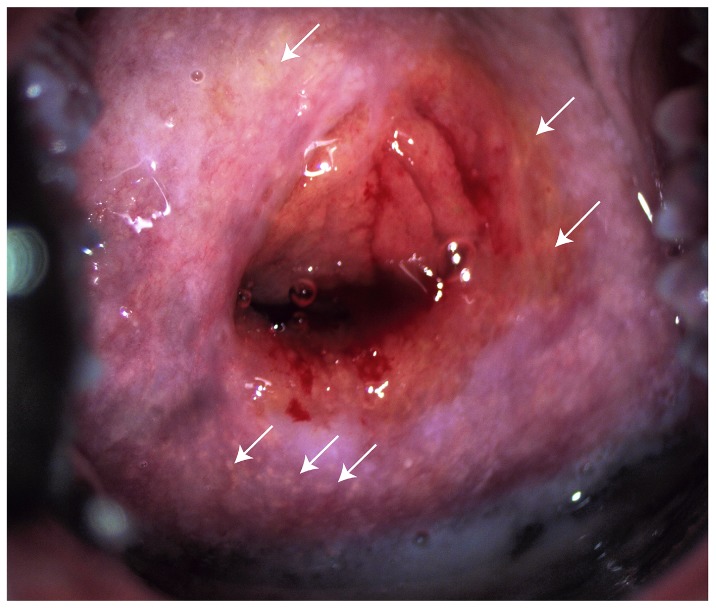
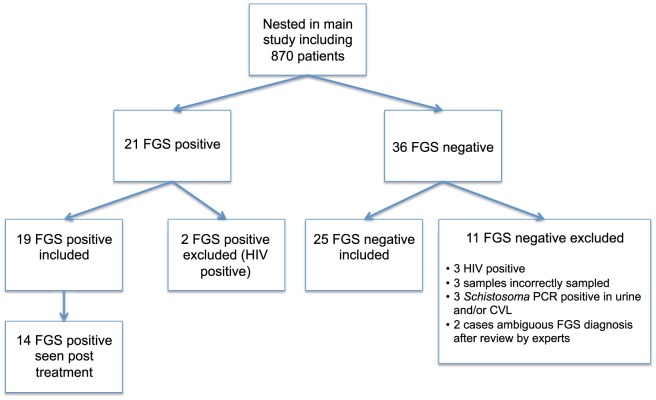
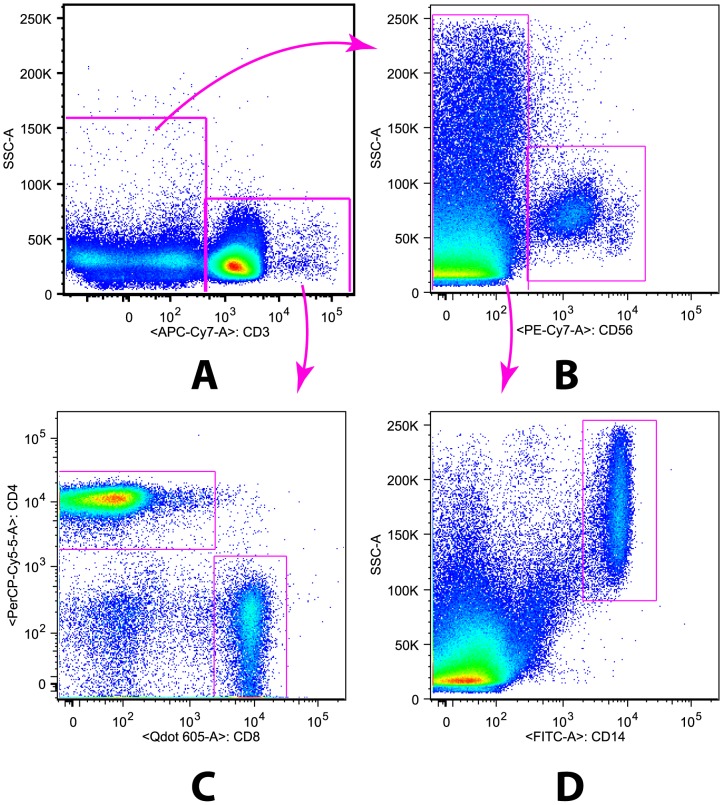
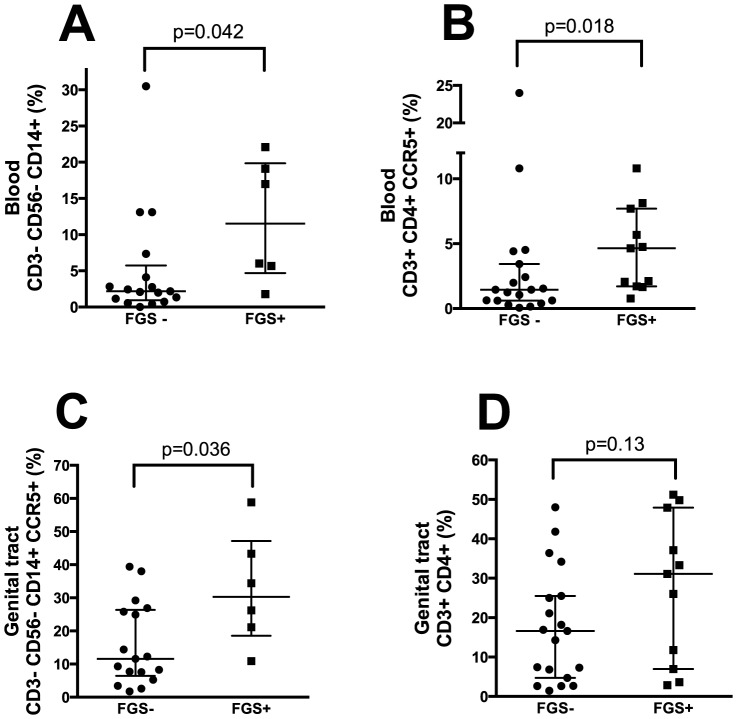
References
-
- Shacklett BL (2010) Immune responses to HIV and SIV in mucosal tissues: “location, location, location”. Curr Opin HIV AIDS 5: 128–134 doi:10.1097/COH.0b013e328335c178 - DOI - PMC - PubMed
-
- UNAIDS report on the global AIDS epidemic 2010 (2010).
-
- Kaul R, Pettengell C, Sheth PM, Sunderji S, Biringer A, et al. (2008) The genital tract immune milieu: an important determinant of HIV susceptibility and secondary transmission. J Reprod Immunol 77: 32–40 doi:10.1016/j.jri.2007.02.002 - DOI - PubMed
-
- Iqbal SM, Kaul R (2008) Mucosal innate immunity as a determinant of HIV susceptibility. Am J Reprod Immunol 59: 44–54 doi:10.1111/j.1600-0897.2007.00563.x - DOI - PubMed
Publication types
MeSH terms
Substances
LinkOut - more resources
Full Text Sources
Other Literature Sources
Medical
Research Materials
