


Impact of leisure-time physical activity on glycemic control and cardiovascular risk factors in Japanese patients with type 2 diabetes mellitus: the Fukuoka Diabetes Registry
- PMID: 24897110
- PMCID: PMC4045868
- DOI: 10.1371/journal.pone.0098768
Impact of leisure-time physical activity on glycemic control and cardiovascular risk factors in Japanese patients with type 2 diabetes mellitus: the Fukuoka Diabetes Registry
Abstract
Aims/hypothesis: The effects of leisure-time physical activity (LTPA) on glycemia and cardiovascular risk factors are not fully understood in Asian type 2 diabetic patients, who are typically non-obese. We studied associations between LTPA and glycemia and cardiovascular risk factors in Japanese type 2 diabetic patients.
Methods: A total of 4,870 Japanese type 2 diabetic patients aged ≥ 20 years were divided into eight groups according to their LTPA. We investigated associations between the amount and intensity levels of physical activity (PA) and glycemic control, insulin sensitivity, cardiovascular risk factors, and low-grade systemic inflammation in a cross-sectional study.
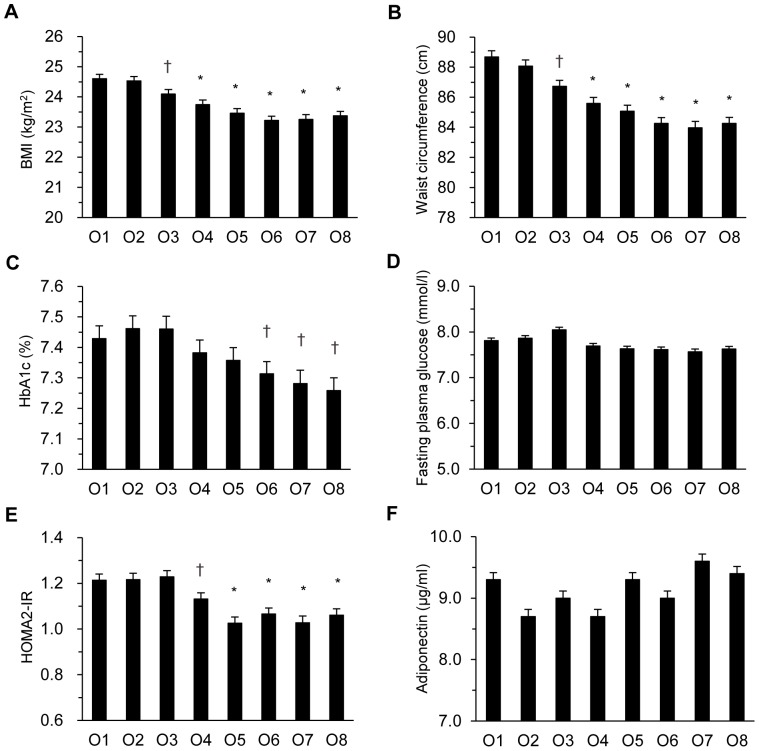
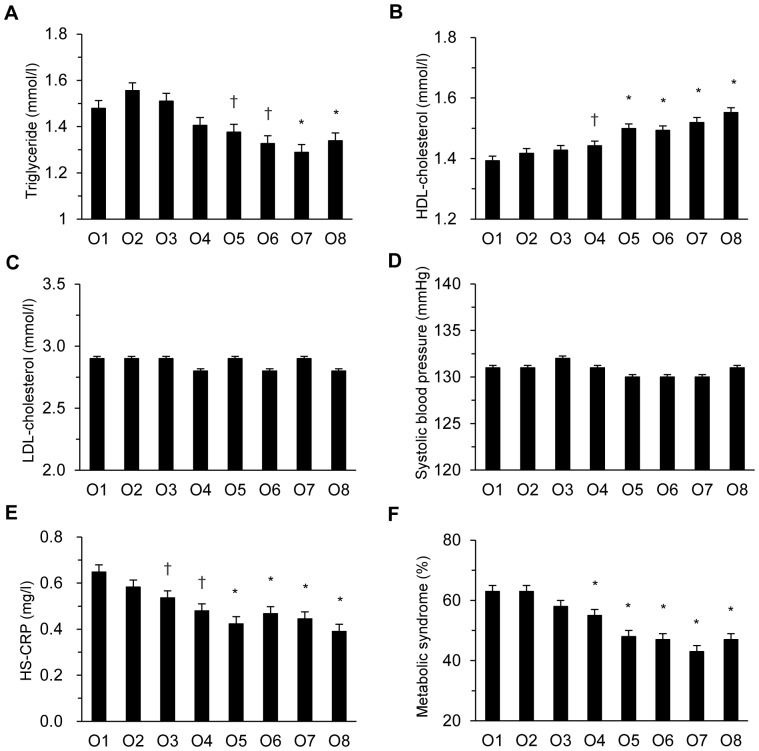
Results: LTPA was dose-dependently associated with body mass index (BMI), waist circumference, hemoglobin A1c (HbA1c), fasting plasma glucose, homeostasis model assessment of insulin resistance, triglyceride, high density lipoprotein cholesterol, high sensitivity C-reactive protein, and prevalence of metabolic syndrome, but not with blood pressure, low density lipoprotein cholesterol or adiponectin. The amount of PA required to lower HbA1c was greater than that required to improve cardiovascular risk factors. LTPA was inversely associated with HbA1c in non-obese participants but not in obese participants after multivariate adjustments for age, sex, duration of diabetes, current smoking, current drinking, energy intake, cardiovascular diseases, depressive symptoms, and treatment of diabetes. Higher-intensity LTPA, not lower-intensity LTPA was associated with HbA1c after multivariate adjustments with further adjustment including BMI.
Conclusions/interpretation: LTPA was dose-dependently associated with better glycemic control and amelioration of some cardiovascular risk factors in Japanese type 2 diabetic patients. In addition, increased higher-intensity LTPA may be appropriate for glycemic control.
Conflict of interest statement
Figures
References
-
- Chan JC, Malik V, Jia W, Kadowaki T, Yajnik CS, et al. (2009) Diabetes in Asia: epidemiology, risk factors, and pathophysiology. JAMA 301: 2129–2140. - PubMed
-
- Umpierre D, Ribeiro PA, Schaan BD, Ribeiro JP (2013) Volume of supervised exercise training impacts glycaemic control in patients with type 2 diabetes: a systematic review with meta-regression analysis. Diabetologia 56: 242–251. - PubMed
Publication types
MeSH terms
Substances
LinkOut - more resources
Full Text Sources
Other Literature Sources
Medical
Research Materials
