


Comparison between (18)F-FDG PET/CT and EMG Mapping for Identifying Dystonic Superficial Muscles in Primary Cervical Dystonia: Preliminary Results
- PMID: 24899935
- PMCID: PMC4042969
- DOI: 10.1007/s13139-009-0004-5
Comparison between (18)F-FDG PET/CT and EMG Mapping for Identifying Dystonic Superficial Muscles in Primary Cervical Dystonia: Preliminary Results
Abstract
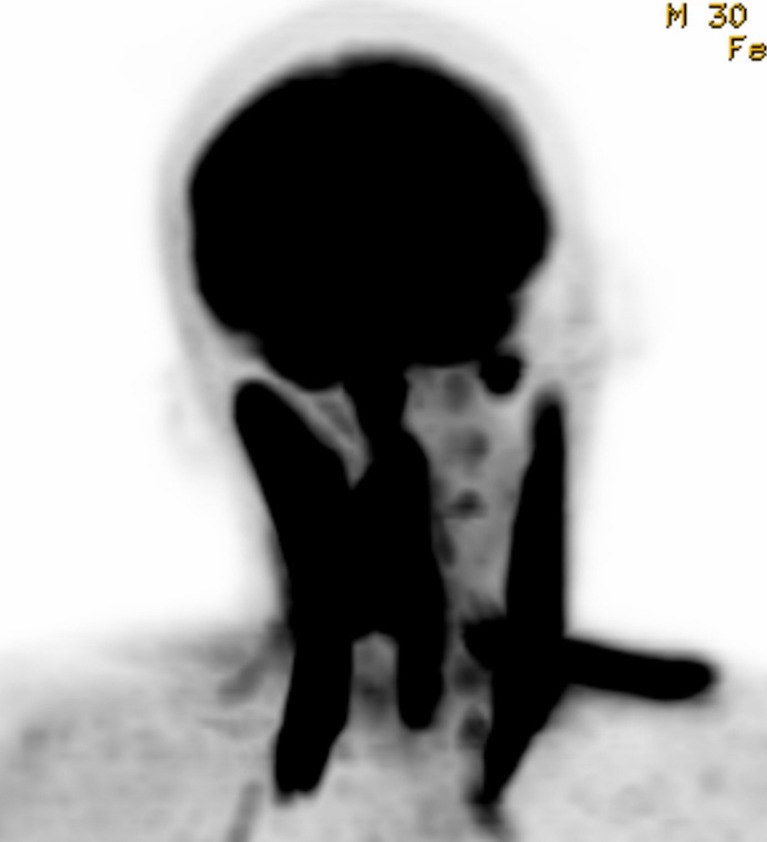
Purpose: This study was conducted to compare (18)F-FDG PET/CT and electromyography (EMG) mapping in patients with primary cervical dystonia (PCD) to find dystonic superficial cervical muscles.
Methods: Ten consecutive patients with PCD (M:F = 5:5, age 44 ± 13 years) whose dystonic posture was not relieved with conventional muscle relaxant therapy were included. Target cervical muscles for the comparison between (18)F-FDG PET/CT and EMG mapping were four representative superficial bilateral cervical muscles: splenius capitis muscle, sternocleidomstoid muscle, upper trapezius muscle, and leavator scapulae muscle. The diagnostic efficacy was compared between (18)F-FDG PET/CT and EMG mapping using physical exam and measurement of rotation angle as the gold standard.
Results: Among 80 muscles evaluated, there were 21 (26%) dystonic superficial cervical muscles assessed with physical exam and motion analysis. The sensitivity, specificity, and accuracy for localizing dystonic muscles were 76, 92, and 88% for (18)F-FDG PET/CT, and 95, 66, and 74% for EMG mapping, respectively. The sensitivity of EMG mapping was significantly higher than that of (18)F-FDG PET/CT. In contrast, (18)F-FDG PET/CT was significantly superior to EMG mapping for specificity and accuracy.
Conclusions: (18)F-FDG PET/CT is more specific and accurate than EMG mapping for finding superficial dystonic cervical muscles. The high sensitivity of EMG mapping suggests that (18)F-FDG PET/CT and EMG mapping are complementary for finding dystonic superficial cervical muscles.
Keywords: 18F-FDG; Electromyography; PET/CT; Primary cervical dystonia; Spasmodic torticollis.
Figures

References
-
- Jankovic J, Schwartz K. Botulinum toxin injections for cervical dystonia. Neurology. 1990;40:277–280. - PubMed
-
- Greene P, Kang U, Fahn S, Brin M, Moskowitz C, Flaster E. Double-blind, placebo-controlled trial of botulinum toxin injections for the treatment of spasmodic torticollis. Neurology. 1990;40:1213–1218. - PubMed
LinkOut - more resources
Full Text Sources