


Structure-Activity Study of Dihydrocinnamic Acids and Discovery of the Potent FFA1 (GPR40) Agonist TUG-469
- PMID: 24900217
- PMCID: PMC4007913
- DOI: 10.1021/ml100106c
Structure-Activity Study of Dihydrocinnamic Acids and Discovery of the Potent FFA1 (GPR40) Agonist TUG-469
Abstract
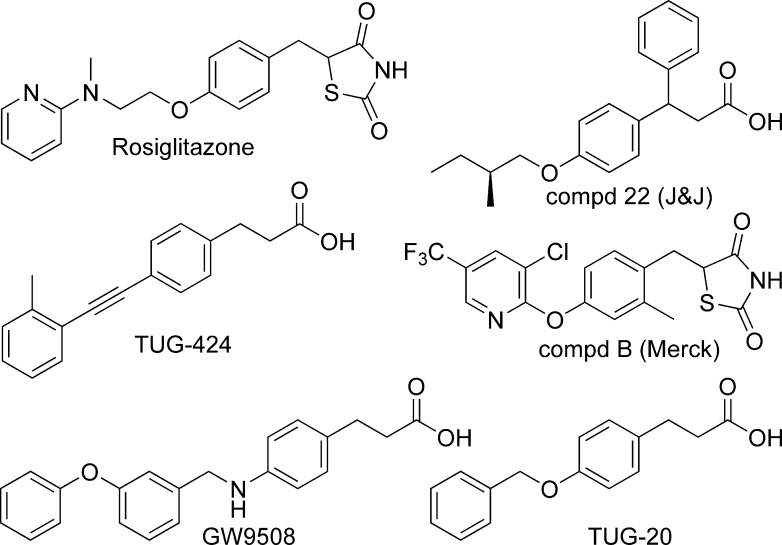
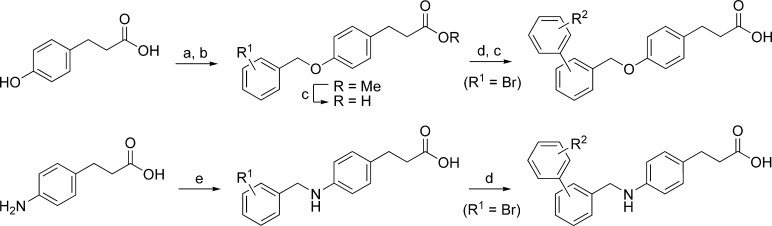
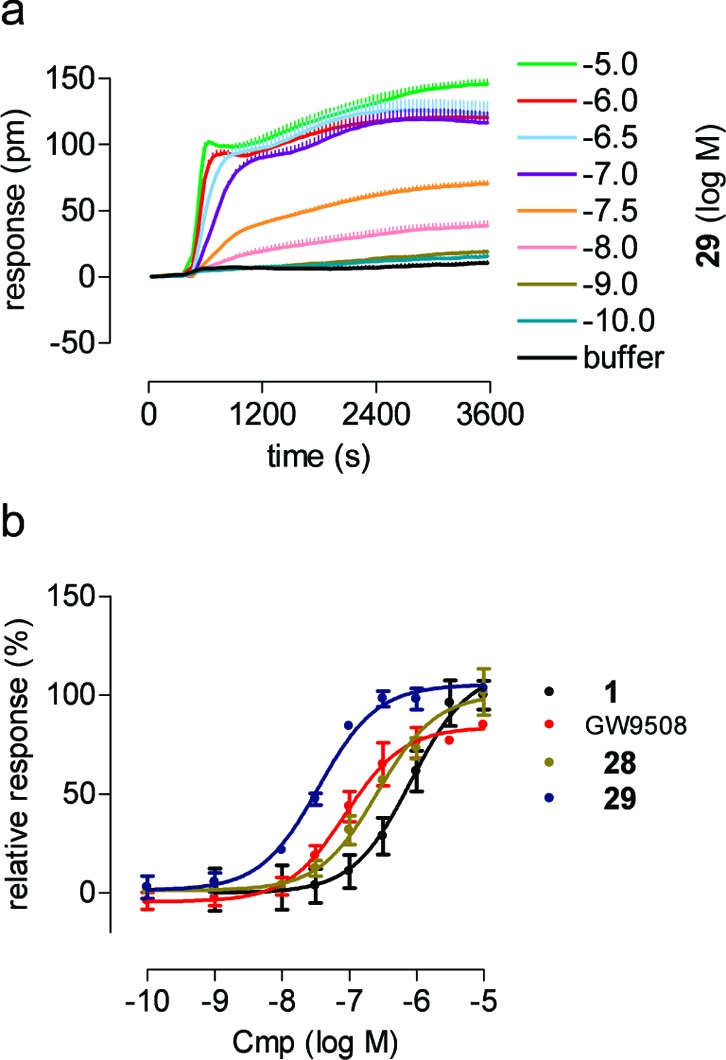
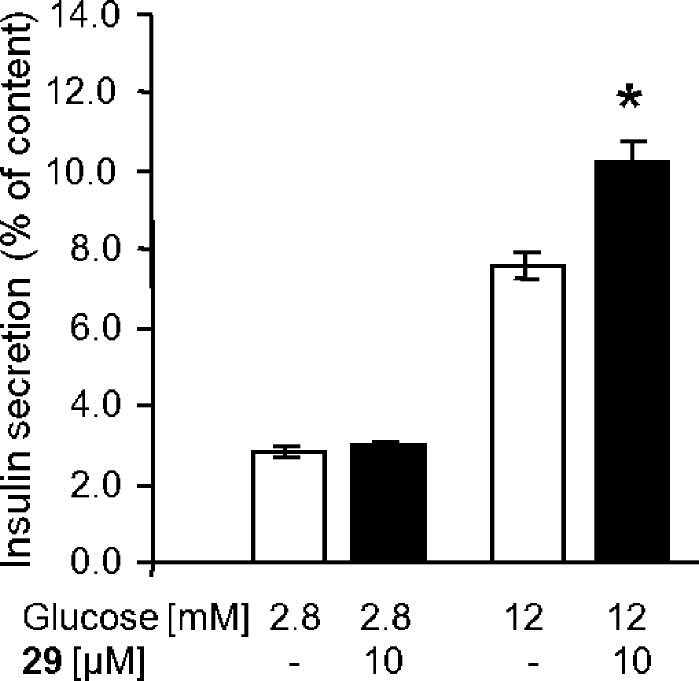
The free fatty acid 1 receptor (FFA1 or GPR40), which is highly expressed on pancreatic β-cells and amplifies glucose-stimulated insulin secretion, has emerged as an attractive target for the treatment of type 2 diabetes. Several FFA1 agonists containing the para-substituted dihydrocinnamic acid moiety are known. We here present a structure-activity relationship study of this compound family suggesting that the central methyleneoxy linker is preferable for the smaller compounds, whereas the central methyleneamine linker gives higher potency to the larger compounds. The study resulted in the discovery of the potent and selective full FFA1 agonist TUG-469 (29).
Keywords: Diabetes; FFA1; FFAR1; GPR40; drug discovery; fatty acids.
Figures
References
-
- International Diabetes Federation. The Diabetes Atlas, 4th ed.; October, 2009; http://www.diabetesatlas.org.
-
- Unwin N.; Gan D.; Whiting D. The IDF Diabetes Atlas: Providing evidence, raising awareness and promoting action. Diabetes Res. Clin. Pract. 2010, 87, 2–3. - PubMed
-
- The name FFA1 is designated by the International Union of Basic and Clinical Pharmacology to the receptor previously called GPR40 (http://www.iuphar.org/).
-
- Itoh Y.; Kawamata Y.; Harada M.; Kobayashi M.; Fujii R.; Fukusumi S.; Ogi K.; Hosoya M.; Tanaka Y.; Uejima H.; Tanaka H.; Maruyama M.; Satoh R.; Okubo S.; Kizawa H.; Komatsu H.; Matsumura F.; Noguchi Y.; Shinobara T.; Hinuma S.; Fujisawa Y.; Fujino M. Free fatty acids regulate insulin secretion from pancreatic beta cells through GPR40. Nature 2003, 422, 173–176. - PubMed
-
- Briscoe C. P.; Tadayyon M.; Andrews J. L.; Benson W. G.; Chambers J. K.; Eilert M. M.; Ellis C.; Elshourbagy N. A.; Goetz A. S.; Minnick D. T.; Murdock P. R.; Sauls H. R.; Shabon U.; Spinage L. D.; Strum J. C.; Szekeres P. G.; Tan K. B.; Way J. M.; Ignar D. M.; Wilson S.; Muir A. I. The orphan G protein-coupled receptor GPR40 is activated by medium and long chain fatty acids. J. Biol. Chem. 2003, 278, 11303–11311. - PubMed
LinkOut - more resources
Full Text Sources
Other Literature Sources
Chemical Information
