


Inhaled nitric oxide usage in preterm infants in the NICHD Neonatal Research Network: inter-site variation and propensity evaluation
- PMID: 24901452
- PMCID: PMC4323079
- DOI: 10.1038/jp.2014.105
Inhaled nitric oxide usage in preterm infants in the NICHD Neonatal Research Network: inter-site variation and propensity evaluation
Abstract
Objective: The use of inhaled nitric oxide (iNO) in preterm infants remains controversial. In October 2010, a National Institutes of Health consensus development conference cautioned against use of iNO in preterm infants. This study aims (1) to determine the prevalence and variability in use of iNO in the Eunice Kennedy Shriver National Institute of Child Health and Human Development Neonatal Research Network (NICHD NRN) before and after the consensus conference and (2) separately, to examine associations between iNO use and severe bronchopulmonary dysplasia (BPD) or death.
Study design: The NICHD NRN Generic Database collects data including iNO use on very preterm infants. A total of 13 centers contributed data across the time period 2008 to 2011. Infants exposed or not to iNO were compared using logistic regression, which included factors related to risk as well as their likelihood of being exposed to iNO.
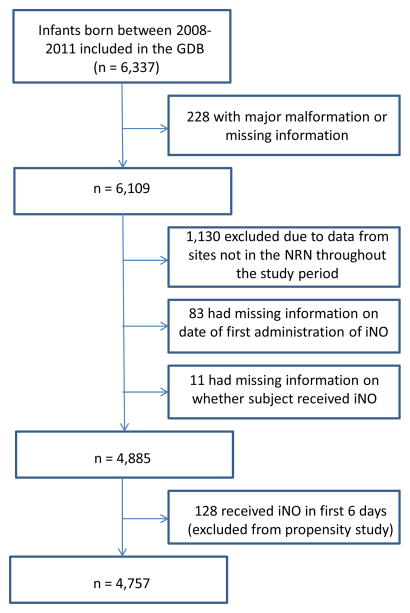
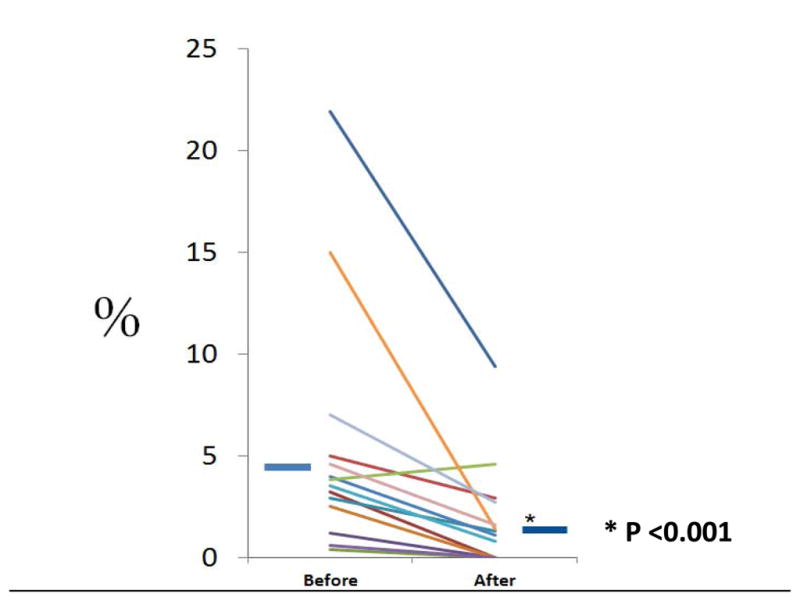
Result: A total of 4885 infants were assessed between 2008 and 2011; 128 (2.6%) received iNO before day 7, 140 (2.9%) between day 7 and 28, and 47 (1.0%) at >28 days. Center-specific iNO use during 2008 to 2010 ranged from 21.9 to 0.4%; 12 of 13 sites reduced usage and overall NRN iNO usage decreased from 4.6 to 1.6% (P<0.001) in 2011. The use of iNO started between day 7 and day 14 was more prevalent among younger infants with more severe courses in week 1 and associated with increased risk of severe BPD or death (odds ratio 2.24; 95% confidence interval 1.23 to 4.07).
Conclusion: The variability and total use of iNO decreased in 2011 compared with 2008 to 2010. iNO administration started at ⩾ day 7 was associated with more severe outcomes compared with infants without iNO exposure.
Conflict of interest statement
There are no conflicts of interest.
Figures
References
-
- Neonatal Inhaled Nitric Oxide Study Group. Inhaled nitric oxide for term and near term infants for hypoxic respiratory failure. New Eng J Med. 1997;336:597–604. - PubMed
-
- Finer NN, Barrington KJ. Nitric oxide for respiratory failure in infants born at or near term. Cochrane Database Syst Rev. 2006;(2):CD000399. - PubMed
-
- Truog WE, Castor CA, Sheffield MJ. Neonatal nitric oxide use: predictors of response and financial implications. J Perinatol. 2003;23(2):128–132. - PubMed
-
- Schreiber MD, Gin-Mestan K, Marks JD, Huo D, Lee G, et al. Inhaled nitric oxide in premature infants with the respiratory distress syndrome. N Engl J Med. 2003;349(22):2099–2107. - PubMed
-
- Ballard RA, Truog WE, Cnaan A, Martin RJ, Ballard PL, et al. Inhaled nitric oxide in preterm infants undergoing mechanical ventilation. N Engl J Med. 2006;355(4):343–353. - PubMed
MeSH terms
Substances
Grants and funding
LinkOut - more resources
Full Text Sources
Other Literature Sources
